Aitmatov Ch.
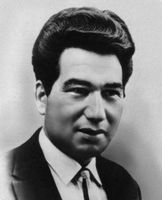 Chingiz Aitmatov, the Kirghiz Soviet prose writer writing on Kirghiz and Russian, born on December 12, 1928 in the village of Sheker, Talas region, Kirgizia. His father, Torekul Aitmatov, was one of the first Kirghiz communists and a regional party secretary. In 1937, while attending the Institute for Red Professorship in Moscow, Torekul was arrested and eventually liquidated on charges of bourgeois nationalism. Chingiz Aitmatov, the Kirghiz Soviet prose writer writing on Kirghiz and Russian, born on December 12, 1928 in the village of Sheker, Talas region, Kirgizia. His father, Torekul Aitmatov, was one of the first Kirghiz communists and a regional party secretary. In 1937, while attending the Institute for Red Professorship in Moscow, Torekul was arrested and eventually liquidated on charges of bourgeois nationalism.
Between 1943 and 1952, Aitmatov was assistant to the Secretary of the Sheker Village Soviet. During this time, he tried his hand at translation, rendering Kataev's Sons of the Regiment and Babayevsky's White Birch in Kirghiz.
He attended the Animal Husbandry Division of the Kirghiz Agricultural Institute in Frunze, but changed from the study of livestock to the study of literature at the Gorky Literature Institute in Moscow.
He began his own literary career in 1952 with the publication of two stories in Russia: The Newspaper Boy Dziuio and Ashim. His first story written in Kirghiz was Ak jann ("White Rain"), which appeared in 1954.
He worked as roving correspondent for Pravda in Kirghizia from 1958 to 1966. His collection of short stories Tales of Mountains and Steppes (1963), won him the Lenin Prize. In 1967 he became a member of the Executive Board of the Soviet Writers Union, and in 1968 he won the Soviet State Prize for literature for his novel Farewell, Gulsary!, a tale of an old man reminiscing about the parallel lives of himself and his old horse, which is dying. Aitmatov won two more State Prizes in 1977 and 1983, and was named a Hero of Socialist Labor in 1978.
A major theme in Aitmatov's work is the inequality among men and women in traditional central Asian society. He also criticizes bias, the mullahs, lack of access to education for women, treatment of women as commodities, and polygamy. A good example of this is the tale Jamila (1958). The title character, a married village woman, falls in love with another man while her husband (who treats her more as an object of ownership than an object of love) is off at the front. In the end, the lovers run off together, abandoning their village and the traditional conventions.
In 1972 he wrote The White Ship, about an orphan boy dreams of becoming a fish so that he can join his father who, he believes, sails in the white ship on the Issyk-Kul Lake.
Aitmatov's 1973 play The Ascent of Mt. Fuji, written with Kaltai Mukhamedzhanov, dealt with the suppression of dissent and caused a sensation when produced in Moscow.
He was First Secretary and Chairman of the Cinema Union of Kirghizia from 1964 to 1985, and in 1985 he was named Chairman of the Kirghiz Writers Union. In the 1990s, he served as an advisor to Gorbachev and in 1990 was named Soviet Ambassabor to Luxemburg.
His most important works include: A Difficult Passage (1956), Face to Face (1957), Farewell, Gulsary! (1967), The First Teacher (1967), The White Ship (1972), The Ascent of Mt. Fuji (1973), and The Day Lasts More Than a Hundred Years (1980), which intertwines a treatment of ordinary people of Central Asia with a science fiction plot of space stations, aliens, and new planets.
Aitmatov has received numerous foreign awards, including the Gold Olive Branch of the Mediterranean Culture Research Center (1988), the Academy Award of the Japanese Institute of Oriental Philosophy (1988) and the Austrian State Prize for European Literature (1994).
He is currently a member of the Kyrgyzistan's parlimanent and serves as his nation's ambassador to the European Union, NATO, UNESCO, Belgium, Luxemburg and the Netherlands and is based in Brussels. He has a son and a daughter.
Akhmatova A.A.
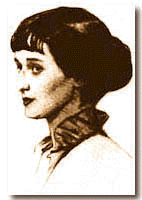 Anna Andreyevna Gorenko was born on 11 June 1889 near Odessa, her father Andrei Gorenko was a maritime engineer. Her aristocratic mother Inna Stogova was a former member of the radical political group Narodnaya Volya (People's Will). The young Akhmatova knew French poets by heart as well as the Russians. She grew up in Tsarskoe Selo where she attended school, completing her final year at Fundukleyevskaya gymnasia in Kiev (1907). The same year she enrolled at the Faculty of Law at the Kiev College for Women, later withdrawing to study literature in St. Petersburg. In 1903 Akhmatova met the poet Nikolai Gumilyov whose persistent wooing led to their marriage in 1910. They travelled abroad in 1910 and 1911. In Paris Akhmatova became friendly with the yet unknown artist Modigliani who drew her as Egyptian queens and dancers. Together they visited the Louvre and recited French poetry. Anna Andreyevna Gorenko was born on 11 June 1889 near Odessa, her father Andrei Gorenko was a maritime engineer. Her aristocratic mother Inna Stogova was a former member of the radical political group Narodnaya Volya (People's Will). The young Akhmatova knew French poets by heart as well as the Russians. She grew up in Tsarskoe Selo where she attended school, completing her final year at Fundukleyevskaya gymnasia in Kiev (1907). The same year she enrolled at the Faculty of Law at the Kiev College for Women, later withdrawing to study literature in St. Petersburg. In 1903 Akhmatova met the poet Nikolai Gumilyov whose persistent wooing led to their marriage in 1910. They travelled abroad in 1910 and 1911. In Paris Akhmatova became friendly with the yet unknown artist Modigliani who drew her as Egyptian queens and dancers. Together they visited the Louvre and recited French poetry.
Akhmatova's first poem appeared in 1907 in Gumilyov's journal Sinus. She participated in the Guild of Poets organized by Gumilyov and Gorodetsky. Soon it disassociated itself from the symbolists, giving birth to Acmeism, whose avowed principles were an emphasis on clarity, freshness, a return to earth and close ties with the literature and culture of Europe and of all ages. The symbolist Annensky was their acknowledged teacher. The popular Gumilyovs frequented the fashionable artistic cafe The Stray Dog.
The first collection of Akhmatova's verse, Evening (Vecher, 1912), appeared under the pseudonym Anna Akhmatova, taken from her Tatar great-grandmother. Hailed for its Acmeist clarity, conciseness, compressed style and precise details, the collection concurrently espoused the romantic concept of evening as a time of awakening for the sensitive young adult to life, love, and grief. Its miniature love lyrics manifested subtlety of style and message. The collection Rosary (Chetki, 1914) showed marked changes in the poet's voice, from wary expectation of betrayal to disillusionment with love coupled with the worldliness of a femme fatale. The lyrics generated numerous female epigones whom the poet deplored in her "Epigram":
I taught women to speak ...
But, Lord. how to force them to be still!
After 1922 no new works of Akhmatova were published because her apolitical work was considered incompatible with the new order. Labeled an "internal emigre," she was given a meagre pension. Critics believed that her time had passed. Yet her verse continued to be cited by scholars of the Formalist school and admired by poetry lovers.
During her forced silence Akhmatova applied herself to the investigation of the life and works of Pushkin, producing some seminal articles published posthumously under the title On Pushkin (O Pushkine). She worked on The Reed (Trostnik, 1926-40) which contains poems on creation and features dedications to the poets Mandelshtam, Pasternak and Dante. From 1926 to 1940 Akhmatova lived with the art critic, Nikolai Punin. The mass arrests of the 1930s which included her son and Punin generated a dirge to human suffering, Requiem (1935-40), never published in the Soviet Union.
The wartime relaxation of controls on her publications ended with the decision of the Central Committee concerning the journals Zvezda and Leningrad which unleashed attacks on Akhmatova and Zoshchenko, resulting in their expulsion from the Union of Soviet Writers without the right to publish. As a means of support and appearing in print Akhmatova began to translate from numerous languages. Six volumes have appeared as separate imprints. Despite her success, Akhmatova complained that for a poet translating was comparable to devouring one's own brains.
Akhmatova's religious motifs are often laced with superstition and vestiges of paganism such as the willow, tree of water nymphs. Akhmatova's love lyrics, then, earned acclaim through their accessible beauty of content and form as well as for the novelty of a feminine voice expressing women's emotions. Scholars found subtle devices and honed imagery in these simple poems. The later poetry adds themes of poetic creation, readership, war, and death, along with longer lyric forms, sometimes achieved through cyclization, all contributing to a wider thematic scope and deepened content. Akhmatova's late hermetic works led some to insinuate a decline in talent, as others had done for Pushkin. Long unnoticed was the device of extending the limits of her concise verse by incorporating literary allusions, correspondences, and subtexts.
Akhmatova has bequeathed two masterpieces in verse. Requiem, immortalizing a mother's anguish over her son's imprisonment, reaches all peoples and times. The ten core poems are preceded by an epigraph and three introductory pieces, as if a work on imprisonment were difficult to commence. Once begun, the surge subsides but slowly, as evidenced by the ponderous bipartite Epilog. Lacking sequential narration, these poems of diverse rhythm shift their focus on the leitmotif of prison and suffering. Each poem has a different approach, as if grief had sent the mother's head reeling with her mind fixated to her loss. Religious overtones intensify with the mother's suffering. Trees that once murmured to her maintain silence in pain. With the son's sentencing, insanity hovers to obliterate memory, but, like death, it evades her. A picture of the Mother of Christ at the Crucifixion broadens the inexpressible sorrow: "And there, where the Mother silently stood,/No one even dared to glance." Even if things change, the persona vows to accept no monument to herself except beside the prison lest in blissful death she forget the suffering of millions. The poema's impactful content is offset by a melodious, folkish, subdued form.
Poem without a Hero. A Triptych is a complex, ciphered, densely structured narrative in verse whose many layers and possible interpretations contribute to its magnificent mystique. It is permeated with literary and biographical allusions. Like Pushkin in Eugene Onegin, Akhmatova invented her own strophe. Part 1, "1913. A Petersburg Tale," termed "a polemics with Blok" by Akhmatova herself, confines numerous authors within itself. It is based on a stylized recollection of the tragic suicide in 1913 of the young comet and poet Vsevolod Knyazev, out of love for Akhmatova's friend Olga Sudeikina, an actress who preferred the poet Blok. On New Year's Eve 1940 costumed shades from 1913, including the ones in the romantic triangle, visit the persona at her home. They are described enigmatically. Nothing is related; a re-creation is achieved through the Hoffmannesque visit of shades, masks, and a portrait stepping out of its frame which conjures up the final year before the cataclysm of 1914 as well as that before World War II. The second part, "Tails" (Reshka, as in "heads and tails"), claiming to illuminate the preceding, returns to the present to treat the fate of a writer's artistic freedom in the face of editorial philistinism; it parallels Pushkin's "Conversation of a Bookseller with a Poet." Akhmatova provides a coded explanation for the obtuse editor unable to distinguish between the three persons in the triangle. Part 3, "Epilog," returns to postwar Leningrad with the poet's departure from Asia. A vessel for memory and culture, the poem memorializes a bygone era. Form, as important in the poem as content, is more accessible since the former is easily appreciated while the latter must be mined for comprehension. Through this work the poet conquers time and space.
Averchenko A.T.
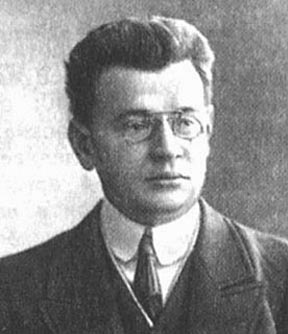 Arkady Timofeevich Averchenko (1881 - 1925) Arkady Timofeevich Averchenko (1881 - 1925)
Russian writer-humorist, playwright, theatrical critic.
He was born on March 15, 1881 in Sevastopol in family of merchant. He was educated at home because of bad sight and poor health; he could not study in gymnasia. He read a lot and without distinction.
When he was fifteen years old A. Averchenko start to work as a junior scribe in a transport office. After one year he left Sevastopol and began to work as a clerk in the Bryansk coal mine where he served three years. In 1900 A. Averchenko moved to Kharkov.
In 1903 the Kharkov newspaper "The Southern Territory" published the first Averchenko's story "How I had to
insure my life", in which his literary style was already shown. In 1906 Averchenko becomes the editor of the satirical magazine "The Bayonet", which was almost completely composed of his works. When this magazine was
closed A. Averchenko heads the next magazine - "The Sword", which soon was closed also.
In 1907 A. Averchenko moves to St. Petersburg and contributes to the satirical magazine "The Dragonfly ", which was later transformed into "The Satiricon". Later he becomes the permanent editor of this popular magazine.
In 1910 three books were published , which made A. Averchenko known to all reading Russia: "Cheerful Oysters", "Stories (humorous)", the
first book, "Speckle On A Wall", the second book. "... Their author can become Russian Mark Twain...", - acutely noticed V.Polonsky.
In 1912 books "Circles On Water" and "Stories For The Convalescent" won him a title "The King of Laughter".
A. Averchenko enthusiastically accepted the February revolution, but not the October revolution. In autumn 1918 he left for the south, and contributes to the newspapers "Priazovsky Territory" and "The South", appears with the reading his own stories, manages a literature department in "the House of the Actor". In the same time Averchenko writes the plays "The Remedy For Nonsense" and "The Play With Death", and in April 1920 he organized the
theatre "The Migrant Birds Nest".
In half-year he emigrates through Constantinople abroad; since June 1922 Averchenko lived in Prague, from time to time leaving for Germany, Poland, Romania and the Baltic states. In that time were published his book "Dozen Knives in the Back of the Revolution", the collection of stories "Children"
and "Ridiculous in the Horrible", the comic novel "the Joke of the Patron of Art" etc.
In 1924 Averchenko underwent an eye removal operation after which he could not recover for long time; soon the heart-disease grew progressively worse.
Averchenko died in the Prague City Hospital January 22, 1925. He is buried in the Olshansky cemetery in Prague.
Babel I.E.
Isaak Emmanuilovich Babel (1894-1941)
Short story writer and playwright who was a correspondent with the Red Army forces of Semyon Budyonny during the Russian civil war. Babel's fame is based on his stories of the Jews in Odessa and his novel Red Cavalry (1926). He was the first major Russian Jewish writer to write in Russian.
Isaak Babel was born in the Jewish ghetto of Odessa, Ukraine. Most of his early years he spent in the Black Sea port Nikolaev, 90 miles away. The atmosphere of the persecution of Jews is reflected in the pessimism of his stories, although his childhood was relatively comfortable. At a time when most Jews were forbidden to live in Moscow, St. Petersburg, Kiev, and other localities, Odessa had many times more Jews than any other city in the Russian part of the empire. However, between 1881 and 1917 two million Jews left Russia, mostly for America. Babel's father was a successful businessman who installed his family in one of the best streets in Odessa. Babel studied violin, German, French, and Talmud at the Nicholas I Commercial Institute (1905-11) and wrote stories at the age of fifteen in imitation of Guy de Maupassant. In 1915 Babel graduated from Kiev University which had been evacuated to Saratov on the Volga because of the war.
After graduating Babel moved to St. Petersburg, where he studied literature. In that capital city "traitors, malcontents, whiners, and Jews" were banned and Babel had to use an apocryphal passport. His first works were published in 1916 in Letopis, a monthly edited by Maksim Gorky. Although Babel himself had been untouched during the pogroms that spread throughout Russia in 1905, he saw in rising revolutionary movements a promise of freedom, and end of all persecution. Babel's early satires of the Czarist bureaucracy attracted the attention of the government and Babel was accused of pornography and incitement of class hatred. This is seen in the loosely autobiographical 'Story of My Dovecote' he described the fate of a murdered grandfather. On Gorky's advise Babel decided to see the world and learn about life. He participated briefly in the war on the Romanian front. He was injured and after his discharge Babel joined the staff of Gorky's newspaper Novaya Zhizn. During the Revolution he worked probably as a clerk for the Commissariat of Education and for the CheKa, the Soviet Secret Police.
In 1919 Babel married Eugenia Gronfein and joined the Ukranian State Publishing House (1919-20). He was assigned then as a journalist to Field Marshall Budenny's First Cavalry army, witnessing its unsuccessful Polish campaign to carry Communist revolution outside Russia. The Reds penetrated almost to Warsaw but were driven back. In Odessa Babel started to write a series of stories set in the Odessan ghetto of Moldavanka, where he was born. "It was not before 1923," Babel recalled later, "that I learned to express my thoughts clearly and not too wordily. Then I went back to writing." Tales of Odessa appeared in book form in 1931. It depicted with broad strokes and humor the Jewish underworld, the middlemen, small merchants, brokers, whores, tough Jewish gangsters, saloon keepers, rabbis, and entrepreneurs, on the eve of Revolution. In the center of the colorful caricature of the ghetto is Benia Krik, the king of gangsters. The stories are entitled 'The King', 'How It Wad Done in Odessa', 'The Father', and Liuba the Cossack', where Benia Krik is absent. In the play Sunset (1928) Babel returned to the Odessa gangster world, but this time the protagonist was Benya's father, Mendel Krik. It did not gain success and also Marya (1935) attacted little attention.
In 1923 Babel started to publish a cycle of novels called Red Cavalry. Like Maupassant, Babel often surprises the reader with twists in the plot. In Red Cavalry basically a pacifist narrator, Liutov, who is a Jewish officer, is assigned to a regiment of traditionally anti-Semitic Cossacs. The joke was, as Jorge Luis Borges has stated, that "the mere idea of a Jew on horseback struck them as laughable, and the fact that Babel was a good horseman only added to their disdain and spite." In one tale, 'Zamosc,' the narrator falls asleep and his horse drags him to the front line of the battle. He wakes looking up at a Russian peasant, armed with a rifle, who tells him, "It's all the fault of those Yids." Out of the horror of battles, torture and murder Babel creates a rapidly cutting polyphonic tale of revolutionary change. Some stories are narrated in a stylized form of the Cossacks' own language. Two stories appeared in Mayakovsky's magazine LEF. The work was traslated into more than 20 languages, gaining Babel national fame, but it was also attacked by Budenny, who claimed that its emphasis on brutal acts insulted his troops. Babel was defended by Gorky.
From 1923 Babel lived in Moscow. His wife went in 1925 to Paris for a 'temporary' separation; his daughter Natalie was raised in France. Babel's mother and sister lived in Brussels from 1926 on, but the author himself did not leave the Soviet Union despite numerous opportunities. Babel visited his wife in Paris and travelled on journalistic assignments in Ukraine and the Caucasus. He served also as a secretary of a village soviet in Molodenovo. Between the yars 1925 and 1930 he wrote a series of fictionalized accounts of his childhood, and young manhood. In the loosely autobiographical 'Story of My Dovecote' he described the fate of a murdered grandfather.
In the beginning of the 1930s Babel's literary reputation was high in the Soviet Union and abroad. He revised his stories for his collected works that appeared in 1932 and 1936. From the mid-1930s Babel avoided publicity under increasing Stalinist persecution, although he worked on film scripts, including Eisenstein's banned Bezhin Meadow and on a new book.
Babel was arrested by the N.K.V.D., a precursor of the K.G.B, in May 1939 at his cottage in Peredelkino, the writers' colony. Under interrogation and probable torture at Lubyanka, Babel confessed a long association with Trotskyites and engaging in anti-soviet activity. His trial was held in Buturka Prison and on January 27, 1940, he was shot on Stalin's orders for espionage. The Soviet officials informed Babel's widow that her husband died on March 17, 1941 in a prison camp in Siberia. Babel's charges were posthumously cleared in 1954. His seized manuscripts have not been recovered. Babel's collected works, based on the 1936 edition but including new materials, were republished in 1957 and 1966.
Bely A.
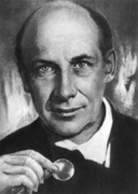 Andrei Bely. Pseudonym of Boris Nikolaevich Bugaev, born on 26 October 1880 in Moscow. The duality which suffused much of Bely's work perhaps began in his childhood. His father, Nikolai Vasilevich Bugaev, a well-know mathematician at Moscow University, was autocratic and firmly committed to the natural sciences, while Bely's mother insisted--sometimes irrationally--on a dedication to the arts. The conflicts between his parents had an unfortunate effect on the psyche of their young son. Andrei Bely. Pseudonym of Boris Nikolaevich Bugaev, born on 26 October 1880 in Moscow. The duality which suffused much of Bely's work perhaps began in his childhood. His father, Nikolai Vasilevich Bugaev, a well-know mathematician at Moscow University, was autocratic and firmly committed to the natural sciences, while Bely's mother insisted--sometimes irrationally--on a dedication to the arts. The conflicts between his parents had an unfortunate effect on the psyche of their young son.
At age 15, Bely became acquainted with the family of Mikhail Solovyov, the younger brother of the famous philosopher Vladimir Solovyov. In the Solovyov home, Bely was exposed to a wide range of cultured guests and discussions of art. Bely himself described meetings at the Solovyov home "sessions of the Florence Academy".
In 1899, Bely graduated from the well-regarded private gymnasium of L.I Polivanov. He entered Moscow University and graduated in 1903 with a degree in natural sciences. In 1904 he enrolled in the university's historical-philological faculty, but soon gave up his studies and by 1906 he had decided to give himself fully to writing.
His writing career began in 1902 with the publication of his "Second Symphony, the Dramatic", under the pseudonym of Andrey Bely, which was suggested by Mikhail Solovyov. Bely was to publish three more "symphonies", "The Northern, or First--Heroic" (1904), "The Return--Third" (1905) and "Goblet of Blilzzards--Fourth" (1908). These "symphonies" were an attempt at a synthesis of word and music, using a system of leitmotifs, a rhythmyzation of prose and an application of the structural laws of music to a literary composition. These works were also influenced by Vladimir Solovyov's concept of "all-in-oneness". A recurring image in these symphonies is that of Sophia-Holy Wisdom and the Eternal Feminine.
Between 1901 and 1903 he fell in with a group of Moscow symbolists (including Bryusov and Balmont) associated with the publisher "Scorpion". In the autumn of 1903 Bely was one of the organizers of the Argonauts, who preached the ideas of symbolism as religious creation and the equality of the "text of life" with the "text of art". It was during this period that he published the poetry volume "Gold in Azure" (1904).
Shortly thereafter, however, Bely's philosophical orientation changed from Nietzsche and Solovyov to neo-Kantian. He viewed the revolutionary events of 1905 as anarchistic maximalism. During the same period, his poems began to take on social themes, Nekrasov rhythms and intonations, as shown in the volume "Ash" (1909), which Bely dedicated to Nekrasov.
Bely had a very difficult relationship with Blok and an unrequited love relationship with Blok's wife, Lyubov, whom Bely identified with the Holy Sophia, reflected in the poetry collection "Urn" (1909).
In 1910 and 1911, Bely published three volumes of critical and theoretical articles, "Symbolism" (1910), "Green Meadow" (1910), and "Arabeques" (1911). The novel "The Silver Dove" appeared in 1910. This latter work is the tale of a young poet who leaves the city to join a group of religious sectarians and ends up being murdered by them.
About this time, he also began a relationship with Asya Turgeneva. Between 1910 and 1912 they traveled through Sicily, Tunis, Egypt, and Palestine.
1913 saw the publication of his most influential novel, "Petersburg". Set in the imperial metropolis in the revolutionary year 1905, "Petersburg" centers around a plot to deliver a bomb to a high government official. The geometric precision of the city clashes with the forces of chaos swirling around, and the swamp on which the city is built threatens to rise up again.
Bely then fell under the sway of the anthroposophical teachings of Rudolph Steiner and by 1914 he was in Dornach, Switzerland, assisting in the construction of Steiner's Anthroposophical Temple. In 1914 and 1915 Bely was also working on the novel "Kotik Letaev", an autobiographical retelling of his childhood.
In 1916, during World War I, leaving Asya Turgeneva in Switzerland, Bely returned to Russia and somehow avoided military service. His reaction to the Revolution of 1917 was that it presented a possible way of avoiding global catastrophe. He worked as a librarian and archivist while also lecturing on literature and anthroposophical ideas. He also was a reader of manuscripts for Proletkult. Of notable interest from this period are his essay "Revolution and Culture" (1917) and the poem "Christ Has Risen" (1918).
In 1921, Bely returned to Europe, but had a falling out with both Steiner and Turgeneva. In 1922 he published "Recollections of Blok".
Bely returned to Russia in 1923 where he married Klavdiya Vasilieva and worked on his trilogy of Moscow novels: "The Moscow Eccentric" (1926), "Moscow Under Seige" (1926) and "Masks" (1931). He also completed three volumes of memoirs: "At the Border of Two Centuries" (1930), "The Beginning of the Century" (1933) and "Between Two Revolutions" (1934). "The Baptized Chinaman", a continuation of the Kotik Letaev story, appeared in 1927. Bely also produced literary studies such as "Rhythm as Dialectic in The Bronze Horseman" and "The Mastery of Gogol" (1934).
Bely died on 1 August 1934. In the autumn of 2000, Bely's apartment in Moscow at Arbat, 55, was opened as a public museum.
Belyaev A.R.
Alexander Romanovich Belyaev was born on March 16, 1884 in Smolensk. His father was a priest. As a child, he dreamed of wingless flight and liked to jump from roofs. One jump was from too great a height and resulted in a spinal injury.
In 1901 he graduated from the seminary, but, being an atheist, he had no desire to become a priest. Instead, he enrolled to study law at a lycee in Yaroslav while also studying violin. To pay for his education, he played in a circus orchestra and worked as a set decorator and a journalist. After graduation, he returned to Smolensk where he worked as a police inspector, then a music and theatre critic for the paper Smolensky Vestnik. He saved his money and, in 1913, managed to take a trip through Italy, France, and Switzerland. Upon his return to Smolensk, resumed journalistic work and became editor of Smolensky Vestnik.
In 1916, he began to suffer from a form of tuberculosis of vertebrae. In 1919 he was put in a cast and stayed in bed for three years. He used this time to study foreign languages, medicine, biology, history, engineering. From 1922 until his death, he wore an orthopedic corset. In 1922, on the advice of doctors, he moved to Yalta and worked at a state home for children.
In 1923, he settled in Moscow and became a legal adviser at the People's Commissariat of Education. This was also when his literary work began. In 1925 he became a full-time writer. His early stories appeared in the magazines Vokrug Sveta, Vsemirny Sledoput and Znaniye-Sila. His first work of science fiction was Professor Dowell's Head (1925), which he himself called an autobiographical story. In it, he wanted to show that "It is possible to feel the head without the body." Other works include Island of the Dead Ships, Man-Amphibian, and Above The Abyss. "The Struggle in Space" (1928) incorporates rocket-airships, radio-controlled tanks, and a Death Ray in a fight against evil American Capitalists you are trying to destroy the Pan-European and Pan-Asiatic Union of Soviet Socialist Republics.
In 1931 he moved to Leningrad, then to its suburb - Pushkin. Subsequent works include Leap Into Nothing (1933), Air Ship (1934), and Second Moon (1935).
In all, Belyaev, who became known as the Soviet Jules Verne, authored more than 50 novels and novelettes and numerous short stories He maintained a relationship with Soviet rocket pioneer Konstantin Eduardovich Tsilokovsky and included in his novels Tsilokovsky's ideas for artificial Earth satellites, interplanetary platforms, and flights into outer space. In fact, Tsilokovsky's initials were used to name the planet in Beliayev's novel Planet KETS.
His last story, The Anatomic Bridegroom, appeared in the magazine Leningrad in 1941. He died a hungry, freezing death in Leningrad on 6 January 1942.
Bezymensky A.I.
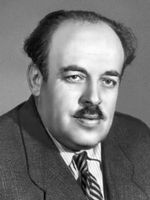 Alexander Ilych Bezymensky, Russian poet, born on 19 January 1898 in Zhitomir, Ukraine. in 1916 he entered the Kiev Institute of Commerce. But the Revolution of 1917 changed his path. He became active in revolutionary events. His first poems were published in 1918, followed soon by the collections "October Dawns" (1920) and "To the Sun" (1921). Alexander Ilych Bezymensky, Russian poet, born on 19 January 1898 in Zhitomir, Ukraine. in 1916 he entered the Kiev Institute of Commerce. But the Revolution of 1917 changed his path. He became active in revolutionary events. His first poems were published in 1918, followed soon by the collections "October Dawns" (1920) and "To the Sun" (1921).
In the 1920s he was active in the RAPP organization, working on the staff of its journal "Na Postu". He also was an editor for the newspaper "Krasnaya Molodyozh". Many of his poems of this era are dedicated to the Komsomol, and one of them, "Molodaya Gvardiya" (Young Guard) (1922) was set to music and became the organization's anthem.
He also focuced on subjects of topical interest to his readers, for example; "About a Cap", "About Felt Boots", "How Life Smells", and of course "V.I. Lenin" and "Feliks".
During the Great Patriotic War he served as a reporter, accompanying troops from Moscow to Prague. His experiences during these years are reflected in his collection "Front Line Notebook".
Following the war, he continued to produce lyric, propagandistic, and satiric peoms, such as "Stronger Than The Atom Bomb".
A.I. Bezymensky died on 26 June 1973.
Blok A.A.
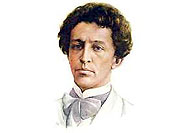 Alexander Alexandrovich Blok (1880 - 1921), poet and playwright, was born in a family of the gentry. His father, A L Blok,was a jurist, professor of Warsaw University, and a talented musician. His mother, A. A. Beketova, was a writer. His parents separated soon after his birth. Blok spent his childhood in the family of his grandfather A. N. Beketov, a botanist and Rector of Petersburg University, in Petersburg and the Beketov's estate Shakhmatovo, near Moscow. In 1889 Blok's mother obtained a formal divorce and married F. F. Kublitsky-Piottukh, an officer, whereupon she and her son moved to his apartment in an industrial section of Petersburg. Having graduated from a Gymnasium in 1898, Blok entered law school at Petersburg University, but transferred to its Historical-Philological Division in 1901, from which he graduated in 1906. In his early youth he had developed an interest in the theater (he played Hamlet, Romeo, and Chatsky in Griboedov's Woe from Wit) and intended to become an actor, but at 18 he began to write poetry seriously. In 1903 Blok married L. D. Mendeleeva, daughter of the famous chemist D. I. Mendeleev. This marriage, hardly successful in a conventional sense, proved important for Blok's inner development: L. D. Mendeleyeva inspired almost all of his early and much of his later verse. Blok's rapprochement to Andrei Bely, Sergei Solovyov, and other Symbolists occurred at the same time. In 1903 Blok's verses were first published in Novyi put', a journal edited by Dmitri Merezhkovsky and Zinaida Hippius. Alexander Alexandrovich Blok (1880 - 1921), poet and playwright, was born in a family of the gentry. His father, A L Blok,was a jurist, professor of Warsaw University, and a talented musician. His mother, A. A. Beketova, was a writer. His parents separated soon after his birth. Blok spent his childhood in the family of his grandfather A. N. Beketov, a botanist and Rector of Petersburg University, in Petersburg and the Beketov's estate Shakhmatovo, near Moscow. In 1889 Blok's mother obtained a formal divorce and married F. F. Kublitsky-Piottukh, an officer, whereupon she and her son moved to his apartment in an industrial section of Petersburg. Having graduated from a Gymnasium in 1898, Blok entered law school at Petersburg University, but transferred to its Historical-Philological Division in 1901, from which he graduated in 1906. In his early youth he had developed an interest in the theater (he played Hamlet, Romeo, and Chatsky in Griboedov's Woe from Wit) and intended to become an actor, but at 18 he began to write poetry seriously. In 1903 Blok married L. D. Mendeleeva, daughter of the famous chemist D. I. Mendeleev. This marriage, hardly successful in a conventional sense, proved important for Blok's inner development: L. D. Mendeleyeva inspired almost all of his early and much of his later verse. Blok's rapprochement to Andrei Bely, Sergei Solovyov, and other Symbolists occurred at the same time. In 1903 Blok's verses were first published in Novyi put', a journal edited by Dmitri Merezhkovsky and Zinaida Hippius.
In 1904 Blok's first book of verse appeared: Verses on a Beautiful Lady (Stikhi o Prekrasnoi Dame) was received with enthusiasm by the young symbolists. Blok's second book of verse, Inadvertent Joy (Nechayannaya radost', 1907), and his lyric drama The Fair Show Booth (Balaganchik), staged in 1906, made him famous. It was then that Blok became a professional man of letters, moving in the circles of the literary-philosophic intelligentsia and the theatrical Bohemia. His personal life and creativity were affected by his relations with the actress N. N. Volokhova (his cycles of verse, "Snow mask" [Snezhnaya maska], "Faina," and the play Song of Fate [Pesnya sud'by]) and the singer L. A. Del'mas (his cycle of verse, "Carmen"). Blok made several trips abroad, of which his journey to Italy in 1909 was particularly significant (his cycle "Italian Verses" and his series of essays, Lightning Flashes of Art [Molnii iskusstva]). His trip to Warsaw, occasioned by the death of his father in 1909, gave Blok the impulse for his verse epic Retribution (Vozmezdie, 1910-21). After the appearance of his books Land in Snow (Zemlya v snegu, 1907), Lyric Dramas (1908), Nocturnal Hours (Nochnye chasy, 1911), a three-volume collection of his poems (1911-12), the play Rose and Cross (Roza i krest, 1913), and the verse epic Garden of Nightingales (Solovlnyl sad, 1915) Blok's fame had spread all over Russia. He published many articles and gave many public lectures ("The People and the Intelligentsia" - Narod i intelligentsiya, 1908). In 1916 Blok edited and wrote an introduction to a collection of the poetry of A. Grigoriev, who influenced his late poetry in many ways.
Drafted in 1916, Blok was appointed, through the influence of friends, to serve as a record keeper with an engineering unit. He was stationed at the front near Pskov until March of 1917. He greeted the February Revolution with enthusiasm. Starting in May of 1917 he edited testimony given by former ministers of the Tsar before the Extraordinary Investigative Commission of the Provisional Government, which provided him with material for his book, The Last Days of the Old Regime (Poslednie dni starogo rezhima, 1919). The October Revolution initially also gave Blok much hope this article, "Intelligentsia and Revolution," 1918). He worked for Soviet institutions, participated in the publishing house Vsemirnaya literatura (World literature), the Bolshoi dramatic theatre, and the Vol'naya filosofskaya assotsiatsiya (Vollfila, Free Philosophic Association), which he helped to organize. In 1920 he was elected chairman of the Petrograd division of the All-Russian Union of Poets. Blok was close to the Left Social Revolutionaries' Party at the time. In February of 1919 he was briefly arrested in connection with the so-called "conspiracy of the Left SR's." The last two years of Blok's life were marked by his profound disappointment in the Revolution. Apathy, despair, hard living conditions, and a mysterious (possibly venereal) disease led to his mental illness and early death.
Blok's early poetry is linked to the traditions of Zhukovsky, Polonsky, Fet, as well as to the epigonic lyrics of the 19th century.
Blok's mature poetry (the poems of his "third volume," 1907-16), enriched by new accomplishments, returns to classical models. Blok now moves close to Pushkin, whose level of artistry he almost reaches. As before, motifs of heartache, despair, cosmic dissonance, and chaos (the cycle Terrible World - Strashnyi mir), the absurdity of human existence (a group of poems entitled Danse macabre - Plyaski smerti) stand out. The cycle Retribution contains some magnificent penitential verse ("Of valor, feats, and glory" - "O doblestyakh, o podvigakh, o slave", "The Commander's Steps" - Shagi Komandora). Blok now looks back to his second period as to a fall, a substitution of modern decadence for living and creative symbolism; ecstatic transcendence beyond the limits of the mundane turned to sin. An ever present memory of his earlier symbolic systems imparts a metapoetic character to Blok's poetry of this kind. A striving emerges to leave lyric isolation for more objective genres. The cycle Iambs (Yamby) is imbued with political and social themes. In Blok's Italian Verses a vivid sense of history, a picturesque plasticity, and lively narrative appear; here Blok achieves an unsurpassed harmony of composition, rhythm, and sound symbolism ("Ravenna"). His short poema "Garden of Nightingales" in many ways resembles his Italian Verses.
Blok had a huge influence on Russian poetry, including schools that were hostile to him, Acmeism and Futurism. Akhmatova and Mayakovsky learned from him directly. He has entered history as a poetic witness of great changes and cataclysms, as a poet who transformed the Russian poetic idiom, and as one of the most controversial and remarkable Russian writers, "a monument to the beginning of a century" (Anna Akhmatova).
Brodsky I.A.
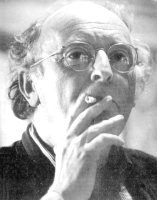 Iosif Alexandrovich Brodsky (1940 - 1996) Iosif Alexandrovich Brodsky (1940 - 1996)
Russian-born poet who was awarded the Nobel Prize for Literature in 1987. After moving to the United States Brodsky wrote his poems in Russian and his prose works in English. As a poet Brodsky was largely traditional and classical. He dealt with moral, religious and historical themes, and often used mythological allusions.
Iosif Brodsky was born in Leningrad (now St. Petersburg). His father was photographer. Brodsky studied at schools in Leningrad up to the age of 15 and started to write poetry from the late 1950s, earning a reputation as a free thinking writer. He taught himself Polish so he could read poetry that had never been translated into Russian. Brodsky also demonstrated considerable talent in rendering Russian translations of Donne and Marvell, and he read such Western authors as Kafka, Proust, and Faulkner through Polish translations.
As a young man, Brodsky worked at many occupations, including stoker and geologist-prospector. His production as a freelance poet and self-learned translator did not gain authorities approval, although he never directly criticized the government. His poetry appeared in samizdat (clandestine circulation) editions but were widely read. Brodsky's reputation made him a target for the secret police and he was convicted as a 'social parasite'. He spent some time in Kresty, the most famous prison in the Soviet Union. In the official record he was characterized to be 'less than one'. It became the title for Brodsky's collection of essays, which was published in 1986. Brodsky was sentenced to five years of hard labour, but the sentence was commuted in 1965 after protests by such prominent cultural figures as the composer Dmitri Shostakovich and the poet Anna Akhmatova, who was his close friend. During Brodsky's exile a collection of his poems was issued by an Ameican publisher in 1965.
In 1972 Brodsky was forced to exile from the USSR. He first went to Vienna, where he was helped by the poet W. H. Auden, and finally he emigrated to the United States. There worked as a visiting professor at several universities, including the University of Michigan, Queen College, City University of New York, Columbia University, New York University, Smith College, Amherst College, Hampshire College, Mount Holyoke College. In 1977 he became a U.S. citizen and in 1991-92 he was America's Poet Laureate. He was a member of American Academy of Arts and Letters, but resigned in protest over the honorary membership of the Russian poet Evgenii Evtushenko in 1987 - he considered Evtushenko a party yes man. Brodsky died of heart attack on January 28, 1996, in New York. He was married with Maria Sozzani, he also had a son with Maria Basmanova. Brodsky's parents were not allowed to travel to the West to see him and they died in Leningrad. In his essays about his parents in Less Than One (1986) the author explained: ''I write this in English because I want to grant them a margin of freedom: the margin whose width depends on the number of those who may be willing to read this. I want Maria Volpert and Alexander Brodsky to acquire reality under 'a foreign code of conscience,' I want English verbs of motion to describe their movements. This won't resurrect them, but English grammar may at least prove to be a better escape route from the chimneys of the state crematorium than the Russian.''
Like several dissident Russian poets, Brodsky's intended his verse for recital rather than for silent reading. Existential problems are dealt in such poems as 'Isaak i Avraam' (1963), which was based on the Old Testament story, and 'Gorbunov i Gorchakov' (1965-68), in which Brodsky fills a madhouse conversation of two patients with references to literature and history. Later works reflected the poet's idea of the coming of a post-Christian era, during which the antagonism between good and evil is replaced by moral ambiguity. Other favorite themes were loss, suffering, exile, and old age. In his new home country Brodsky did not feel complete secure - disturbing visions penetrated into his mind also in peaceful Cape Cod: "in formal opposition, near and far, / lined up like print in a book about to close, / armies rehearsed their games in balanced rows / and cities all went dark as caviar." (from Lullaby of Cape Cod, 1975) He also recognized in the work of Robert Frost darker tones than his image as the "folksy, crusty, wisecracking old gentleman farmer" would suggest.
"Still, if sins are forgiven,
that is, if souls break even
with flesh elsewhere, this joint,
too, must be enjoyed
as afterlife's sweet parlor
where, in the clouded squalor,
saints and the ain'ts take five,
where I was first to arrive."
(from 'Cafe Trieste: San Franciso', to L.G.)
As an essayist Brodsky started in the 1970s, writing first in Russian, but he soon switched to English. Brodsky became a regular contributor to the New York Review of Books, Partisan Review, and The Times Literary Supplement. He wrote mostly about literature, evaluating Auden 'the greatest mind of the twentieth century' and Osip Mandelshtam 'a poet of and for civilization.'. Language was for him a vehicle of civilization, superior to history, living longer than any state. Poems are a vehicle to restructure time - poets should keep language alive ''in the light of conscience and culture.'' Brodsky finished in his life time two collections of essays. Less Than one explored the works of Marina Tsvetayeva, Anna Akhmatova, Mandelshtam, Auden, Derek Walcott, C.P. Cavafy, and Eugenio Montale. On Grief and Reason (1995) includes tributes to his favorite poets Frost, Hardy, and Rainer Maria Rilke. In one essay Brodsky notes that after the Great Patriotic War theatres showed Hollywood films - war booty from Germany - and Tarzan films influenced on the dissolving of the Stalin cult more than Nikita Khrushchev's speeches.
Budantsev S. F.
Born 28 November 1896, Old Style (10 December, New Style). He was the 11th son of an estate manager in Ryazan. After graduating from a private gymnasium in Ryazan in 1915, he enrolled in the historical-philological faculty of Moscow University. He fell in with a group of writers and artists including the likes of Khlebnikov, Aseev, Vera Ilina, N. Chernishev and E. Lisitsky. Upon reading Mayakovsky's Cloud in Trousers, Budantsev reports that he suddenly ceased being an epigone of Symbolism and turned into a propagandist for Mayakovsky.
Budantsev spent little if any time on his studies, preferring instead to churn out three poems a day. He and other imitators of Mayakovsky and Khlebnikov managed to wrest control of the journal Mlechnii Put away from some amateur "peoples' poets" and publish their works.
In spring of 1916, Budantsev was called up for military service. In September, he was sent to work as a quartermaster with Russian forces in Persia. In February 1918, he found himself in Enzel, Persia, where he aligned himself with the Revolutionary Committee, headed by I.O. Kolomiytsev. A Social-Revolutionary-turned-Bolshevik, Kolomiytsev was named the first Soviet representative to Teheran, and he invited Budantsev to join him there on the mission. Budantsev, however, was eager to return to Russian, so Kolomiytsev gave him a letter of introduction to the editor of the paper Izvestia of the Baku Soviet.
During the summer of 1918, Baku was in turmoil. German and Turkish forces threatened from the north. The Menshevik and Social-Revolutionary parties were engaged in anti-Soviet agitation, advocating that the English be invited into the city as protectors. Budantsev, who had first-hand knowledge of English activities in Persia, wrote a series of articles exposing the colonial aspirations of the British, their greedy desire to control the oil riches of the region, and their complete lack of concern for the indiginous people. Budantsev used several pseudonyms for these articles: A. Pridorogin, B. Vorozhbin, and P. Vladimirov.
After the counterrevolutionary coup in Baku, Budantsev and others, betrayed by Mensheviks, were arrested as they tried to sail out of the city. Budantsev's papers were confiscated and, in the confusion, this allowed him to blend in with a crowd of refugees and escape to Astrakhkan.
In Astrakhan, the military revolutionary committee assigned Budantsev and two others to organize a Red Army newspaper. Publication of this paper, Krasnii Voin, began in September 1918. Each edition of the paper carried at least one, and sometimes two or three articles by Budantsev.
While in Astrakhan, Budantsev stayed with some of Khelnikov's relatives. He tried to coax Khlebnikov to write for Krasnii Voin, but the poet proved unsuited to newspaper work. The paper published a few of his poems as well as the piece "October on the Neva."
During this time, Budantsev began writing poetry again, and had a few verses published in the literary journal Sirena.
In 1919, Budantsev was with the provisions committee of the 5th Army, chasing after Kolchak. By the beginning of 1920, however, he was back in Moscow, where he finally undertook writing as his full-time profession.
Budantsev's first novel, completed in 1922, was Komandarm ("Army Commander"), about a provincial revolt led by an unrepentant Social-Revolutionary in Astrakhan. The novel originally was named Myatezh ("Uprising"), but Dmitri Furmanov had also written a novel using that title. So the two writers flipped a coin, and Budantsev lost. The novel was written in a "chopped prose" (rublenaya proza) style which was in vogue in the early twenties. Some critics of the time saw a resemblance between Budantsev's work and that of Pilnyak, noting at the same time a greater tendency toward realism in Budantsev. The villain of Komandarm, the left Social-Revolutionary Kalabukhov, is effectively portrayed as a vainglorious poseur, spiritually empty, filled instead with a hatred of Soviet power. The positive heroes--the Bolsheviks Bolotov and Lysenko--however, come off looking rather superficial and made-to-order.
Budantsev sent a copy of this novel as well as volume of his short stories entitled Yaponskaya Duel ("Japanese Duel") to Maksim Gorky. Yaponskaya Duel takes up a favorite subject of the 1920s, the fate of the intellectual in the Revolution. The protagonist of this story, an eccentric bibliographer, cannot find his way in the new revolutionary society, so he gets his revenge by burning his life's work--a bibliographic collection of translations of western European poets into Russian. Other stories in this collection focus on the petty bourgeois and philistines trying to adopt to the new order. Typical examples of this theme are Moscovskiye Ugli ("Moscow Corners"), Tarakan ("Cockroach"), Vesenaya Pesnya ("Spring Song"), and Kaplya ("The Drop"). Striking portraits of businessmen-NEPmen can be found in the stories Ugli Padeniya ("Angles of Fall") and Otchii Dom ("Father's House").
In his subsequent works, Budantsev abandoned the chopped prose style in favor of straight realism. This is apparent in his second novel, Sarancha ("Locusts", 1927). The action takes place around a cotton-cleaning factory in a remote region of southern Azerbaijan near Persia. The area is threatened with an imminent attack of locusts. Local officials try to prepare for the attack, but swindlers--both in and out of official positions--defraud the government, leaving the region without resources or equipment with which to battle the locusts. As a result, calamity is unavoiable. A particularly memorable scene in the novel shows an army of women using shovels to squash the locust larvae while the men, wading ankle-deep through a sea of the writhing vermin, shovel them into pits and set them aflame. Part crime story, part natural-disaster tale, Sarancha also defends the importance of marriage and seems to advise against abortion. The novel is also curiously devoid of politics. One of the swindlers makes a passing comment to the effect that the Soviet government stole from the rich, so it's his turn to steal back now. But the swindlers are basically just crooks. They do not belong to any organization; they are not engaged in any nefarious plot to overthrow Soviet authority. They just want to get rich. The factory-director hero of the novel, an intellectual recently returned from Persia, is motivated not by any political ideas, but a simple desire to work and help others. And the local Communist, a Comrade Effendiev, does not preach politics. Rather, his is like a good civic official anywhere, looking out for the welfare of his people.
While Sarancha avoided political topics, the same cannot be said of some of the stories Budantsev wrote in the 1920s. In stories such as Forpost Indii ("Outpost of India", 1922), Lunnii Mesyats Ramazan (1925), and Zhena ("Wife", 1926), drawing upon his experience in Persia and Azerbaidjan, the author highlights the curelty and inhumanity of the British occupation of the region. Concerning these stories, in 1988 Soviet critic L. Polosina wrote:
Not getting distracted with the exotic, he [Budantsev] reflects real life, the class contradictions which he himself saw, the cruel politics of British imperialism, turning the country into its colony.
In Forpost Indii, a local Persian Bolshevik attempts to lead the oppressed workers in a rebellion against the colonialists. Betrayed, he dies a horrible death in prison at the insistence of the "cultured" English overlord, who also duplicitously despises the informer who helped him catch the Bolshevik.
Zhena ("Wife") tells the story of the four wives of a rich Uzbek in a remote village. The senior wife is dedicated to her husband and cruel toward the other wives, all of whom live a hard life with no rights. One of the younger wives, pregnant, dies as a result of being overworked. Another wife is drawn to the new life and new people symbolized by the railroad which is being built through the area. Her attempt at flight is stymied, but there remains hope for her future.
During the 1920s, Budantsev produced so many short stories and plays that in 1929 an edition of his collected works filled three volumes. Budantsev was active in literary circles, working for various newspapers and serving as head of the prose department of the state publishing house Goslitizdat. He hob-nobed with the likes of Zoshshenko, Leonov, Babel, Vs. Ivanov, and Konstantin Fedin. He had a particularly close friendship with Boris Pasternak.
In 1930, Budantsev again took up the topic of the intellectual in the new society. The story Dom S Vykhodom V Mir ("House With an Exit into the World", 1930) is about a construction engineer who decides to remain at a large factory construction site, far from his beloved Moscow. While he is impressed with the scope of the project and with the people selflessly working on it, he makes this decision not out of conviction, but rather because of the messy state of affairs in his own family.
In the 1930s, socialist construction became the main topic for most Soviet writers, including Budantsev. He wrote sketches about Dneprostroi, the electrification of the country, and the construction of the Moscow Metro. He composed a whole cycle of sketches on the Balakhan Paper Factory, one of the major construction projects of the first Five Year Plan. The topic informed his fiction as well. Rasskaz o Trude ("Story of Labor", 1932) tells the tale of a factory foreman for whom the interests of the factory are a matter of his personal proletarian honor. He cannot abide shoddy work and undertakes to redo faulty welding himself. He works for more than 24 hours straight in order not to fall behind schedule.
Budantsev's third novel, Pisatelnitsa ("Woman Writer") was completed in 1936. It is a novel about the life of a factory and a city, but also about the art of creation. The novel begins with a woman writer arriving at a factory to gather material for her next work. The narrative follows her every step and thought. As the characters of the heroes of her future novel come more into focus, we see the world view of the old woman writer herself changing. She feels drawn to these new people, comes to understand them, and--more than merely writing about them--she gets involved in their lives.
In 1940, Sergei Budantsev was unlawfully repressed. He was later rehabilitated. At the time of his death, Iunosha ("Youth"), a novel about a young man come to study in Moscow, remained unfinished.
Bulgakov M.A.
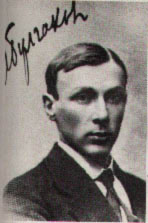 Mikhail Bulgakov was born in Kiev, Ukraine, the eldest son of a theology professor at the Kiev Theological Academy. He attended First Kiev High School (1900-09) and studied then medicine at Kiev University (1909-16). From 1916 to 1918 he served as a doctor in front-line and district hospitals. These experiences he described in notes of a young doctor, 'Zapiski yunogo vracha' (1925-26). Mikhail Bulgakov was born in Kiev, Ukraine, the eldest son of a theology professor at the Kiev Theological Academy. He attended First Kiev High School (1900-09) and studied then medicine at Kiev University (1909-16). From 1916 to 1918 he served as a doctor in front-line and district hospitals. These experiences he described in notes of a young doctor, 'Zapiski yunogo vracha' (1925-26).
Russian journalist, playwright, novelist, and short story writer, whose major work was the Gogolesque fantasy The Master and Margarita. In the story the Devil visits Stalinist Moscow to see if he can do some good. The book is considered a major Russian novel of the 20th century. It first appeared in savagely censored form in the Soviet journal Moskva in 1966-67. The work was suppressed because Bulgakov refused to make the changes reguired by the authorities. Although Bulgakov was still making changes to the text on his death bed, the novel was completed. A first Soviet edition was published in 1966-67. The fuller text appeared in 1973 and the revised full text in 1989.
Bulgakov also used satire and fantasy in his other works, among them the short story collection Diaboliad (1925).
The naked man pushed his way to the front, tapped with his nail on the bronze bonnet and said:
"Here, comrades, we have a remarkable character. A notorious harlot of the first half of the 19th century..."
The lady with the stomach turned purple, took her young daughter by the hand and quickly drew her away.
(from 'The Fire of the Khans')
In 1918-19 Bulgakov worked as a doctor in Kiev, and witnessed the German occupation and then the occupation by the Red Army. During these war years he suffered from a morphine addiction, but was helped by his first wife to win the addiction. In 1920 Bulgakov abandoned medicine in favor of a career as a writer. He organized in Vladikavkaz, Caucasus, a 'sub-department of the arts', wrote stories for newspapers and moved to Moscow in 1921. There he worked for the literary department of the People's Commissariat of Education, writing as a journalist for various groups and papers. His largely autobiographical novel BELAYA GVARDIYA (1925, full text 1966, The White Guard) was an account of the turbulent years between 1914 and 1921 as reflected in the lives of a White family in the Ukraine. Two parts of the work was published in the journal Rossiya, whch was closed before the third part could appear.
From 1925 Bulgakov was associated with the Moscow Arts Theatre. He wrote and staged many plays, which enjoyed great popularity. Bulgakov's criticism of the Soviet system was not swallowed by the authorities. The Heart of the Dog (written in 1925), a satire on Soviet life in the guise of science fiction, was condemned unpublishable. In the story 'Pokhozhdenia Chichikova' the protaginist of Gogol's Dead Souls was dropped in the middle of the Soviet Russia's New Economic Policy period of 1921-27. 'Diaboliad' (1925) portrayed a poor clerk in a gigantic bureaucracy, where he loses his identity and life. In 1928 Bulgakov had three plays running in three Moscow theatres, Zoya's Apartment, The Crimson Island, and The Days of the Turbins, dramatized from his novel The White Guard. It brought the author overnight success and became 'a new Seagull' for the new generation, although it also received hostile reviews for the sympathetic portrayal of White officers. Paradoxically, The White Guard was one of Stalin's favorite plays. It was banned in 1929, reinstated in 1932 but published only in 1955.
By 1930s Bulgakov's works were published rarely or not at all - Zoya's Apartment (1926), a play set in an atelier-bordello, was banned, as The Crimson Island (1928). Flight (1928), dealing with White fugitives leaving Russia, was banned before its premiere. In 1929 he wrote to Maxim Gorky: "All my plays have been banned; not a line of mine is being printed anywhere; I have no work ready, and not a kopeck of royalties is coming in from any source; not a single institution, not a single individual will reply to my applications..."
After writing a letter to Soviet government, requesting permission to emigrate, Bulgakov received a personal telephone call from Stalin and was employed as an assistant producer with the Moscow Arts Theatre. He adapted classics for the stage and during the late 1930s he was librettist and consultant at Bolshoi Theatre. However, Stalin's favour protected Bulgakov only from arrests and executions, but his writings remained unpublished. In Black Snow, a Theatrical Novel, Bulgakov described his love-hate relationship and took a revenge on Stanislavsky for the failure of his play A Cabal of Hypocrites, produced under the title Moličre. In one scene Louis XIV, the Sun King, says: "Then hear this: my author is oppressed. He is frightened. I will show kindness to anyone who forewarns me of whatever danger imperils him... The ban is lifted. You may stage Tartuffe." The Last Days was performed first in 1943 under the title Pushkin.
Bulgakov was married three times: with Tatiana Nikolaevna Lappa (1913), Liubov Evgenevna Belozerskaia (1924), and Elena Sergeevna Shilovskaya (1932), who gave invaluable support to the author when he wrote The Master and Margarita and had his fits of paranoia. Bulgakov was writing Black Snow, his theatre novel, when he died in Moskow on March 10, 1940. It took until 1980s before all Bulgakov's works could be published in Russia. Bulgakov was considered decades an outsider and the most "un-Soviet" writer. Supernatural and occult attracted him, and he used sudden cuts into the fantastic and mockery. Although he was subjected to a number of restrictions as a writer, he survived attacks from the officials, when others were imprisoned and perished in the 'Gulag Archipelago'.
Bulychev K.
Bulychev, Kir. Pen name of Ivan Vsevolodovich Mozheiko, born on 18 October 1934 in Moscow. He graduated from the Moscow Teachers Training Institute of Foreign Languages in 1957. He then worked as a translator and correspondent in Burma from the Novosti Press Agency and the magazine Vokruz Sveta. In 1962 he finished graduate work at the USSR Institute of Oriental Studies. In 1981 he completed his doctural dissertation on "The Buddhist Sangha and the State in Burma".
A doctor of historial sciences, a winner of the State Prize of the USSR, and a member of the Geographical Society of the USSR, Bulychev started writing science fiction in 1965. Many of his works have been turned into live-action and animated films, and he was presented with prestigious Russian science fiction Aelita award in 1997.
His favorite works of science fiction are "Professor Doyle's Head" by A. Beliayev, "Plutonia" by Nikolai Orpuchev, and "Lost World" by Arthur Conan-Doyle. He is married to the artist Kipa Alekseevna Soshinskaya, who has illustrated many of his books. He is alive and well and living in Moscow.
Bunin I.A.
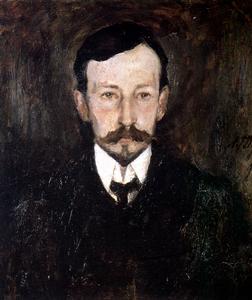 Ivan Alexeyevich Bunin (1870 - 1935) Ivan Alexeyevich Bunin (1870 - 1935)
Russian poet, short story writer, novelist who wrote of the decay of the Russian nobility and of peasant life. Bunin was awarded the Nobel Prize for literature in 1933. He is considered one of the most important figures in Russian literature before the Revolution of 1917. Bunin gained fame chiefly for his prose works, although he wrote poetry throughout his creative life.
Ivan Bunin was born on his parents' estate near the village of Voronezh, central Russia. His father came from a long line of landed gentry - serf owners until emancipation. Bunin's grandfather was a prosperous landowner, who started to spent his property after the death of his young wife. What little was left, Bunin's father drank and played at card tables. By the turn of the century the family's fortune was nearly exhausted. In early childhood Bunin witnessed the increasing impoverishment of his family, who were ultimately completely ruined financially. Much of his childhood Bunin spent in the family estate in Oryol province, and became familiar with the life of the peasanrs. In 1881 he entered the public school in Yelets, but after five years he was forced to return home. His elder brother, who had studied at an university and had also sat in prison for political reasons, encouraged him to write and read Russian classics, Pushkin, Gogol, Lermontov, and others.
At the age of seventeen Bunin made his debut as a poet, when his poem appeared in a magazine in St. Petersburg. He continued to write poems and published in 1891 his first story, 'Derevenskiy eskiz' (Country Sketch) in N.K. Mikhailovsky's journal Russkoye bogatstvo. In 1889 he followed his brother to Kharkov, where he became a local government clerk. Bunin then took a job as an assistant editor of the newspaper Orlovskiy Vestnik, and worked as a librarian, and district-court statistician at Poltava. Bunin wrote short stories for various newspapers, and started a correspondence with Anton Chechov, becoming a close friend with him. Bunin was also loosely connected with Gorky's Znanie group. In 1894 Bunin had met Leo Tolstoy, whose works he admired, but he found impossible to follow the author's moral and sociopolitical ideas. In 1899 Bunin met Maxim Gorky, and dedicated his collection of poetry, Listopad (1901), for him.
From 1895 Bunin divided his time between St. Petersburg and Moscow. He traveled much, married in 1898 the daughter of an Greek revolutionary. By the turn of the century, Bunin had published over 100 poems. He gained fame with such stories as 'On the Farm,' 'The News From Home,' 'To the Edge of The World,' 'Antonov Apples', and 'The Gentleman from San Francisco' (1915), which depicts an American millionaire who cares only about making money. He dies in a luxury Italian hotel and is shipped home in the hold of a luxury liner. Several tales focused on the life of peasants and landowners, but after the revolution of 1905 Bunin's peasant themes became darker in tone. The author, who knew village life more closely than did the urban intellectuals, considered the folk ignorant, violent, and totally unfit to take a hand in government. Later he wrote about the Bolsheviks in his notebook Cursed Days: A Diary of Revolution: "What a terrible gallery of convicts!"
As a translator Bunin was highly regarded. He published in 1898 a translation of Henry Wadsworth Longfellow's The Song of Hiawatha, for which he was awarded by the Russian Academy of Science the Pushkin Prize in 1903. Among Bunin's other translations were Lord Byron's Manfred and Cain, Tennyson's Lady Godiva, and works from Alfred de Musset, and François Coppée. In 1909 the Academy elected Bunin one of its twelve members.
After Bunin's first marriage ended, he married again in 1907. When he was 40, Bunin published his first full-length work, Derevnya (1910, The Village), which was composed of brief episodes in the Russian provinces at the time of the Revolution of 1905. The story, set in the author's birthplace, was about two peasant brothers - one a cruel drunk, the other a gentler, more sympathetic character. The Village made his famous in Russia. Bunin's realistic portrayal of village life destroyed the idealized picture of unspoiled peasants, and arose much controversy with its "characters sunk so far below the average of intelligence as to be scarcely human." Two years later appeared SUKHODOL (Dry Valley), a lament for the passing of gentry life and a veiled biography of Bunin's family.
In exile Bunin wrote only of Russia. Bunin's name had been mentioned several times in Nobel Prize speculations and the whole process had became a burden for the author. According to a story, Bunin was stopped in Berlin on his way to Stockholm to receive the award. Nobel winner or not, he was arrested by the Gestapo, interrogated - the excuse was jewel smuggling - and he had to drink a dose of castor oil. During World War II Bunin, who was a strong opponent of Nazism, remained in France and it is said he sheltered a Jew in his house at Grasse throughout the Occupation. Bunin died of a heart attack in a Paris attic flat on November 8, 1953. His projected trilogy, which began with Zhizn Arsenieva (1927-33, The Life of Arsenyev) was characterized by the Russian writer Konstantin Paustovski "neither a short novel, nor a novel, nor a long short story, but is of a genre yet unknown." The second part, Lika, was published in 1939. Bunin modified his views of the Soviet Union after World War II, and a five-volume selection of his work appeared in his native country.
Burlyuk D.D.
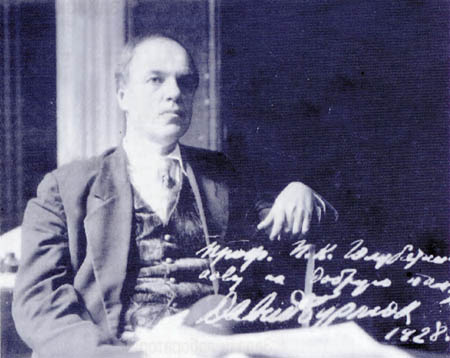 Burlyuk David Davidovich Burlyuk David Davidovich
1882, the Semirotovshina khutor of Kharkov province. - 1967, Long Island, USA
The poet, artist, one of founders of the Russian futurism
He was born on July 9, in the Semirotovshina khutor of the Kharkov province in the Cossack family. His father sold farm and worked as a manager in
different estates, therefore the family frequently moved from place to place, and Burlyuk studied in gymnasias of different cities: Sumy, Tambov and Tver.
Since he was ten years old Burlyuk had been interested in painting, in 1898-1899 he studied at Kazan and Odessa art schools. In 1902-1905 Burlyuk
studied painting at the Munich Royal Academy of Arts. He participated in art exhibitions in Russia and abroad.
On his return to Russia, Burlyuk became close with the left artists and participated in art exhibitions. In 1909-1910 Burlyuk united the young poets and artists who repudiated aesthetics of symbolism. They searched for new ways to develop poetry and art. Later they will name themselves the futurists. About that time Burlyuk met Mayakovsky (since 1910 Burlyuk, as well as Mayakovsky, studied in the Moscow Art School) who named him "his real teacher".
Burlyuk's energy, his organizing abilities and initiative helped to establish a new poetic school. In the collection "Slap in the Face to Public Taste" (1912) he called to reject classical traditions (he proposed
"to throw Pushkin, Dostoevsky and Tolstoy from the Steamship of the Modernity"). Furious attacks on the collection followed, thus only increased interest to the new school.
In the same years Burlyuk lectured on the principles of
futurism in poetry and cubism in painting. In 1914 Mayakovsky and Burlyuk were expelled from the art school "because of participation in public debates".
Burljuk believed: "True work of art can be compared to the accumulator from which energy of electric suggestions proceeds. Each work is marked, as
in the theatrical act, with the determined hours for admiration and viewing. Many works contain stocks of aesthete - energy for long period".
Burlyuk's pictures and drawings are scattered all over the world in museums and private collections. "Father of the Russian futurism", Burljuk actively participated in performances of futurists and was their theorist, poet, artist and critic.
V.V.Mayakovsky recollected: "My real teacher, Burlyuk made me a poet... He gave me 50 kopecks daily. So I could write without starving ".
During the First World War Burlyuk was not drafted to the front, since he did not have one eye. He lived in Moscow, published poetry, cooperated in
newspapers and painted pictures.
During 1918-1920 he traveled over Ural, Siberia and the Far East.
In 1920 Burlyuk immigrated to Japan where he lived two years, studying culture of the East and continued to paint pictures.
In 1922 Burlyuk settled in the USA. Together with his wife Burlyuk published collections, brochures and magazines, which were distributed through friends
mainly in the USSR. His memoirs about futurism and V.V.Mayakovsky have a great value. He continued to write and paint pictures and published magazine "Color and Rhyme ".
In 1956 Burlyuk visited the Soviet Union.
He died on January 15, 1967 in USA.
Chernyonok M. Ya.
 Chernyonok, Mikhail Yakovlevich. Destined to become the "Siberian Simenon", one of the leading writers of detective fiction in the Soviet Union, Mikhail Chernyonok was born in 1931 in Siberia. He studied at and graduated from the Novosibirsk River Transport Technicum, after which he worked on ships up and down the Ob River for nearly twenty years as a navigator, then an inspector responsible for monitoring safety of ships and investigating accidents.. Chernyonok, Mikhail Yakovlevich. Destined to become the "Siberian Simenon", one of the leading writers of detective fiction in the Soviet Union, Mikhail Chernyonok was born in 1931 in Siberia. He studied at and graduated from the Novosibirsk River Transport Technicum, after which he worked on ships up and down the Ob River for nearly twenty years as a navigator, then an inspector responsible for monitoring safety of ships and investigating accidents..
He began his writing career not with prose, but with reporting and observations, which were published in the oblast newspaper Krasnoye Znamye.
Needing help in caring for his two young children, Chernyonok moved to Tolguchin, east of Novosibirsk on the Inya River, where his parents and older sister were living. There he quickly found a job on the raion newspaper. And it was here, too, that he began his association with a life of crime, becoming a people's court chairman and penning his first documentary detective story Sledskviem Ustavleno ("Proven by Investigation"). This story, serialized in the local newspaper, was an immediate hit. The literary journal Sibirskiye Ogni reprinted the tale and hired Chernyonok for its staff.
Chernyonok continued to produce other works ("Kukherterin Diamonds" and "Under Mysterious Circumstances"), but still money was tight for him, his wife, and four children. Besides writing, Chernyonok helped out in the family garden, the produce of which helped augment the family income. But things improved vastly with the publication of Stavka Na Proigrysh ("Losing Bet"), published in Siberskiye Ogni in 1979. The proceeds from this novel of fraud, illegal speculation, icon forging and murder enabled Chernyonok to buy himself a Zhiguli car, which we was still driving as late as 2001. Also, he was made a member of the Writers' Union Artistic Council for Detective and Science Fiction Literature.
Chernyonok's style is in the tradition of the classic, "old-fashioned" detective or mystery fiction, focusing on intellectual challenges and puzzles and making sure that Soviet justice always prevails. As Chernyonok himself expresses it:
I want crime to be followed by punishment, so that people don't lose their faith in the triumph of justice, in the supremacy of moral laws over immorality.
Chernyonok is displeased with the direction Russian detective fiction has taken in post-Soviet times. He feels that there has been an extinguishing of energy, feeling, and emotion. Further, he says:
The majority of contemporary detective stories seem to me mechanical - although nowadays it's hard to find this ancient genre in its pure form. Basically, they write action books in which mountains of corpses pile up; but the mystery, and the unraveling of the mystery--that which makes the readers think, which impels them to creative thought - is absent.
Chernyonok has written a total of 21 novels, including Fartoviye Babocki ("Lucky Butterflies"), Devushka Ishchet Sponsora ("Girl in Search of a Sponsor"), Killeri Ne Stareiut ("Killers Don't Grow Old"), and Taina Starogo Kolodtsa ("Secret of the Old Well"). A ten-volume collection of his works was issued in 2000 by Mangazeya Publishers. And now, Chernyonok has decided to put his pen to rest and spend his time fishing and catching up on his reading, particularly Chekhov and another Siberian author who sometimes wrote about criminals--Vasily Shukshin.
Although Chernyonok has enjoyed a good life because of crime fiction, he notes:
Oh, if only you knew how happy I'd be if life no longer provided a basis for the creation of detective fiction.
Dudintsev V. D.
 Dudintsev, Vladimir Dmitrievich Born on 29 July 1918 in Kupyansk, Kharkov oblast, Ukraine. Graduated from the Moscow Law Institute. Fought as a soldier in World War II; was wounded and demobilized and served out the rest of the war working in the military prosecutor's office in Siberia. His first work was published in 1933. In 1988, Dudintsev had this to say about his early work:
"They had a half-polished quality. They all were created without the moral weight of a writer's soul, like almost all of Stalin-era literature." Dudintsev, Vladimir Dmitrievich Born on 29 July 1918 in Kupyansk, Kharkov oblast, Ukraine. Graduated from the Moscow Law Institute. Fought as a soldier in World War II; was wounded and demobilized and served out the rest of the war working in the military prosecutor's office in Siberia. His first work was published in 1933. In 1988, Dudintsev had this to say about his early work:
"They had a half-polished quality. They all were created without the moral weight of a writer's soul, like almost all of Stalin-era literature."
It was only when he ran into geniune suffering that his work took wing. "The experience of life and practical work provided the necessary massage which led to the development of my soul", he said.
His 1956 novel "Not By Bread Alone" caused a sensation, unleashing both wild enthusiasm from readers and harsh criticism from officials, including Nikita Khrushchev himself. It tells the story of an inventor who struggles against the bureaucracy and self-servers in an attempt to aid the Soviet economy. Many Western media outlets trumpeted the negative aspects portrayed in the book. This dismayed Dudintsev, making him feel "as though my novel, a peaceable ship in foreign waters, had been seized by pirates and was flying the skull and crossbones." He did not deny portraying negative aspects of Soviet society, but he said:
We speak boldy and honestly about our deficiencies and our difficulties, because they are the birth pangs of a new world in which there is no injustice, a world the principals of which are being confirmed and marching to victory in my country."
The idea for the novel formed in his mind during the war. To a meeting of the Union of Writers he recalled:
"How I was lying in a trench and above me flew 40 of our planes and two German planes, how the Germans, one after another, shot down our pilots, and how the question occured to me: how was such a slaughter possible given the great numerical superiority of Soviet planes? And I was always searching for an answer, collecting material for the novel."
Nonetheless, he was broadly condemned at a rowdy meeting of the Union of Writers, at which Dudintsev himself fainted. For a long time afterward, he was shunned by almost all. He survived by loans and anonymous gifts. Scientists who had opposed Lysenko and were themselves shunned, made friends with Dudintsev.
He authored one work of science fiction, "A New Year's Fairy Tale" (1957). "White Clothes" (Beliye Odezhdi) was published in 1987, at the height of perestroika. In this latter work, the hero, Dezhkin, is, according to Dudintsev, "an agent of good sent into the camp of evil with the assignment of defeating them." His fight is clandestine, unlike that of Lopatkin, the hero of "Not By Bread Alone", who fought openly. The author explained the difference this way:
Years had passed between the writing of these two novels. And I understood that for the Lopatkins to win, they must become Dezhkins. That is, in a definite social situation, those people pursuing a socially significant goal require not only courage, but also the ability to correctly and sensibly carry on the battle. If Dezhkin spoke out publically in defense of the scientific discovery, the repressive machine, having gathered momentum, would simply smash him. If I had portrayed such a hero as overcoming the system, his victory would appear false and programmed by the will of the writer's mind, not dictated by genuine reality.
"White Clothes" also contains the idea of "parachutists", described by Dudintsev this way:
People thrown from the destroyed world into the conditions of Soviet reality. Entrepreneurs and egoists in their souls, they looked around and saw that here, too, it was possible to live if they accepted the new "rules of the game". And hiding their true nature they began to shout along with everyone else, "Long live the world revolution!" Masking their insincerity, they shouted louder and more expressively than others so that they quickly rose to the top, occupied leading posts and began to struggle for their own personal, comfortable lifestyle.
According to Dudintsev, this is why gray-haired academics supported Lysenko and gave the leadership the needed "scientific" conclusions; and this is why, says Dudintsev, "ministers built not what was needed by the people, but that which did not contradict their personal interests." To Dudintsev it is obvious that the ecological disasters around the Aral Sea, the Volga, and Lake Ladoga are the work of the "parachutists".
In the words of the author, "The fight against evil is inevitably accompanied with great losses. With my book I wanted to call people to be more energetic."
He died on 23 July 1998.
Ehrenburg I.G.
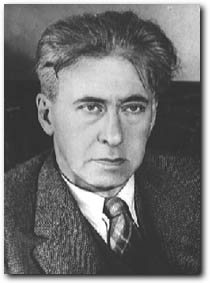 Ilya Grigorievich Ehrenburg (1891 - 1967) Ilya Grigorievich Ehrenburg (1891 - 1967)
Prolific Russian writer and journalist who played as a link between Soviet and Western intellectuals before and after the Cold War. From the 1930s to the 1960s Ehrenburg was one of the most visible Soviet figures, who spent the second half of his life as a respected messenger of the Soviet state. Without being a member of the Communist Party, he moved freely in foreign countries and held important cultural positions. Ehrenburg published poetry, short stories, travel books, essays, and several novels, which combined patriotism with cosmopolitanism. Ehrenburg adapted his writings to Soviet political demands and avoided conflicts, that destroyed many other writers and artist.
"How can the folk in tropics dwelling,
Where roses in December grow
Where people hardly know the spelling
Of the words like 'blizzard' and 'ice floe,'
Where even azure, even pleasant,
Above the sails a silken sky,
Since time primordial to the present,
The selfsame summer soothing the eye.
How can they even for a twinkling,
In a slumber, or in daydream learn,
How can they have the slightest inkling
Of what it means for spring to yearn,
Or how in freezing winter vainly,
When dour despondency holds sway
To wait and wait until ungainly
And massive ice gets under way."
Ilya Ehrenburg was born in Kiev, Ukraine, in a middle-class Jewish family. When he was five his parents moved to Moscow, where his father operated a brewery. In his memoirs, People, Years, Life (1960-65), Ehrenburg tells that he was pampered in his childhood and it was a mere chance that he did not become a juvenile delinquent. He attended First Moscow gymnasium, but he was arrested in his early teens for revolutionary activities and excluded from the 6th grade. Among his close friends during these years was Nikolai Bukharin, the Russian revolutionary who was shot in 1938 during Stalin's terror. Ehrengburg was imprisoned for five months. After release he went to Poltava where his uncle lived. In 1908 Ehrenburg immigrated to Paris to avoid trial for revolutionary agitation. He spent much time in Left Bank cafés, met V.I. Lenin, who wanted to hear news from Moscow, and started to write poetry under the influence of Verlaine, Francis Jammes, and Konstantin Dmitrievich Balmont. His first collection of verse appeared in 1910. In France Ehrenburg's become friends with such legendary figures as Picasso, Apollinaire, Ferdinand Léger, who showed him drawings made in the trenches of WW I, and Modigliani.
During the war Ehrenburg was a war correspondent at the front. His anti-communist poem, 'Prayer for Russia', appeared in 1917. After returning to his home country, he lived in Kiev, where he worked as a teacher, Kharkov, Kerch, Feodossia, and Moscow. He also traveled to Georgia with Osip Mandel'shtam. Ehrenburg's The Stormy Life and Lazar Roitschwantz (1928) was a version of Jaroslav Ha ek's The Good Soldier of Svejk and Voltaire's Candide. The hero is a Jewish ghetto tailor who escapes from Russian anti-Semitism and whose adventures take him through a half a dozen countries and several prison. Lazar works as a rabbit breeder in Tula, rabbi in Frankfurt, police informer for Scotland Yard, film actor in Berlin, a starving pioneer in Palestine, and painter in Paris. Ehrenburg's satirizes among others the phoney artists of the Quartier Latin and the speculators in the Weimar Republic. He also viewed skeptically the era of the New Economic Policy in the Soviet Union. Zhizn i gibel Nikolaya Kurbova (1923) was about the downfall of a Soviet secret policeman and The Love of Jeanne Ney (1924) depicted a love affair between a Russian Communist and a French woman. Out of Chaos (1934) was an apologia for Socialist Realism, and in Ne perevodya dykhania (1935) the writer accepted the official Communist policy in economic and political matters.
From 1925 to 1945 Ehrenburg lived in Paris, working as a foreign editor of Soviet newspapers. At intervals he returned to the USSR. With the American director Lewis Milestone Ehrenburg composed in 1933 a screenplay for a film, based on one of his stories, but the film was never realized. When the International Writers Congress was held in Moscow in 1934, he opposed Gorky, who advocated the doctrine of Socialist realism.
During the Spanish Civil War Ehrenburg wrote for the Soviet newspaper Izvestiia. He met Ernest Hemingway in Madrid - according to Ehrenburg he was at that time young and thin. In 1941 he returned to Moscow and listened Stalin's radio speech after the Nazis had attacked the Soviet Union. Stalin was nervous, he drank water and called his listeners "brothers, sisters, friends". Ehrenburg worked as a war correspondent. His ambitious novel, The Fall of Paris (1941-42), depicted the decline of capitalist France. Ehrenburg's reputation made him a target of Goebbel's propaganda. As late as January 1945 Hitler claimed that Stalin's flunkey Ilya Ehrenburg manifests, that the people of Germany must be destroyed.
The Storm (1949) and The Ninth Wave (1951-52) reflected the atmosphere of the Cold War - Stalin himself defended against critics The Storm, in which a Soviet citizen falls in love with a French woman. In The Thaw (1954-56) Ehrenburg tested the boundaries of free speech in the relatively less rigid but short period starting in the mid-1950s. Ehrenburg's connections to the top of the Soviet political hierarchy were exceptionally good and just before Stalin's death rumors spread in Moscow that the writer Ilya Ehrenburg had been picked to deliver a petition to Stalin begging him to let Russia's Jews emigrate to Siberia. Behind the scenes, Stalin planned to launch another purge and use Jewish doctors and their absurdly invented "crimes" as an alibi.
Ehrenburg received the Stalin Price in 1942 and 1948, and the International Lenin Peace Prize in 1952. In 1946 he visited Canada and the United States, where John Steinbeck said to him, "if you spit in the mouth of a lion, it becomes tame." When newspapers and magazines stopped printing his writings in 1949, Ehrenburg sent a short letter to Stalin. The ban was lifted, and he continued his travels in different parts of the world. In China he was astonished by the discipline of the people. He met Pablo Neruda in 1954 in Chile, and in Japan he felt that Kipling's famous lines, "Oh, East is East, and West is West, and never the twain shall meet," are not only wrong but dangerous. Ehrenburg was the Vice President of World Peace Council (1950-67) and a Deputy of the Supreme Soviet of the USSR from 1950. Ehrenburg died in Moscow on August 31, 1967. The last years of his life Ehrenburg devoted to his memoirs, People, Years, Life, which portrayed a number of famous writers and artists he had known. He also campaigned to have published works by writers who had earlier been politically condemned by the regime.
Esenin S.A.
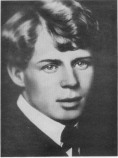 Esenin Sergei Alexandrovich, Russian poet, born 3 October 1895 in the village of Konstantinovo in the Ryazan province. In 1899, he went to live with his maternal grandparents. When he was three and a half, his uncles put him on a horse with no saddle and set it galloping off. Young Sergei held on for dear life. He learned to swim in a similar fashion. They took him out in a boat, stripped him naked, and tossed him into the water. When he was eight, he would act as hunting dog for an uncle, swimming in the lake after ducks which had been shot. He began writing poetry when he was nine. Esenin Sergei Alexandrovich, Russian poet, born 3 October 1895 in the village of Konstantinovo in the Ryazan province. In 1899, he went to live with his maternal grandparents. When he was three and a half, his uncles put him on a horse with no saddle and set it galloping off. Young Sergei held on for dear life. He learned to swim in a similar fashion. They took him out in a boat, stripped him naked, and tossed him into the water. When he was eight, he would act as hunting dog for an uncle, swimming in the lake after ducks which had been shot. He began writing poetry when he was nine.
He finished primary school in 1909. Hoping to turn Sergei into a rural schoolteacher, his family sent him to a teachers seminary in the village of Spas-Klepki. Reportedly, he loved church servies and singing in the choir. And it was here that he got serious about poetry. Following the advice of a teacher, he set off for Moscow in March 1913 to pursue poetry.
In 1914 he married Anna Izryadnova, and they had a son in January of 1915. Izryanova describes Esenin as arrogant, proud, ambitious, and possessive. Soon, he abandoned the family and Moscow for Petrograd, which he saw as the real literary capital.
He was so nervous that he broke into a sweat when he first met Alexander Blok on 9 March 1915. Blok gave Esenin encouragement and help, calling him a "naturally gifted peasant poet". Esenin, in turn claims that he learned lyricism from Blok and Kliuev, and from Bely.
Esenin's first collection of poems, Radunitsa, was published in February 1916. His fame rose quickly, and he even read his poetry in the presence of the empress and her daughters, for which he received a gold watch and chain. Esenin's sympathies, however, were with the revolutionaries and he warmly greeted both the February and October revolutions. Somewhere around this time Esenin married a second time, to Zinaida Raikh.
In 1918, three more collections of his work were published: "The Infant Jesus", "Transfiguration", and "Rural Breviary". In March 1918, he moved to Moscow, and in May his daughter was born.
He considered 1919 the best time of his life. He was given control of a bookstore, a publishing concern, and The Stall of Pegasus, a bohemian literary cafe. At this time he formed the Imaginist literary movement wtih poets Anatoly Mariengof, Vadim Ahershenevich, and Riurik Ivnev. They proclaimed the primacy of "the image per se" and spoke of the image "devouring" meaning. Metaphors were referred to as "minor images". Esenin said:
"Just realize what a great thing Imaginism is! Words have become used up, like old coins, they have lost their primordial poetic power. We cannot create new words. Neologism and trans-sense language are nonsense. But we have found a means to revive dead words, expressing them in dazzling poetic images. This is what we Imaginists have created. We are the inventors of the new."
In 1918 or 1919, Esenin applied to join the Communist Party, but he was considered too individual and "alien to any and all discipline". In 1920 two more collections were published, "Treriadnitsa" and "Triptich". The second son is born in 1920. The collection "Hooligan's Confession" is published in 1921.
Despite his intensely social life, slowly, a sense of alienation and lonliness grew in him. In 1921 he notes, "Generally speaking, a lyric poet should not live long."
In November 1921, he met American dancer Isadora Duncan, 17 years his senior. They were married on 2 May 1922, and 10 May 1922, they set off for a tour of Europe and America. Traveling was difficult for Esenin, however, and the next month in Berlin, he suffered a nervous breakdown. He recovered, and after stopping off in Paris and Venice, he and Duncan set off for America. They arrived in New York on 1 October 1922.
They had a stormy and difficult time in the USA, which was not helped by Esenin's experience with bootleg liquor. He hated New York, saying it was so abominable as to invite suicide. He feared losing his spiritual sense of art. As his mental and physical health declined, he and Duncan returned to Paris. His struggles with drinking continued and one night, he smashed all the mirrors and woodwork in his room at the Crillon Hotel. Influential friends succeeded in freeing Esenin from the police, and Duncan moved him to a mental hospital. By 5 August 1923, they were back in Moscow. By the end of October, their relationship was over.
Esenin was bored and deeply depressed, suffering from alcoholism and hallucinations. Unable to find a spiritual anchor, he seemed to some as helpless as a two-year-old child. Although his marriage to Duncan was never officially dissolved, he married again to Galina Benislavskaya. His drinking continued. The only time he was sober was when he wrote. But he felt his writing skills waning. He said that he was beginning to write verse, not poetry.
In 1923 he published "Stikhi skandalista" (Verse of a Creator of Scandals), and in 1924, the "Tavern Moscow" collection appears. In 1925 he published "Song of the Great Campaign" and several collections, including "Soviet Rus" and "Land of the Soviets."
In early 1925 he went to Baku where he wrote his "Persian motifs" and "Anna Snegina". In June, he left Benislavskaya, sold the rights to his collected works to the State Publishing House, and married Sofia Tolstaya, Leo Tolstoy's granddaughter. A persecution mania grew in him as did his hallucinations, and he finally entered a clinic in November. He suddenly left the clinic on 21 December, resumed drinking, and set off for Leningrad. He took a room in the Hotel d'Angletrre, and hung himself from the water pipes in the icon corner on 28 December. He left a suicide poem written in his own blood:
"Good-bye, my friend, good-bye.
My dear one, you are in my breast.
This predestined parting
Promises a meeting ahead.
Good-bye, my friend, without hand, without word
No sorrow and no sadness in the brow.
In this life, dying is nothing new,
But living, of course, isn't novel either."
According to Anatoly Mariengof:
If Sergei decided to leave us, he must have somehow come to doubt his own creative powers. There could not be any other reason for his death, just as he had no other aim in life save his poems.
Fadeyev A.A.
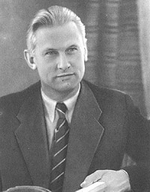 Alexander Alexandrovich Fadeyev, Russian writer, born 24 December 1901 in Krimy on Volga, east of Tver. Father was a village teacher, his mother was a doctor's assistant. Family moved to Vilnius, Ufa, then to the Far East region of Ussuri in 1908. He went to the village school in Sarovka, near Iman close to the Manchurian border. In 1912 the family moved to Chuguevka, further south in the same region. In autumn of 1912 he entered the Commercial Academy in Vladivostok. In 1918, during the Japanese occupation of the region, he joined the Communist Party and became active in the Bolshevik underground. In the spring of 1919, he left the academy without taking his final exams and joined the partisans east of Vladivostok. He saw action at Khabarovsk and Spassk and was wounded. He then joined the Red Army. In spring 1921, he went to Moscow as a delegate to the 10th All-Russian Party Congress. Later, he took part in the suppression of the Kronstadt rebellion and was again wounded. He was demobilized and entered the Academy of Mines in Moscow. But in 1924 he left the Academy and went south to Kradnodar and Rostov-on-Don for Party and journalistic work, mainly for the Rostov paper "Soviet South". He also helped establish the literary journal Lava. In 1926 he returned to Moscow and continued his political work for the Writers' Association. In 1937 he visited Spain during the Civil War. During the Great Patriotic War (World War II), he wrote reports and sketches from the front for Pravda and Izvestiya. At the end of the war he resumed political activities, visiting Britain in 1947, Iceland and Poland in 1949, and Czechoslovakia and Austria in 1951. He won two Orders of Lenin, was one of the leaders of RAPP (Russian Association of Proletarian Writers), and served on the editorial boards of several literary journals. In 1934 he was elected to the Presidium of the Union of Soviet Writers, and was General Secretary of the organization from 1946 to 1954. In 1939 he became a member of the Party's Central Committee. Alexander Alexandrovich Fadeyev, Russian writer, born 24 December 1901 in Krimy on Volga, east of Tver. Father was a village teacher, his mother was a doctor's assistant. Family moved to Vilnius, Ufa, then to the Far East region of Ussuri in 1908. He went to the village school in Sarovka, near Iman close to the Manchurian border. In 1912 the family moved to Chuguevka, further south in the same region. In autumn of 1912 he entered the Commercial Academy in Vladivostok. In 1918, during the Japanese occupation of the region, he joined the Communist Party and became active in the Bolshevik underground. In the spring of 1919, he left the academy without taking his final exams and joined the partisans east of Vladivostok. He saw action at Khabarovsk and Spassk and was wounded. He then joined the Red Army. In spring 1921, he went to Moscow as a delegate to the 10th All-Russian Party Congress. Later, he took part in the suppression of the Kronstadt rebellion and was again wounded. He was demobilized and entered the Academy of Mines in Moscow. But in 1924 he left the Academy and went south to Kradnodar and Rostov-on-Don for Party and journalistic work, mainly for the Rostov paper "Soviet South". He also helped establish the literary journal Lava. In 1926 he returned to Moscow and continued his political work for the Writers' Association. In 1937 he visited Spain during the Civil War. During the Great Patriotic War (World War II), he wrote reports and sketches from the front for Pravda and Izvestiya. At the end of the war he resumed political activities, visiting Britain in 1947, Iceland and Poland in 1949, and Czechoslovakia and Austria in 1951. He won two Orders of Lenin, was one of the leaders of RAPP (Russian Association of Proletarian Writers), and served on the editorial boards of several literary journals. In 1934 he was elected to the Presidium of the Union of Soviet Writers, and was General Secretary of the organization from 1946 to 1954. In 1939 he became a member of the Party's Central Committee.
His first published work, Against the Current appeared in Molodaya Gvariya in 1923. In 1934 this piece was revised and renamed The Birth of the Amgunsky Regiment. It is a story of partisans and Red Army troops in the Far East in 1920. The Flood (1924) is set in the taiga between the February and October Revolutions of 1917. The Rout (1927) is based on the author's own experiences with partisans in 1919 when they were forced to retreat deep into the taiga. He authored a manifesto piece, The Highway of Proletarian Literature in 1928. Parts of this is second novel, The Last of the Udege, an attempt at a broad treatment of the Civil War in the Far East, appeared between 1929 and 1940, but it was never completed. The tale Earthquake appeared in 1939 and his war sketches, Leningrad During the Siege came out in 1944. His third novel, The Young Guard (1945) was based on the heroic exploits of young Communist underground workers in the Donbass town of Krasnodon during the Nazi occupation, and it won Fadeev a Stalin Prize. Another novel, Black Mettallurgy, intended to show the triumphs of socialist labor, also never reached completion.
In his last years he suffered from kidney disorder, neuritis, alcoholism, and depression. During a period of sobriety on 13 May 1956, he committed suicide. His bitter suicide note, clearly revealing his disallusionment with the Party and Stalin, was "arrested" by the KGB at the time of his death and was not released until 34 years later, in the era of perestroika and glasnost. In the note, he wrote:
"It is impossible for me to live any further since the art to which I have given my life has been destroyed by the self-confident, ignorant leadership of the Party and can no longer be corrected. The best cadres of literature--in number far more than the tsarist satraps could even dream--have been physically exterminated or have died with the criminal connivance of those in power.
Literature, the highest fruit of the new order, has been debased, persecuted, and destroyed. The complacency of the nouveau riche to the great teachings of Lenin--even while they swear allegiance to these teachings--has led to my complete distrust of them. From them we can expect worse than from Stalin--he at least was educated, these new ones are ignoramuses.
My life as a writer loses all meaning. I leave this life with great joy, seeing it as a deliverance from a foul existence, where meanness, lies, and slander rain down on you. My last hope was to tell all this to the people who lead the government, but in the course of three years, despite my requests, they have not been able to receive me.
I ask to be buried next to my mother."
Fedin K.A.
Konstantin Alexandrovich Fedin, born 24 February (12 February, Old Style) 1892 in Saratov. His father was a merchant, running a stationary store. At a young age, in addition to attending school, Fedin began to learn the violin. In 1901, he entered the Commercial Academy. In 1905, together with his entire class, he participated in a student's strike. In 1907, he ran off to Moscow where he pawned his violin. His father, however, tracked him down and dragged him home. He made another attempt to escape--in a boat along the Volga--but this plot was foiled, too.
Rather then go to work in his father's store, Fedin continued his studies at the Commercial Academy in Kozlov. It was here that he developed a love of literature and started writing. His first story, written in 1910, was Sluchai c Vasiliem Porfirevichem ("Incident with Vasily Porfirevich"), an imitation of Gogol's Overcoat.
In 1911, he went on to study economics at the Moscow Commercial Institute. He continued writing and in 1913 his first published work, Melochi ("Trifles") appeared in the Petersburg journal New Satirycon. Upon seeing his words in print for the first time, Fedin recalls being so happy that he skipped and sang.
In 1919, Fedin moved to the town of Syzran, where he worked as editor and writer for the newspaper Syzran Communar. He didn't stay there for long, however. In the autumn of 1919 he was mobilized and sent to the Petrograd front during Yudenich's attack. He was assigned first to a calvary division, then transfered to serve as assistant editor of the paper Fighting Pravda. From 1921 to 1924, he served as editor of the magazine Books and Revolution. During this time, he continued writing articles and stories and was closely associated with the Serapion Brothers, a literary goup dedicated to the inividual freedom of the creative act. Later Soviet critics were hostile to the Serapion Brothers, and Fedin tried to distance himself from the group, saying he saw the need to break with them thanks to the influence of Maxim Gorky. Fedin wrote:
After meeting Gorky, I can't explain what was happening with me. In my soul, I recited an unending monologue. This was a feeling of liberation. It seemed that I had broken out of a narrow, almost impassable confine onto a vast open space; that now was the time to scratch away the scabs of the past, to purifiy myself; that I had won a special right to creation--of course, pure, real creation; that I would have to defend this right, but that I, of course, would defend it because my helpmate was Gorky. Yes, I mentally called him this: my helpmate and liberator.
In assessing the work of Fedin at the time, Maxim Gorky wrote:
Konstantin Fedin is a serious and intense writer, who works carefully. He is one of those who does not hurry to speak, but who knows how to speak well.
Fedin's first collection, Pustyr ("Wasteland") appeared in 1923. It included the story Sad (Orchard), the tale of an old gardener who watches sadly as the orchard he cared for and the manor house of the old owners are turned over to a Soviet orphanage and fall into neglect. In the end, the gardener sets the house and orchard on fire. This work won Fedin the first prize from the House of Writers.
In 1924, Fedin finished his masterful novel Goroda i Gody ("Cities and Years"), one of the first Soviet novels, portraying the path of the intelligentisa during the Revolution and Civil War. It was also a work of stylistic and structural novelties. In the novel, a spineless Russian intellectual, Andrei Startsov, is interred in Germany at the start of World War I. He falls in love with a German girl, Mari, who helps him in an escape attempt. He is perceptive in his observations of the cruelty and contradictions of German militarism, and back in Russia after the war, he struggles to find his place in Revolutionary society. He wants to join the new exciting world, but is frozen by his intellectual detachment and proves unable to make any contribution, to take any action. He was, in short:
...a man who, with anguish, waited for life to accept him. To his very last moment, he took not a single step, but waited for the wind to bring him to the shore he hoped to reach.
Forgetting his promises to send for Mari, Andrei drifts into another affair and gets another girl pregnant. He also helps a personal acquaintance, now a counterrevolutionary, escape Soviet justice. He has a chance to turn in this enemy of the people, but fearing that he himself would have a man's blood--even a guilty man's blood--on his hand, he fails to take action. For this betrayal of the Soviet cause, his best friend kills Andrei.
In 1926, Fedin retired to a village in the Smolensk region. There he wrote Transvaal, the story of a cruel Estonian of Boer extraction who comes to wield almost dicatorial power over the peasants of his village. Some critics disliked the story, seeing in it a defense of kulaks.
Fedin's next novel, Bratya ("Brothers"), appeared in 1928. This novel--again employing temporal displacements--is the story of musician and composer who attempts to claim an expemption from Revolutionary service in pursuit of his individual artistic expression. He argues with his brother, a Bolshevik who goes off to die in battle. In the end, the musician takes up his brother's cause and believes, therefore, that he has overcome the contradiction between art and Revolutionary activity. However, his view of art as essentially tragic, born in solitude, remains unchanged.
In 1934, Fedin was elected to the board of the Writer's Union. During World War II, he worked as a war correspondent, but also found time to produce the play Ispytaniye Chuvstv ("Test of Feelings") (1942). This play depicts a heroine, Aglaia, involved with the anti-German resistance.
Fedin returned to novels and undertook a triology consisting of Perviye Radosti ("First Joys") (1946), Neobyknovennoye Leto ("No Ordinary Summer") (1948), and Koster ("The Bonfire") (1961), offering a chronicle of Russian life between 1910 and 1941. The first of these, First Joys, is a broad, realistic novel set in Saratov on the Volga on the eve of World War I. It shows the actions of a young, budding revolutionary (Izvekov) and an older revolutionary factory worker (Ragozin), as well as various other strata of pre-revolutionary Russia. No Ordinary Summer begins in 1919 when a Russian soldier escapes from a German prisoner of war camp and makes it back to Russia, which is caught up in the Civil War. Also returning are Izvekov and Ragozin, who meet up with old friends and enemies. As Aleksei Tolstoy did in his novel Bread, here Fedin alters history somewhat to make Stalin, not Trotsky, the hero of the Battle of Tsaritsyn. The novel also features a nonpolitical writer trying to maintain his artistic freedom and express his sympathies for the suffering, no matter what side they are on. And in the third book of the trilogy, The Bonfire, a positive hero rushes to the defense of the motherland when the Nazis invade Russia.
In commenting on The Bonfire, Fedin noted that, throughout his career, he strove to not only to create characters who were, in their own way, heroes of their time, but also to protray the character of that time itself. He wrote:
My constant goal has been to find the image of the time and to include the time in the narrative on equal footing with, and even given preference over the heroes of the story.
Fedin produced some portraits of his friends and contemporaries in Pisatel, Iskusstvo, Vremya ("Writer, Art, Time") (1957). He received two Stalin Prizes, in 1948 and in 1950. He served as head of the Soviet Writers Union from 1959 to 1971 and, in this capacity, denied publication to Solzhenitsyn's Cancer Ward in 1968. From 1971 until 1977 Fedin worked on the editorial board of Novy Mir. He was married and had one daughter.
Konstantin Fedin died in Moscow on 15 July 1977.
Forsh O.A.
Olga Dmitrieva Forsh, Russian prose writer, born on 28 May 1873 in the Gunib fortress in Dagestan in the family of General D. Komarov, administrator of the Middle Dagestan district. Her mother died early, and her father married her governess. Upon the death of the general, however, her stepmother deposited Olga in a Moscow orphanage.
Forsh studied painting and drawing in Kiev and Odessa and under the direction of P. Chestyakov at the Academy of Arts. Her first publication was the story There Was A General, which appeared in the magazine Russkaya Mysl in 1908. This was followed, in the same year, by The Bear Panfamil, After The Firebird, and Pioneer.
Prior to the October Revolution, Forsh worked in Tsarskoye Selo as a drawing instructor. Soon after the Revolution, she moved to Moscow and worked in the School Reform office. The experiences of this time formed the basis for her later book Moscow Stories.
She eventually moved to Petrograd and, in 1923, began writing historical fiction. Her first work, Dressed in Stone (1925), is a tale of a 19th-century revolutionary who became a "secret prisoner", locked by the tsar in solitary confinement for 20 years. Contemporaries (1926), follows the fates of Gogol and the painter A.A. Ivanov. In the 1930s, she completed her Radishchev trilogy: Jacobin Ferment (1932), A Landed Lady of Kazan (1934), and Fateful Book (1939). The era of Paul I and the architects V. Bazhenov and A. Voronikhin are portrayed in Mikhalovsky Castle (1946). Her last major novel is Firstborn of Freedom (1953), a treatment of the Decembrist uprising.
She also wrote several volumes of fictionalized reminiscences: Hot Shop (1926) concerns the revolutionary workers and soldiers of 1905-1907; Mad Ship (aka "Ship of Fools") (1931) describes life in Petrograd's House of Arts in the 1920s; and The Raven (1933) deals with the Petersburg intelligentsia of an earlier time.
Forsh also wrote many satirical short stories, novellas, plays, filmscripts, and children's stories.
She died in 1961.
Furmanov D. A.
 Furmanov, Dmitry Andreyevich. Born in 7 November (New Style) 1891, the third of seven children in Serenda (later renamed Furmanov), Kostroma province. His father was a tavern keeper. In 1897, the family moved to Ivanovo-Voznesensk. In 1905, he entered the town's commercial academy. In 1909, he went on to secondary school in Kineshma, on the Volga. In 1912, he enrolled in the University of Moscow, where he studied literature. In November 1914, he became a nurse in the army, serving on both the Caucaus and Turkish fronts. Then, in 1915, he was transferred to Kiev. Furmanov, Dmitry Andreyevich. Born in 7 November (New Style) 1891, the third of seven children in Serenda (later renamed Furmanov), Kostroma province. His father was a tavern keeper. In 1897, the family moved to Ivanovo-Voznesensk. In 1905, he entered the town's commercial academy. In 1909, he went on to secondary school in Kineshma, on the Volga. In 1912, he enrolled in the University of Moscow, where he studied literature. In November 1914, he became a nurse in the army, serving on both the Caucaus and Turkish fronts. Then, in 1915, he was transferred to Kiev.
In October 1916, he returned to Ivanovo-Voznesensk and worked as a teacher for workers. After the October Revolution, he first supported the Social Revolutionaries and the anarchists before joining the Bolsheviks in July 1918. He became a member of the party's provincial executive committee. In 1919 he left for Sarama to join the Fourth Army. He was appointed political commissar of the 25th Infantry Division, led by Chapaev. In August 1919 he was transferred to the Turkestan front and assumed overall responsibility for political work. He served in Tashkent, Ferny (Alma-Ata) and the Kuban, where he was wounded and awarded the Order of the Red Banner. In 1921 he returned to Moscow to engage in political and editorial work. In 1923 he joined the "October" group of writers and was made political editor in the State Publishing House. One of his assignments there was to oversee the publication of Babel's Red Calvary Stories.
In March 1924, Furmanov became Secretary of the Moscow Association of Proletarian Writers. In March 1926 he contracted meningitis and died. He is buried in Novodevichy Cemetery in Moscow.
His first published work was a poem "In Memory of D.D. Efremov", which appeared in an Ivano-Voznesensk newspaper in 1912. In 1916 a series of sketches from the front appeared in "Russkoye Slovo". "Red Landing" (Krasny Desant), a story about a Red Army operation against Wrangle's forces, appeared in 1923.
Furmanov's most famous novel, "Chapaev" (1923), is a chronical of events surrounding Vasili Ivanovich Chapaev's exploits during the civil war. Chapaev, as a Soviet hero, is not quite "politically correct". He believes that the international solidarity of workers is a myth. He has no idea of how a collective farm would work. His grand economic strategy is to seize 100 cows from the rich and give one cow to each of 100 peasants. He's a member of the Communist Party but has never read the Party platform and has no comprehension of what's in it. He is disdianfully dismissive of all "staffs" and the intelligentsia in general.
Chapaev is, however, a man of action much admired by the peasants. He is a great battle tactician and knows well how to motivate the troops...albeit sometimes through brutal measures. And although most of the time he talks nonsense, he is portrayed as having a constructive effect since he preaches industriousness and rails against greed, sloth, and wreckers of all kinds.
In the novel, Chapaev is accompanied by his faithful political commisar, Fyodor Klichkov, a stand-in for Furmanov himself, who served as commissar to the real-life Chapaev. Together with the Red Army, they battle across Siberia, turning the tide against the Whites, forcing Kolchak out of Ufa and the Cossacks out of Uralsk. Along the way Chapaev dances, sings, and flies into countless rages. Throughout it all, Klichkov remains calm, waits for Chapaev to cool down, then manipulates him to the proper political position.
The novel is a mix of journalism and literature. Perhaps today we would call it a "docu-drama". It is uneven in quality and shows signs of having been written in a hurry. This is not surprising, seeing as it was drawn from Furmanov's own battlefield notebooks. Furmanov admitted that there was a certain "chaos" in the construction of the book, even "contradictions". But, he said, this arose not so much from his inability to connect everything artistically, but from the basic chaotic nature of the Civil War itself. Perhaps the best description of Furmanov's goal for this work comes from the narrator of the novel who says:
"In our sketch we make no pretension to a complete narration of events, or to a strict observance of sequence or absolute accuracy in dates, places and names. We limit ourselves to a picture of the life that was born of the times and was characteristic of the times."
That character of the times, Chapaev the loveable brute, became a folk hero in Soviet culture. A movie was make in 19xx based on the novel, and countless Chapaev jokes arose. (The Chapaev joke is, perhaps, second in popularity only to the Sterlitz joke). And now there is even a Chapaev video game, "Vasili Ivanovich and Petka Save the Galaxy".
Furmanov's next novel, "The Revolt" ("Myatezh"), is another civil war tale, this time set in Turkestan. It was completed in 1924 and published in 1925. Two collections of Furmanov's sketches and stories--"The Path of Struggle" and "Shtark" also came out in 1925. The novel "The Writers", reflecting the complex ideological struggle in Soviet literary circles at the time, remained unfinished at Furmanov's death. Other collections of his sketches and tales include "Seashores", "Unforgettable Days", and "The Blind Poet".
Gaidar A. P.
Gaidar, Arkady Petrovich. (Real family name, Golikov.) Born 22 Jan (9 Jan, Old Style) 1904 in the town of Lgov, Kursk guberniya, Ukraine, into the family of a teacher. He had three sisters, Natasha (b. 1905), Olga (b. 1908), and Katya. Although not yet members of the party, Arkady's parents--Pytor and Natalya Golikov--assisted the Bolsheviks in hiding caches of illegal literature.
In 1908, the family moved to Nizhni-Novgorod. To help with the family finances, Arkady's mother became a midwife-doctor's assistant. In 1912, when Arkday was 8 years old, the family moved to Arzamas.
When World War I began and his father was drafted into the army, the young Arkady ran away from home and tried to join his father at the front. Four days and ninety kilometers later, he was apprehended and returned home.
Back in school, he listed his favorite activity as "books". First among the authors he admired was Gogol, followed by Pushkin, Tolstoy, Goncharov, Pisarev, Dostoevsky, Shakespeare, and Mark Twain.
After the February 1917 Revolution, Arkady's father, still in the army, was elected a regimental commissar, and then later a divisional commissar. He spent the entire Civil War at the various fronts. Arkady himself was also drawn to the Bolsheviks and helped the local Arzamas organization as a type of intelligence agent, gathering information on the streets and passing it on to the Party committee. On 29 August 1918, Arkady became an official member of the Party. In December 1918 he enlisted in the Red Army "to fight for the shining kingdom of socialism."
Arkady was sent to a school for Red commanders, but before studies could be completed, he and other students were pulled out of school and sent off to fight the various bands warring throughout Ukraine. On 27 August 1919, the commander of Arkady's company was killed, and Arkady, only 15 years old, was promoted to replace him. In December 1919, now a platoon commander on the Polish front, Arkady received a shrapnel wound to the leg. He was sent home on leave, where he contracted typhus. Around this time, his mother became a member of the Party, and his father was fighting on the eastern front against Kolchak.
After his recovery, Arkady returned to battle as a company commander, first in the Kuban, then in the Tambov region, where he was given command of a regiment engaged in the battle against Antonov and his forces.
Despite the squeaky-clean reputation which was later to spring up around Gaidar, there is evidence that, during the Civil War, he was responsible for some excesses, ordering and engaging in the execution of innocent peasants. These accusations came to the attention of higher-ups, and Gaidar was tossed out of the Party.
In 1924, shell-shocked and ill, Gaidar was demobilized. The scene then shifts to the Nevsky Prospect, where, Konstantin. Fedin remembers:
In 1925, a tall, well-built, light-haired, bright-eyed young man entered to editorial offices of the Leningrad almanac Kovsh. He laid several notebooks on the table and said, "I'm Arkady Golikov. This is my novel. I want you to print it."
To the question, had he written anything before he answered, "No. This is my first novel. I've decided to become a writer."
"And what were you before and what are you now?"
"Now I'm a Red Army soldier demobilized because of shell-shock. I used to be a regimental commander."
The manuscript Arkady Golikov handed over to Fedin was his first work, V Dni Porazheniye i Pobed ("Days of Defeat and Victory"), based on those whirlwind, post-Revolutionary days in Ukraine. The first to read it was Sergei Semenov, whose reaction was favorable, noting, "We can make a writer out of him [Golikov]." Fedin, while also encouraging, was a bit more blunt, telling Arkady, "You don't know how to write, but you can write, and you will write."
Fedin, M. Slonimsky, and particularly Semenov helped Arkady rework his manuscript, line by line, and the work was published. The reaction of reviewers was negative. Mikhail Levidov wrote:
We are interested with the question: On what basis did Arkady Golikov expect that any reader would enjoy his work? The subject matter? Instead of that there's a banal episode. The characters are not alive. There's no language, only grey dust.
The most positive review came from the journal Oktyabr, which described the work as slightly better than cliche. Golikov continued to write and produced his second work, R.V.S..
Golikov then decided to travel, to work and study life. A friend invited him to Perm to work on the Party newspaper Zvezda. He accepted the offer and on 7 November 1925, the 8th anniversary of the Great October Socialist Revolution, the paper printed his story Uglovoi Dom ("House on the Corner"), and for the first time he used the pen-name of Gaidar.
Gaidar never explained how he arrived at this pseudonym, but one theory relies on the fact that, while in school, he studied French and always enjoyed peppering his speech with French words. Accordingly, the pseudonym is constucted from the first letter of his last name Golikov (G), the first and last letters of his first name, Arkadii (A, I), the French possessive (D'), and the first two letters of his home town, Arzamas (A,R). In short, G-AI-D-AR = Golikov-Arkadii-From-Arzamas.
Gaidar produced mainly feuilletons for Zvezda, which printed 115 of them between 1925 and 1927. He was even sentenced to a week in jail for one which displeased a local court investigator. In addition, Gaidar wrote 13 stories, 12 sketches, and four tales for the paper.
Gaidar then went wandering again. Between December 1928 and February 1930, he was working in the north for the Arkhangel paper Volna. It was here in the north that he wrote Chetvyorti Blindazh ("Fourth Dug-out"), a tale about some children being accidentally exposed to artillery fire. In addition, he scored a major success with publication of the semi-autobiographical tale Shkola ("School", 1930), which recounted the stern, heroic school of life through which the children of the Revolution passed.
Following his demobilization, Gaidar had married and had a son, Timur. However, the marriage broke up and in 1931 Gaidar moved to Khaborovsk to work for the newspaper Tikhookeanskaya Zvezda. It became apparent to his co-workers there that the horrors of the Civil War had left their mark on Gaidar's psyche. He suffered from alcoholism and depression and even attempted suicide. He was capable of great rage and once, in a fit of anger, smashed up an apartment. His friends persuaded him to seek help at a local psychiatric hospital, but Gaidar had trouble getting admitted, because the doctor had never before heard of someone turning himself in voluntarily.
1932 saw the publication of Dalniye Strany ("Distant Lands"), a story in which the hum of construction comes to a backwoods village, where the children dream of distant lands.
Gaidar is considered one of the founders of Soviet children's literature. He was a firm believer in Communism and felt it important to convey a message in his works. Gaidar's grandson, the perestroika-era economist and politician Yegor Gaidar, has this to say about his grandfather's sense of mission:
My grandfather's sense of his world was shot through with premonitions of another terrible war soon to come. And so he considered it his duty as a writer to prepare young readers for the grave trials ahead. It would be a fierce fight; they would need all their strength in the struggle against the enemy.
A good example of this thinking can be found in Gaidar's Skazka o Voennoi Taine ("Tale of the Military Secret", 1935). In this story, the peaceful Soviet motherland is subjected to a perfidious sneak attack by bourgeois forces. As the Soviet fathers and older brothers are killed, little children have to join the battle. One such child is the Malchik-Kilbachish. He is captured and tortured, but remains true to his word and does not reveal the great military secret of what makes the motherland and the workers of the world so strong. His bravery gives the Red Army the time it needs to ride to the rescue.
Other works by Gaidar include Vsadniki Nepristupniykh Gor ("Horsemen of the Inaccessible Hills"). Golubaya Chashka ("Blue Cup"), Sudba Barabanshchika ("Fate of the Drummer"), Dym v Lesu ("Smoke in the Forest"), and Chuk i Gek.
Gaidar's most lasting contribution is the tale Timur i evo Komanda ("Timur and His Team", 1940). It is the story of a gang of kids who sneak around a village secretly doing good deeds, protecting families whose fathers and husbands are in the Red Army, and doing battle against nasty hooligans. This story was part of the curriculum in every Soviet school even up into the 1990s.
On the second day of the Great Patriotic War, Gaidar was given an emergency assignment. He was to write the screenplay for the patriotic film Klyatva Timura ("Timur's Vow"). He was given 15 days to complete the job. He took only 12 days.
Immediately upon finishing the script, Gaidar volunteered to reenlist in the army and be sent to the front. This request was refused. Instead, he found his way to the front as a war correspondent for Komsomolskaya Pravda. The detachment he was with became surrounded by fascist forces, but Gaidar refused evacuation and fought on as a machine gunner. He was killed in battle near the Ukrainian village of Lyaplyavaya on 26 October 1941. That, at least, is the official story. In 1979, Soviet journalist Viktor Glushchenko discovered a woman named Khristya Kuzmenko in the village of Tulintsa, who claimed that Gaidar and another comrade had escaped the encirclement and spent the winter hiding out in her home. According to Kuzmenko, who sought neither fame nor reward, Gaidar left only in the spring of 1942, hoping to make it back to Soviet lines. In attempting to verify this story, Glushchenko contacted the Gaidar Museum and the Soviet Military Archives. Both sources assured him that there was no basis to question the official version of Gaidar's death, which was confirmed by eye-witness testimony. Glushchenko then received a call from the Obkom Director of the Department of Propoganda who insisted that he drop the investigation, asking pointedly, "Are you tired of living a peaceful life?" The reported got the hint and did as he was told.
Left unfinished at the time of Gaidar's death were the tales Bumbarash and Siniye Zvezdy ("Blue Stars"). During his lifetime he won two orders and many medals.
Gamzatov R.G.
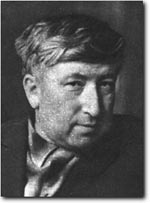 Rasul Gamzatovich Gamzatov, Russian Soviet poet, born on 8 September 1923 in an Dagestani village. His father, the Peoples Poet Gamzat Tsadas, was his first teacher and mentor in the study of poetry. Gamzatov wrote his first poem when he was eleven years old. Rasul Gamzatovich Gamzatov, Russian Soviet poet, born on 8 September 1923 in an Dagestani village. His father, the Peoples Poet Gamzat Tsadas, was his first teacher and mentor in the study of poetry. Gamzatov wrote his first poem when he was eleven years old.
Gamzatov studied at the pedagogical institute and, in 1940, returned to teach in his village school for a short time. He then took on a series of jobs, including director's assistant in a traveling theatre troupe, and worker for radio as well as the newspaper Bolshevik Gor.
In 1943, he published his first collection of poems, Firey Love and Burning Hate, in Avar, the language of Dagestan.
Between 1945 and 1950, Gamzatov studied at the Gorky Institute of Literature in Moscow. His first collection of poems in Russian was published in 1947. Since then, he has published over 20 books in both Russian and Avar.
His poetry collection Year of My Birth (1950) was awarded the USSR State Prize in 1952. Gamzatov also won the Lenin Prize for his 1962 collection Lofty Stars. Some of his other titles include, Word About The Older Brother (1952), Dagestani Spring (1955), Miner (1958), My Heart is in The Hills (1959), Two Shawls, Letters (1963), Rosary of Years (1968), By The Hearth (1978), Island of Women (1983), Wheel of Life (1987) as well as the lyrical novel My Dagestan (1967-1971).
In 1959, Gamzatov was declared a People's Poet of Dagestan. In 1974 he became a Hero of Socialist Labor.
Rasul Gamzatov currently lives and works in Makhachkala, Dagestan. He is Chairman of the Union of Writers of Dagestan, a post he has held for 50 years now.
Gazdanov G.I.
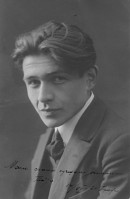 Gaito (Georgy) Ivanovich Gazdanov (1903-1971) Gaito (Georgy) Ivanovich Gazdanov (1903-1971)
The prose writer, literary critic.
Gazdanov is known as a Russian writer. He wrote about his native language: " I do not speak Ossetic language, though my parents speak it perfectly. I studied at the Paris University, but Russian remained my native language".
Gazdanov was born on November 23, in Saint-Petersburg in the well-off family of Ossetic origin, but a Russian one by culture, education and language. The father's profession - forest warden - forced family to move around the country a lot, therefore the future writer spent only his childhood in Saint-Petersburg, and then he lived in different cities of Russia (in Siberia, the Tver Province etc.). Gazdanov frequently visited his relatives in Caucasus, Kislovodsk.
His school days Gazdanov spent in Poltava, where he studied one year in the Military School; and Kharkov, where since 1912 he studied in gymnasia.
In 1919, when he was sixteen years old, Gazdanov joined the Vrangel's Voluntary Army and fought in Crimea. He served in armored train. When the
army retreated, Gazdanov left Russia with the army, firstly to Gallipolis, then to Constantinople. Here he met his cousin, a ballerina, who had emigrated
even before the revolution and together with her husband lived and worked in Constantinople. They helped Gazdanov a lot. Here he continued study in
gymnasia in 1922. Here, in Constantinople, he wrote his first story - "Hotel of the Future". The gymnasia were transferred to the city of Shumen in Bulgaria, where Gazdanov graduated in 1923.
In 1923 he came to Paris, where he lived for thirteen years. To earn his living, Gazdanov was doing any work: a loader, locomotives washerman and worker at Citroen factory etc. Then 12 years he worked as a taxi driver. During these twelve years Gazdanov wrote four of nine novels, twenty-eight of thirty-seven stories, to write the rest he spent another
thirty years.
At the end of 1920s and in the beginning of 1930s Gazdanov studied four years at the history and philology department of Sorbonne, where he studied
history of the literature, sociology and economic sciences.
In the spring of 1932 under M.Osorgin's influence Gazdanov joined the Russian Masonic Lodge "Northern Star". In 1961 he became the Master of the Lodge.
In 1930 Gazdanov's first novel "Evening At Claire" was published, and the writer was proclaimed the man of talent. All the emigration praised the novel. Gazdanov began to publish stories, novels together with Bunin,
Merezhkovsky, Aldanov and Nabokov in the "Modern Notes" (the most authoritative and respectful magazine of emigration). He actively
participated in the literary association "Ęîchevie".
In 1936 Gazdanov goes to Riviera where he met his future wife Gavrisheva, nee Lamzaki (from rich Odessa family of the Greek origin). During 1937-1939 he came there each summer, to Mediterranean sea, having the happiest years of his life.
In 1939 when the Second World War broke up, Gazdanov stayed in Paris. He lived through the fascist occupation and helped those who were in danger. He
participated in the Resistance movement.
During this time Gazdanov wrote a lot: novels and stories. But only one thing, that was written at that time was recognized - novel "Phantom of Alexander Volf" (1945-1948).
After the war the book "Buddha's Return" was published and had a big success and brought popularity and money. Since 1946 Gazdanov earned his living by literary work only, but sometimes additionally working as a night taxi driver.
In 1952 Gazdanov was offered to become an employee of new radio station - "Svoboda". He accepted this offer and worked there from January 1953 till his death. In three years Gazdanov became the editor-in-chief of news (in Munich), in 1959 he came back to Paris as a correspondent of the
Parisian bureau of "Svoboda". In 1967 he again transferred to Munich as a senior editor and then the editor-in-chief of Russian service.
When Gazdanov visited Italy, he fell in love with this country, particularly with Venice. He was coming here each year.
In 1952 the novel "Night Roads" and then "Pilgrims" were published. His last published novels were "Awakening" and "Eveline and Her Friends", he
started them in 1950s, but completed only in the end of 1960s.
Gazdanov died of lung cancer on December 5, 1971 in Munich. He was buried at Russian cemetery Sainte-Genevieve-De-Bois near Paris.
Gladkov F.V.
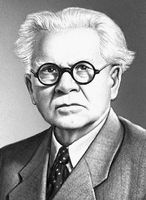 Fyodor Vasilyevich Gladkov, Russian Soviet writer, born 9 June (Old Style -21 June New Style) 1883 into poor family of Old Believers in the village of Chernavka, Saratov Province. In 1895, family moves to Ekaterinodar (later, Krasnodar) in the Kuban. He worked in chemist's shop and as apprentice typesetter in a printer's shop. He eventually became a primary school teacher and in 1902 moved to the Stretensk district of Siberia, east of Lake Baikal. In 1904 he began propaganda work for the Social Revolutionary Party in Chita, east of Irkutsk. In 1905 he enters a teachers' institue in Tiflis. In 1906 he begins propaganda work for Bolsheviks and returns to Stretensk. In November 1906 he is arrested and exiled for four years to Manzurka village in Irkust province for four years. After exile, he moves to Novorossiisk then to the Kuban where he is appointed head of a primary shool in Pavlovskaya, a large Cossock village. In spring of 1918, he returns to Novorossiisk to reorganize schools. The town is captured by the Whites in August 1918 and Gladkov takes refuge in the workers' settlement of a cement (surprise!) factory. After Whites were driven out in 1920, he is put in charge of adult education in the town. He served in the Red Army for a short time and was made editor of the newspaper "Krasnoye Chernomorye". He was also head of the regional department of Popular Education. In 1921 he moves to Moscowl where he works as head of a factory school, then secretary of the journal "Novy Mir". He joined the proletarian literary group "The Smithy". From 1932 to 1940 he served on the editorial board of "Novy Mir". In 1941 he became special correspondent for "Izvestiya", reporting from Svedlovsk, and specializing in war-time industrial topics. After the war, from 1945 to 1948 he was director of the Gorky Literary Institute in Moscow. Fyodor Vasilyevich Gladkov, Russian Soviet writer, born 9 June (Old Style -21 June New Style) 1883 into poor family of Old Believers in the village of Chernavka, Saratov Province. In 1895, family moves to Ekaterinodar (later, Krasnodar) in the Kuban. He worked in chemist's shop and as apprentice typesetter in a printer's shop. He eventually became a primary school teacher and in 1902 moved to the Stretensk district of Siberia, east of Lake Baikal. In 1904 he began propaganda work for the Social Revolutionary Party in Chita, east of Irkutsk. In 1905 he enters a teachers' institue in Tiflis. In 1906 he begins propaganda work for Bolsheviks and returns to Stretensk. In November 1906 he is arrested and exiled for four years to Manzurka village in Irkust province for four years. After exile, he moves to Novorossiisk then to the Kuban where he is appointed head of a primary shool in Pavlovskaya, a large Cossock village. In spring of 1918, he returns to Novorossiisk to reorganize schools. The town is captured by the Whites in August 1918 and Gladkov takes refuge in the workers' settlement of a cement (surprise!) factory. After Whites were driven out in 1920, he is put in charge of adult education in the town. He served in the Red Army for a short time and was made editor of the newspaper "Krasnoye Chernomorye". He was also head of the regional department of Popular Education. In 1921 he moves to Moscowl where he works as head of a factory school, then secretary of the journal "Novy Mir". He joined the proletarian literary group "The Smithy". From 1932 to 1940 he served on the editorial board of "Novy Mir". In 1941 he became special correspondent for "Izvestiya", reporting from Svedlovsk, and specializing in war-time industrial topics. After the war, from 1945 to 1948 he was director of the Gorky Literary Institute in Moscow.
First published work, "Towards The Light" (1900), tells the tale of a young girl who becomes a village teacher and dedicates herself to the service of common people. "After Work" (1900) and "Maksuitka" (1901) are stories of the downtrodden. Other early stories include "Before Hard Labor" (1903), "They Went Off to War" (1904) and "The Inspection" (1905). "Three In One Hut" (1905) relates his meeting with three women convicts serving exile in Siberia. "The Outcasts" (1908) is a series of sketches about the lives of political exiles. "The Abyss" (aka "The Only Son") (1917) is a picture of village life during World War I. "Spring Shoots" (1921) and "The Fiery Steed" (1922) are civil war tales. "Cement" appeared in 1925 and was hailed a the first Soviet novel of the working class. "The Old Secret Prison" (1926) is set in an Irkutsk political prison. "THe Cephalopodous Man" (1927) is a satirical tale. "Energy" (aka "Power") (1932-1938) dealt with the construction of the Dneproges hydroelectric plant, but was not as successful as "Cement". "The Birch Grove" (1941) is a lyrical forest story. "The Scorched Soul" (1943) and "The Vow" (1944) are collections of tales. He spent his later years on a series of autobiographical works: "Story of My Childhood" (1949), "The Outlaws" (1950), "Evil Days" (1954), and "Restless Youth" (unfinished). The first two volumes won Stalin Prizes in 1950 and 1951. He died on December 20, 1958.
Gorky M.
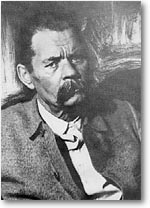 Maxim Gorky (1868-1936) - born on March 16 (New Style March 28) 1868 - pseudonym Gorky means "bitter", originally Aleksei Maximovich Peshkov Maxim Gorky (1868-1936) - born on March 16 (New Style March 28) 1868 - pseudonym Gorky means "bitter", originally Aleksei Maximovich Peshkov
Russian short story writer, novelist, autobiographer and essayist, whose life was deeply interwoven with the tumultuous revolutionary period of his own country. Gorky ended his long career as the preeminent spokesman for culture under the Soviet regime of Joseph Stalin. Gorky formulated the central principles of Socialist Realism, which became doctrine in Soviet literature. The rough, socially conscious naturalism of Gorky was described by Chekhov as 'a destroyer bound to destroy everything that deserved destruction.'
Aleksei Peshkov (Maxim Gorkyi) was born in Nizhny Novgorod. He lost his parents at an early age - his father died of cholera and his mother died of tuberculosis. Orphaned at the age of 11, he experienced the deprivations of a poverty. The most important person in Gorky's life in those years was his grandmother, whose fondness for literature and compassion for the downtrodden influenced him deeply. Otherwise his relationships to his family members were strained - and in his childhood Gorky stabbed his stepfather, who regularly beat him. Gorky received little education but he was endowed with an astonishing memory. He left home at the age of 12, and followed from one profession to another, working in shops and on the Volga River steamers. Later Gorky used later material from his wandering years in his works. In 1884 he failed to enter Kazan University, and in the late 1880s he was arrested for revolutionary activities. At the age of 19 he attempted suicide but survived when the bullet missed his heart.
After travels through Ukraine, the Caucasus, and the Crimea Tiflis (late Tbilisi), Gorky published his first literary work, 'Makar Chudra' (1892), a short story. 'Chelkash', the story of a harbour thief, gained an immediate success. He started to write for newspapers, and his first book, the 3-volume Sketches and Stories (1898-1899), established his reputation as a writer. Gorky wrote with sympathy and optimism about the gypsies, hobos and down-and-outs and he started to analyze the plight of these people in a broad, social context. In these early stories Gorky skillfully mixed romantic exoticism and realism. Occasionally he glorified the rebels among his outcasts of Russian society. In his early writing career Gorky became friends with Anton Chekhov, Leo Tolstoy, and Vladimir Lenin. Encouraged by Chekhov, he wrote his most famous play, The Lower Depths (1902), which took much of the material from his short stories. It was performed at the Moscow Art Theater under the direction of Konstantin Stanislavsky. It enjoyed a huge success, and was soon played in Western Europe and the United States.
Because of his political activism, Gorky was constantly in trouble with the tsarists authorities. He joined the Social Democratic party's left wing, headed by Lenin. In 1906 Gorky settled in Capri. Lenin visited his villa in 1908, he fished there and played chess, becoming childishly angry when he lost a game. Gorky was disgusted by Lenin's smug Marxism and after reading only a few pages from his book Materialism and Empirio-Criticism he threw it on the wall.
During his ill-fated mission to America to raise funds for the Bolshevik cause, Gorky wrote in the Adirondack Mountains greater part of his classic novel, The Mother, which appeared in 1906-1907. Its heroine, Pelageia Nilovna, adopts the cause of socialism in a religious spirit after her son's arrest as a political activist. Pelageia's husband is a drunkard and her only consolation is her religious faith. Pelageia's husband dies, and her son Pavel changes from a thug to socialist role model and starts to bring his revolutionary friends to the house. Pavel is arrested on May day for carrying a forbidden banner. While continuing to believe in Christ's words, she joins revolutionaries, and is betrayed by a police spy. Gorky based her character on a real person, Anna Zalomova, who had travelled the country distributing revolutionary pamphlets after her son had been arrested during a demonstration. The novel, considered the pioneerr of socialist realism, was later dramatized by Bertold Brecht.
In 1913 Gorky returned to Russia, and helped to found the first Workers' and Peasants' University, the Petrograd Theater, and the World Literature Publishing House. The first part of his acclaimed autobiographical trilogy, My Childhood, appeared in 1913-14. It was followed by In the World (1916), and My Universities (1922), which was written in a different style. In these works the author looked through the observant eyes of Alyosha Peshkov his development and life in a Volga River town. When the war broke out, Gorky ridiculed the enthusiastic atmosphere and broke off all relations with his adopted son, Zinovy Peshkov, who joined the army. First the author also rejected Lenin's hard-line policy. "Lenin's power arrests and imprisons everyone who does not share his ideas, as the Romanovs' power used to do," he wrote in November of 1917. After Russian revolution Gorky enjoyed protected status, although in 1918 his protests against Bolsheviks dictatorial methods were silenced by Lenin's order. Gorky's memoir of Lev Tolstoy (1919) painted nearly a merciless portrait of the great writer.
In 1924-25 Gorky lived in Sorrento but persuaded by Stalin he returned in 1931 to Russia. He founded a number of journals and became head of the Writers' Union. Gorky's speech at The First Congress of Soviet Writers in 1935, in which he criticized the bureaucracy of the Writers' Union, did not change anything. All the proposals of the congress were very soon buried when the Great Terror started. Writers were shot and Stalin showed personal interest in the activities of writers. Gorky's actions and statements before and after his return to Russia are controversial. When the poet Anna Akhmatova and many writers asked Gorky to help Nikolai Gumilev, a celebrated poet and Akhmatova's first husband, Gorky apparently did nothing to save him from execution.
Gorky died suddenly of pneumonia in his country home, dacha, near Moscow on June 18, 1936. The author was buried in the Red Square and Stalin started earnest his Show Trials. Rumors have lived ever since that he may have been assassinated on Joseph Stalin orders. Genrikh Yagoda, Stalin's secret police chief during the great purges of 1936-38, made a "confession" at his own trial in 1938, that he had ordered Gorky's death. According to another rumor, Gorky had been administered 'heart stimulants in large quantities', and the ultimate culprits were 'Rightists and Trotskyites'. The murder of Gorky's son in 1934 was seen as an attempt to break the father. However, when the KGB literary archives were opened in the 1990s, not much evidence was found to support the wildest theories. Stalin visited the writer twice during his last illness and the most probable conclusion is that Gorky's death was natural.
As an essayist Gorky dealt with wide range of subjects. Underlying most of Gorky's essays is a passionate humanistic message and political commitment to bolshevism. In Notes on the Bourgeois Mentality he accuses the bourgeoisie of self-absorption and concern only with its own comfort. On the Russian Peasantry sees peasants as resistant to the new social order and City of the Yellow Devil, written in New York, condemns American capitalism. On the other hand Gorky early opposed Bolsheviks, criticizing their use of violence against their fellow men. Among Gorky's important essays are biographical sketches of such writers as Tolstoy, Leonid Andreev and Anton Chechov.
Ilf & Petrov
 Ilya Ilf (1987-1937) & Yevgeny Petrov (1903-1942) Ilya Ilf (1987-1937) & Yevgeny Petrov (1903-1942)
Russian team of writers and journalists, whose best known work is the satirical novel The Twelve Chairs (1928). In the story Ostap Bender, a clever scoundrel, tries to find in the Soviet Russia of 1927 hidden jewelry with Ippolit Matveyevich Vorobyaninov, a former nobleman. Ilf and Petrov also published a large number of stories and sketches under the pseudonym "Tolstoyevsky" in Soviet magazines and newspapers. The literary reputation of the two writers rests mainly on their collaborative works - other books have not stood the test of time.
Ilya Ilf (pseudonym of Ilya Arnoldovich Fainzilberg), was born in Odessa as the son of a bank clerk. After graduating from a technical school in 1913, he worked then in an architect's office, in a aviation plant, and in a hand grenade factory. He also contributed to a humor magazine, Sindektikon. In 1923 he moved to Moscow, where he obtained a post of librarian and wrote for various newspaper and humor magazines. Two year later he became a journalist for the magazines Gudok and Moriak. During his visit in Central Asia he witnessed the clash between the old customs and new system, which became one of the central themes of The Twelve Chairs. After meeting Petrov he started to write with him humorous pieces for Pravda and other publications. The collaboration lasted nearly a dozen years. Ilf died on April 13, 1937 of tuberculosis which he had contracted on his journey in the United States.
Yevgeny Petrov (pseudonym of Yevgeny Petrovich Kataev) was born in Odessa as the son of a history teacher. He graduated in 1920 from a classical Gymnasium and started his career as journalist. In 1921 he became correspondent for the Ukrainian Telegraphy. Before moving to Moscow in 1923, he worked at Odessa Criminal Investigation Department. Petrov was appointed sub-editor of the satirical journal Krasnyi perets and in 1923 he joined the staff of the newspaper Gudok, a publication for railway workers. Petrov had no ambition to become a writer. However, his elder brother, the novelist Valentin Kataev (1897-1986), encouraged him to compose short stories, and a small collection was published in 1924. Petrov married in 1929. From 1932 he contributed to Pravda and Krokodil.
In 1925 Petrov became acquainted with Ilf, who also worked for Gudok. Their first book, The Twelve Chairs, gained a huge success. It appeared during the relatively liberal period, when the New Economic Policy (NEP) allowed limited private enterprise. The idea for the story was suggested by Valentin Kataev. Ostap Bender, the utterly amoral protagonist, meets during his adventures a wide variety of opportunists, bureaucrats, and crooks and swindlers of the NEP period. As a traveling con artist he has much in common with Gogol's Pavel Ivanovich Chichikov from The Dead Souls (1841-46). Two groups seek jewelry, which were hidden during the Russian Revolution by a rich old lady in one of 12 chairs. The chairs have been confiscated by the new regime, and sold to different persons. Bender and others track down the various owners from the provinces to the Soviet Georgia and the Transcaucasus mountains. At the end of the story Bender is killed by his companion Ippolit Matveyevich, who eventually discovers that the diamonds have been found and sold to build a workers' club. Bender represents values of the old order - egoism and individualism. He knows "four hundred ways to get money without working for it", and he has no future in the postrevolutionary Soviet Union. The story has inspired stage and film adaptations, not only in the Soviet Union but also in the United States. Mel Brooks's film version from 1970 received mixed critics. Brooks directed, scripted, authored a song, and played in a small role. In spite of all his efforts, his humor was not as sharp as in The Producers (1968).
1001 den; ili; Novaya Shakherezada (1929), published under the pseudonym F. Tolstoevskii, was a collection of satirical novellas. The Golden Calf (1931), a sequel to The Twelve Chairs, resurrected Ostap Bender with a tell-tale scar across his throat. This time he manages to become a millionaire but in workers' paradise money doesn't bring him fame and power. His plans fail - the only thing he manages to keep after a customs inspection is a medal, the Order of the Golden Fleece (or Golden Calf). Although humor in The Golden Calf was clearly propagandistic in tone, and its world view was not so bleak, the Soviet officials viewed the story with suspicion. It was published after Maksim Gorky's personal intervention.
In 1933-34 Ilf and Petrov visited western Europe. They met the famous Russian journalist Ilya Ehrenburg in Paris, and wrote with his a film comedy, which was not produced. According to Ehrenburg, Ilf's humor was bitter; Petrov was optimistic, his humor was more humane, and he wished good for all people. Little Golden America (1936) was based on their transcontinental automobile trip in the Unites States. They met Ernest Hemingway and Henry Ford, and after seeing over one hundred movies the two committed communists preferred their own country. Ilf's death was a hard blow to Petrov, who then wrote only little fiction. He limited himself mainly to film scripts and edited a collection of Ilf's private notebooks (1937-38). In 1940 he joined the Communist Party and became editor of the journal Ogonyok. In 1941 Petrov visited Germany, half a year before the Nazis attacked the Soviet Union, and told: "The Germans are tired of war..." During World War II Petrov served as a war correspondent. He died in an airplane crash returning from besieged Sevastopol on July 2, 1942. Petrov's reports from the front were published posthumously under the title Frontovoy dnevnik (1942). The Twelve Chairs is considered a cult classic and has been reprinted a number of times.
Kaverin V. A.
 Kaverin, Veniamin Aleksandrovich. (Real family name, Zilber.) Born 19 April 1902 (6 April, Old Style) in Pskov, the son of a band conductor. He studied at the Pskov gymnasium and, while there, began to write poetry. In 1919, he moved to Moscow to enter the history-philology faculty of Moscow University. Along with his studies, he also acted as an instructor for the artistic department of the Moscow Soviet. Kaverin, Veniamin Aleksandrovich. (Real family name, Zilber.) Born 19 April 1902 (6 April, Old Style) in Pskov, the son of a band conductor. He studied at the Pskov gymnasium and, while there, began to write poetry. In 1919, he moved to Moscow to enter the history-philology faculty of Moscow University. Along with his studies, he also acted as an instructor for the artistic department of the Moscow Soviet.
On the advice of Yuri Tynyanov - who just happened to be Kaverin's brother-in-law and first literary teacher--in 1920 Kaverin transferred to the philosophy faculty of Petrograd University while simultaneously studying Arabic at the Institute of Eastern Languages. It was here in Petrograd that Kaverin joined up with Zamyatin, Zoshchenko, Fedin, and others in the Serapion Brothers.
Kaverin's first attempt at prose was the story Odinnadtsataya Aksioma ("The Eleventh Axiom"), which he entered in a contest sponsored by the Petrograd House of Writers. It won first prize and the attention of Maksim Gorky himself.
In 1923 Kaverin graduated from the Institute of Eastern Languages, and in 1924, from Petrograd University. He then undertook graduate studies and in 1929 defended his dissertation on the history of Russian journalism.
His first publication was a collection of stories entitled Mastera I Podmasterya ("Masters and Journeymen", 1923). The stories were fantastic, experimental in style, influenced by the German romantics.
Kaverin's first novel, Skandalist ("The Troublemaker"), came out in 1928. It is a damning portrayal of old-fashioned, inflexible attitudes among the older academics in Leningrad. Russian Formalism is parodied as it is shown disintegrating. One character in the work is possibly modeled on Viktor Shklovsky.
His second novel Khudozhnik Neizvesten ("Artist Unknown", 1931), addresses problems of culture in the Soviet Union of the late 1920s. It revolves around a philosophical discussion between and engineer and a painter.
Ispolneniye Zhelanii ("Wish Fulfillment"), 1934, offers a type of comparative study of two different students at Leningrad State University, one a student of literature, and the other a student of physiology. The physiology student scores success in life, whereas the literature student fails.
Kaverin's most popular work, Dva Kapitana ("Two Captains") was published in installments between 1938 and 1944. It chronicles the fates and links between two captains. The first captain is a pre-Revolutionary explorer who disappears under mysterious circumstances in the Arctic Ocean before the first world war. The second is a young Soviet Air Force captain who comes to maturity shortly before the Great Patriotic War. This work won a Stalin Prize in 1946.
During the Great Patriotic War, Kaverin worked as a war correspondent for Izvestiya and still managed to publish a few collections of stories, including My Stali Drugimi ("We Became Different"), Orlinii Zalet ("Eagle's Flight"), Russkii Malchik ("Russian Boy") and others.
In 1949, Kaverin published the first installment of his trilogy Otkrytaya Kniga ("Open Book"), the last installment of which appeared in 1956. It is the story of a woman biologist who proposes a bold new theory. The theory is opposed by the entrenched obscurantists, but the biologist presses on, at great personal expense.
In the post-Stalin period, Kaverin continued to explore the issues of the intelligentsia and science (Kusok Stekla "Piece of Glass", 1960). He also addressed the abuses of the Stalin era. For example, in Sem Par Mechistykh ("Seven Pairs of Dirty Ones", 1962), the discrepancy between legality and morality of the Stalin time is revealed in a tragic episode during the transportation of convicts in the White Sea.
Pered Zerkalom ("Before the Mirror", 1971) again spoke to issues of culture and art. In this work, the hero discovers the civilizing mission of art.
A volume of memoirs, Osveshcheniye Okna ("Lighted Windows", 1978), provides a useful and interesting account of the events and literary atmosphere of the early 1920s.
Veniamin Kaverin died in Moscow on 2 May 1989.
Kazakov Y.P.
 Yury Pavlovich Kazakov, Russian Soviet writer, born 8 August 1927 in Moscow in a workers' family. From early on, he dreamed of being a musician. After first studying at the Moscow School of Architecture, Kazakov enrolled in the Gnesin Musical Academy, from which he graduated in 1951, with a specialization in the cello. He won a position in the orchestra of the Stanislavsky and Nemirovich-Danchenko Musical Theatre, but as early as 1952 he began to feel the pull to literature and penned his first works. He enrolled in the Gorky Institute for Literature in 1953, and graduated in 1958. Yury Pavlovich Kazakov, Russian Soviet writer, born 8 August 1927 in Moscow in a workers' family. From early on, he dreamed of being a musician. After first studying at the Moscow School of Architecture, Kazakov enrolled in the Gnesin Musical Academy, from which he graduated in 1951, with a specialization in the cello. He won a position in the orchestra of the Stanislavsky and Nemirovich-Danchenko Musical Theatre, but as early as 1952 he began to feel the pull to literature and penned his first works. He enrolled in the Gorky Institute for Literature in 1953, and graduated in 1958.
Kazakov had a particular affinity for the north of Russia, particually the White Sea area, and many of his stories are set there. He focuses mainly on the emotions and private lives of individuals. Lyric imagry, sounds, smells, and silences are all used effectively in his stories.
His output was not large - some 35 stories in all. Also, some in the literary establishment attacked him for "pessimism" and "morbidity". Kazakov fell into depression and drink and lived in semi-seclusion, publishing nothing in the last five years of his life.
Yury Kazakov was married and had one son. He died on 29 November 1982.
Kharms D.I.
 Daniil Ivanovich Kharms, Russian writer, real name Daniil Ivanovich Iuvachev. Born 17 (30) December 1905 in Petersburg. His mother ran a refuge for women who were released from prison. His father was a former member of the People's Will (Narodnaya Volya) revolutionary organization. He was arrested in 1883 and spent time in Schiesselburg Fortress and in Sakhalin in far eastern Siberia. In prison, he became religious and a pacifist. After his release, he returned to Petersburg and took up writing. His works include "Eight Years in Sakhalin" (under the pseudonym of I.P. Miroliubov) in 1901 and "Schiesselburg Fortress" in 1907. Daniil Ivanovich Kharms, Russian writer, real name Daniil Ivanovich Iuvachev. Born 17 (30) December 1905 in Petersburg. His mother ran a refuge for women who were released from prison. His father was a former member of the People's Will (Narodnaya Volya) revolutionary organization. He was arrested in 1883 and spent time in Schiesselburg Fortress and in Sakhalin in far eastern Siberia. In prison, he became religious and a pacifist. After his release, he returned to Petersburg and took up writing. His works include "Eight Years in Sakhalin" (under the pseudonym of I.P. Miroliubov) in 1901 and "Schiesselburg Fortress" in 1907.
In 1915, the young Daniil was sent to a very disciplined German school on the Nevsky Prospect. There he learned German and English. His notebooks contain hand-written copies of the poems of Lewis Carroll in English. In 1919, he went to live with his aunt in Detskoe Selo. Begins to write verse in approximately 1922.
In 1924 he moves back to Leningrad and enters the Leningrad ElektroTeknicum. In 1925, he began to perform in public as a poetry reader of his own works as well as the works of other Soviet poets, including Mayakovsky, Severyanin, and Aseeva. He attended literary evenings and became friends with V. Vvedensky. He also started an acquaintance with the poets N. Kliuev and A. Tyfanov. It is in this year that he first used his most popular pseudonym-- Daniil Kharms. He had over 30 pseudonyms in total.
In early twenties, he was associated with the poetry movement known as "Zaum" ("Trans-sense", "Trans-rational", or "Unintelligible"). On 17 October 1925, just eight days after being officially accepted into the Leningrad department of the All-Russian Union of Poets, Kharms performed at a Zaum literary evening, along with Vvedensky and Tufanov. In January 1926, Kharms and Vvedensky formed a branch of Zaum, calling themselves "Plane Trees". Kharms's first published work "Incident on the Railroad" appears in 1926 in the almanac "Poetry Collection", prepared by the Leningrad department of the Union of Poets.
In 1927, Kharms proposed the creation of an Academy of Left Classics, whose purpose would be a "struggle against hacks". On 28 March, the "Plane Trees" hold a literary evening which erupts in catcalls, whistles, and fights in the audience.
At the end of 1927 the Plane Trees announced the formation of a new group: OBERIU (an abbreviation for the "Union of Real Art-oo"). In its manifesto, the OBERIU said its main task was to portray the world in a clearly objectified manner.
In a letter to a friend, Kharms wrote, "When I write poetry, the most important thing for me is not the idea, not the contents and not the form and not the obscure notion of "quality", but something even more obscure and unintelligible to the rational mind, but understandable to me...This is--purity of order. This purity is the same in the sun, in the grass, in man, and in poetry. Real art stands side by side with the first reality. It creates the world and is its first reflection."
On 28 January 1928, OBERIU hosts a theatrical evening called "Three Left Hours". The first hour was for poetry readings. During this, Kharms rode out onto stage on a black lacquered wardrobe, which was animated by two men hiding inside. Kharms, on the top, was covered in white powder and wearing a long jacket decorated with red triangles. On his head was a golden cap with pendants. In a loud, somewhat raspy voice, he declaimed some "phonetic poems".
The second hour of the meeting was given over to a performance of Kharms' play "Elizaveta Bam". The heroine of the play is an adolescent. "From the beginning to the end of the play, the girl is chased by two dark persons. They accuse Bam of a murder she did not commit. The girl tries to joke her way out of it, run away, to plead with and to amuse her pursuers. For a while, this works. And then the tense expectation of something horrible is shattered by a clownish joke. The persecutors accept Elizaveta's invitation to a game. The accused victim and the accusers play a kind of broken telephone and cat-and-mouse game. But despite the fun and games, the persecutors' purpose does not change. The play ends with them taking away Bam. The series of playful episodes in the play are perceived as independent episodes. Bam's persecutors, Ivan Ivanovich and Pyotr Nikolaiovich, forgetting about their evil mission, play the fool. Mama and Papa Bam play up to them. Besides isolated staged episodes, the play unrolls an interlude in verse "Battle of Two Bogatyrs"; the connection of this to the main action is hard to fathom. Thus the play reveals two forces. One is trying to construct a subject and lead it to a conclusion. The other force tries to break the dramatic line of the subject, to shatter it. It bursts out into circus, farce, buffoonery, self- sufficient theatrical scenes. The first force brings out a disturbing theme; the second one, a festive, disruptive one. Both forces fight with shifting success. But in the end, despite the dark beginning and conclusion, what remains in the memory is the eccentric game, the unfettered romp." (Aleksandrov, Anatoly. "Chudodei: Lichnost' i Tvorchestvo Daniila Kharmsa". Sovetskii Pisatel'. 1991)
In 1928, Kharms also began working for the children's magazine "Yozh" ("Hedgehog"), edited by Marshak. By the end of the year, "Yozh" had printed ten of Kharms's works, including the poem "Ivan Ivanych Samovar".
In 1930 he also began writing for the children's magazine "Chizh" ("Siskin"). Konstantin Chukovsky recalled, "Now it's almost unbelievable that the witty verses of Kharms, to which children (especially young children) were so attracted, in the 1930s drew furious rage from the majority of pedagogues."
The occasional OBERIU theatrical "concerts" continued into 1930. Then on 9 April 1930 an article characterizing one of their performances appeared in the journal "Smena". The article, by L. Nilvich, was entitled "Reactionary Juggling: Concerning an Attack by Literary Hooligans". Following this, OBERIU performances ceased.
In December of 1931, based on a false denunciation, the editorial staff at "Yozh", including Kharms, were temporarily arrested. He was released on 18 June 1932. Kharms resumed his work for "Chizh", producing, among other things, a cycle of stories about Professor Trubochkin. He also created the character "Smart Masha", who was a continuing feature in the magazine.
In 1934 he also began work on a philosophical-literary piece entitled "Existence". Although never finished, he signed the manuscript "Daniil Dandan". This year also saw him accepted into the newly formed Union of Soviet Writers. And he married Marina Vladimirovna Malich.
As numerous of Kharms's friends and colleagues fell into official disfavor (Zabolotsky) or were arrested (Oleinikov), Kharms's own literary reputation was cast into doubt. In 1937, he was temporarily banned from the pages of "Chizh", reappearing only a year later. In 1937 and 1938, he hosted musical-literary evenings in his apartment. One participant remembers a noticed posted on the walls which read: "List of Persons Particularly Respected in This House". The list included the names Bach, Gogol, Glinka, and Knut Hamsun. In 1939, Kharms finished his "Incidents" cycle, which includes "Pushkin and Gogol". An article that year in the magazine "Children's Literature" entitled "Comic Poetry" gives a favorable review of Kharms's work.
On 23 August 1941, he was arrested. The doorman asked him to come down into the courtyard for something. He was taken away half-dressed, wearing slippers on his bare feet. He died on 2 February 1942 in a prison hospital in Novosibirsk. He was rehabilitated in 1956.
Kirsanov S.I.
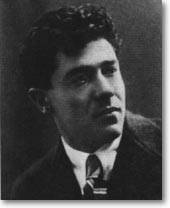 Kirsanov Semyon Isaakovich, Russian poet, born on 18 September (5 September, old style) 1906 in Odessa into the family of a tailor. While studying philology at the Odessa Institute of Peoples Education in the 1920s, he began writing poetry about the liquidation of illiteracy, Red Army Soldiers, the Revolution, etc. In 1925 he moved to Moscow and became an active member of Mayakovsky's "Lef" movement. Kirsanov Semyon Isaakovich, Russian poet, born on 18 September (5 September, old style) 1906 in Odessa into the family of a tailor. While studying philology at the Odessa Institute of Peoples Education in the 1920s, he began writing poetry about the liquidation of illiteracy, Red Army Soldiers, the Revolution, etc. In 1925 he moved to Moscow and became an active member of Mayakovsky's "Lef" movement.
In the 1930s he used his poetry to further the propaganda and agitation goals of the Soviet goverment. For example, the collection Lines of Construction (Stroki Stroiki), Poetry in the Ranks (Stikhi V Stroiu), Shock Quarter (Udarni Kvartal) , The Five Year Plan (Pyatiletka) and Comrade Marx (Tovarishch Marks). He created slogans for factories and traveled to the Dneproges construction site.
During the Great Patriotic War, he worked as a front-line correspondent for varioius newspapers as well as TASS. He contributed slogans, pamphlets, chastushki, articles, and poems.
Works published after the war include the books Feeling of the New (Chustvo Novovo), Soviet Life (Sovetskaya Zhizn), and Comrade Poetry (Tovarishch Stikhi). In the 1950s there was the poem The Top (Vershina) as well as a cycle of poems about Italy and London and Leningrad Notebook (Leningradsky Tetrad). In later years he published the collections Lyric Poetry (Lirka), Searchings (Iskaniya) and The Mirror (Zerkolo). He also translated the works of Pablo Neruda, Louis Argon and others.
He died on 10 December 1972 in Moscow.
Kozakov M. A.
Kozakov, Mikhail Emmanuilovich. Born 11 August 1897 (23 August, Old Style) at Romodan, in the Mirgorodsky Raion, Poltava Oblast. He studied law at Petrograd University, from which he graduated in 1922. That same year, he began publishing his writings.
He published a collection of stories entitled Popugaevo Schastye ("Parrot Happiness") in 1924. Following in 1926 was Abram Nasatyr, the Innkeeper. In this story, a hard-hearted innkeeper in the NEP period gets rich as the result of a murder he inspired his brother to commit. When his position is threatened, he then kills this same brother.
Meshchanin Adameiko ("Philistine Adameiko") appeared in 1927. It is the tale of the Raskolnikov-like Adameiko, who plots the murder of a userer because, as he sees it, the parasites who survived the Revolution must be eliminated. Unlike Raskolnikov, he plans to manipulate someone else into doing the actual killing. 1927 also saw the publication of Poltora Khama ("One and a Half Louts").
Kozakov also wrote several plays, including Chekisti ("The Chekists", 1939) and Neistovii Vissarion ("Furious Vissarion", 1948).
His main work is the novel Devyat Tochek ("Nine Points"), also called Krusheniye Imperii ("Fall of the Empire", 1929-1937). The action takes place during the First World War and the Febuary Revolution of 1917. It begins as a story of everyday family life, but broadens into a historical epic.
Kozakov died in Moscow on 16 December 1954. in 1957, two of his works were published posthumously: the novel Zhiteli Etovo Goroda ("Residents of This City") and the tale Petrogradskiye Dni ("Petrograd Days").
Lavrenyov B.A.
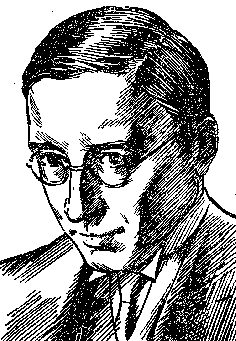 Boris Andreyevich Lavrenyov, pseudonym of Boris Sergeyev, born on July 17, 1891 (5 July, Old Style) in Kherson, the son of a teacher of Russian literature. Boris Andreyevich Lavrenyov, pseudonym of Boris Sergeyev, born on July 17, 1891 (5 July, Old Style) in Kherson, the son of a teacher of Russian literature.
Lavrenyov's first foray into literature came in 1905 when he was 14 years old. Inspired by his reading of Lermontov's Demon, the boy produced a 1500-line poem called Lucifer in what he believed to be pure iambic tetrameter. His father, while noting that there were some good ideas in the work, suggested, however, that the meter might more correctly be descibed as a limping, lame, paralyzed kasha. Crushed, the young writer buried the manuscript under an acacia tree.
While still in gymnasium, the young Lavrenyov ran away from home and signed up to work on a ship headed abroad. His sailing lasted for two months, until the Italian police snatched him off the deck, an incident to be described later in the story Marina.
Returning home, Lavrenyov continued his studies and, in 1909, enrolled in the law faculty of Moscow University, from which he graduated in 1915.
His first publication came in 1911 when the Kherson newspaper Rodnoi Krai accepted one of his poems. His first national exposure came a year later when Zhatva, an almanac of Moscow symbolists, presented a cycle of his poems--Maki ("Poppies"), Skazka Vechernyaya ("Evening Fairy Tale"), Fevral ("February") and Muka Rassveta ("Torment of Dawn").
For the next few years, Lavrenyov eagerly plunged himself into the whirlwind of ego-futurism. He made it his job to:
...disturb the picturesque prosperity, spoil the mood of the bourgeoisie, to upset its carefree digestion. It was necessary to stun the bourgeois and philistine with the cudgel of novelty.
His poems appeared in editions of the ego-futurist almanac Mezonin Poeziya in 1913 and 1914. These works contained echoes of symbolism but were also imitative of Mayakovsky's early strivings. There were plans to print two books by Lavrenyov, but these plans were never realized.
During World War I, Lavrenyov served in an artillery brigade of the tsarist army. Writing many years later, Lavrenyov said he never regretted his service in this imperialist war, because, as he put it, "I received a priceless gift from this war--an understanding of the people." And this understanding, he says, led him to denounce his futurist past:
With disgust I recalled the petty clowning of the futurist scandals, the pointless fussing of literary squabbles. How indecent the stripped jackets, the painted faces, and silly poetry games now seemed in light of the greatness of the silent, selfless fighting achievement of the people. I wanted to write the story of the people at war and about the true face of this disgusting war.
And so Lavrenyov penned a sharply antiwar story entitled Gala-Peter (the name of a Swiss chocolate firm). Influenced by the rhythmic, stylized prose of Andrei Bely, the story was accepted for publication by the Kiev almanac Ogon. But when the censors read the story, they had the manuscript confiscated and its publication was banned. It wasn't until 1925 that the story finally saw the light of day.
After the October Revolution, frightened by some of the excesses he witnessed, Lavrenyov was uncertain of what to do. He contemplated going abroard for a time until the situation settled down. His father advised him to stay, however, and he was soon back in Moscow. There, much to his dismay, he saw that his former futurist friends were still up to the same clownish antics. Like the Bourbons of France, Lavrenyov wrote, they understood nothing and had learned nothing. So alien was this atmosphere to Lavrenyov that he enlisted in the Red Army just to get out of town.
He served on an armored train sent to battle Petlyura in Ukraine and later as chief of artillery under Commander N.I. Podvoisky. He was wounded in the leg and sent back to Moscow. After recouperation, he was dispatched first to Samara, then to Tashkent where he worked as an editor for the front line newspaper Krasnaya Zvezda as well as administering the literary department of Turkestanskaya Pravda. It was here in Central Asia that Lavrenyov wrote the tales Wind (Veter), Star Color (Zvesdnii Tsvet), and the ever-popular The Forty-First (Sorok-Pervii).
In December of 1923, Lavrenyov was sent back to Leningrad, and he was demobilized in the spring of 1924. He aligned himself with the literary group Sodruzhestvo and won publication--all in 1924--for Wind, Star Color, and The Forty-First in the journals Krasnii Zhurnal Dlya Vsekhk and Zvezda.
Wind is the story of a sailor, turned into a class-conscious revolutionary, who engages in peaceful civilian activity. He grows bored and returns to the adventurous life at the front, where he dies.
In 1926, Lavrenyov produced The Sky-Blue Cap (Nebesnii Kartuz), a parody of a Sherlock Holmes story in a Soviet setting, and Thalassa, the story of an ordinary, meek Soviet who citizen gets involved in a smuggling expedition along the Black Sea coast.
Lavrenyov turned to satire in The Fall of the Rebublic of Itl (Krusheniye Respubliki Itl) (1926). It describes a fictional foreign intervention in southern Russia and the establishment of a so-called democratic republic with the help of "Nautilia", an obvious reference to England.
The following year, 1927, Lavrenyov published The Seventh Satellite (Sedmoi Sputnik). In this story, an old White General is arrested in 1918 as part of a round-up of bourgeois elements. The Cheka decides he's harmless and releases him. He is reduced to taking a job as a laundryman, but he finds this work useful. Lavrenyov's 1928 work Woodcut (Graviura na Dereve) addresses the problems of the intelligentsia and culture.
In 1927, in honor of the 10th anniversary of the Great October Socialist Revolution, Lavrenyov produced another dramatic work, The Breakup (Razlom), which remained in continuous production for some 50 years. Lavrenyov was one of the creators of a type of heroic-revolutionary drama typified in the plays Song of Those From the Black-Sea (Pesnya o Chernomortsakh) (1943) and For Those Who Are At Sea (Za Tekh, Kto v More) (1945). He also penned the political drama Voice of America (Golos Ameriki) (1950). Lavrenyov's play Lermontov debuted on 30 Dec 1954 with music by composuer Khachaturian.
In the early 1940s, an unknown writer by the name of Aleksandr Solzhenitsyn sent Lavrenyov a few of his stories. Lavrenyov liked the stories well enough to submit them to a literary journal. Publication was, however, rejected. When Solzhenitsyn sent him more stories a few years later, Lavrenyov continued to give encouragement to the future renegade, writing: "The author has matured, and it is now possible to talk about real literary productions."
Throughout the years, many of Lavrenyov's works have been adapted for film: The Forty-First (Director Yakov Protazanov, 1926); Wind (Director L. Shefer & Ch. Sabinskii, 1926); Story of a Simple Thing, also known as Leon Kutiure (Director V. Kasianov, 1927); The Seventh Satellite (Director V. Kasianov, 1928); For Those Who Are At Sea (Director A. Faintsimmer, 1948).
In 1987, The Forty-First was produced as a ballet-pantomine by Sergei Berinsky. And Lavrenyov's Ring of Fire was presented as two-act opera by Avet Terterian (composer) and Vladimir Shahnarzaryan (libretto).
Lavrenyov was known both as a socialist-realist and as a socialist-romantic. The writer was willing to accept both labels, saying that he strove to combine "healthy revolutionary romanticism with a realistic view of life." In 1930, he summed up his attitude toward literature this way:
Literature should be brief, clear, and untrue to life to such a degree that it might be believed....Literature ought to excite and thrill.
Lavrenyov was also an amateur painter.
Boris Lavrenyov died on 7 January 1959 in Moscow.
Libedinsky Yu. N.
 Libedinsky, Yury Nikolaevich. Born 10 December 1898 in Odessa, but soon the family moved to the Urals where his father was a factory doctor. He attended the Chelyabinsk secondary school. He joined the Communist Party in 1920 and served as a political commissar in the Red Army during the Civil War. Libedinsky, Yury Nikolaevich. Born 10 December 1898 in Odessa, but soon the family moved to the Urals where his father was a factory doctor. He attended the Chelyabinsk secondary school. He joined the Communist Party in 1920 and served as a political commissar in the Red Army during the Civil War.
Libedinsky's first novel, Nedelya ("A Week") (1922), concerning Communists caught up in a peasant rebellion in a remote town in the Urals, was one of the first significant works of the young Soviet literature and made Libedinsky an instant star. N.I. Bukharin wrote an article in Pravda, praising the work and calling Libedinsky "the first swallow" of the new proletarian literature. While essentially realistic, A Week also shows some influence of Bely in frequent lyrical passages. It tells the story mainly through individual portraits of the various characters. The Communists are show as human, having their own failings and doubts. Some are mere self-servers, who joined the Party only to secure a comfortable position for themselves. The novel exposes a profound failing in the structure of the Party, which results in those who are good in speech-making being advanced over those who actually understand the peasants and know how to run the factories. The work is also frank in its portrayal of the deep and intense hatred the peasants had for the Bolsheviks and how tenuous was the Soviet grasp on power. In the end, while the revolt is put down, most of the leading Communists in the town are brutally murdered.
Following the success of The Week, Libedinsky joined the "October" literary group, which was founded at the end of 1922. It had 100% pure Communist membership and came out in defense of ideologically pure proletarian literature. The Artistic Platform of "October" declared:
That literature is proletarian which organizes the psychology and consciousness of the working class and of the wide toiling masses toward the final aims of the proletariat as the reorganizer of the world and the creator of Communist society.
Proletarian literature opposes itself to bourgeois literature as its antipode.
The group "October" asserts the primacy of content. The very content of a proletarian work of literature supplies the verbal and artistic material and suggests the form. Content and form are dialectial antitheses: content conditions form and is artistically formalized through it. (1)
The group, however, refused to endorse any one particular form. Libedinsky also became a prominent leader in RAPP.
Libedinsky's 1923 novel Zavtra ("Tomorrow"), centers around the fictional news of a successful Communist revolution in Germany and the effect the news has on Bolsheviks in the USSR. The suggestion in the novel is that the Revolution in Russia can be saved only by extension beyond Russia's borders. Libedinsky himself later wrote a short article, Why My Tomorrow Was A Failure, denouncing this work as ideologically unsound, admitting that it was written under the pernicious influence of Trotskyism.
Kommissary ("Commissars") (1925), tells the tale of some Red Army Political Commisars who gather in a provincial town for a refresher course during the transition to NEP. The different social origins and attitudes of the Party members are highlighted. Some are confused and bewildered by the new economic policy. Some, proving themselves essentially bourgeois in nature, must be purged.
Libedinsky also addresssed the problem of party leadership in Povorot ("Turning Point") (1927). Rozhdeniye Geroya ("Birth of a Hero") (1930) strikes out against conservatism in the Party and stagnation in intellectual life. The hero of the novel is a Communist commisar, who is shown in his family life, complete with failings and contradictions. He is beset with various temptations--especially of the flesh. In the end, however, he overcomes all and is reborn as a true proletarian hero. Not all in RAPP approved of this work however, describing it as "Freudian" and calling the main character "a newfangled Party Hamletkin". One critic wrote:
All Libedinsky's characters are pale and impotent shadows of reality, for whom the material world, the class struggle, Socialist reconstruction in our country are merely the idealistic creations of self-developing shadows.
Even the poet Aleksandr Bezymensky disapproved of the novel, wanting to see the construction of socialism, and not some Party worker's private life. Libedinsky eventually bowed to his critics and admitted that this work was a failure.
In later years, Libedinsky focused much of his work on the peoples of the Caucases--their daily life, their past, their part in the revolutionary struggle--and the international brotherhood of the peoples of the USSR. For example, the novels Batash and Batai (1940-1941), Gory I Liudi ("Mountains and People") (1947), Zarevo ("Dawn") (1952), and Utro Sovetov ("Morning of the Soviets") (1957).
He fought in the Great Patriotic War and wrote numerous military sketches and stories. Other works include a children's book, Vospitaniye Dushi ("Education of the Soul") (published in 1962); a tale about S.M. Kirov, Syn Partii ("Son of the Party") (published in 1964); and some books of reminiscences, Sovremenniki ("Contemporaries") (1958) and Svyaz Vremyon ("Connection of Times") (published 1962).
He was awarded the Order of the Workers' Red Banner and numerous medals.
Yuri Libedinsky died in Moscow on 23 November 1959.
Libedinsky's widow, Lidiya Borisovna, published her own book of memoirs, Zelyonaya Lampa ("The Green Lamp") in 2000.
Mandelshtam O.E.
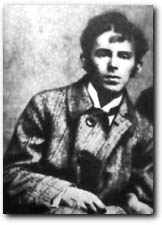 Osip Emilievich Mandelshtam was Russian poet, prose writer, essayist, translator. Osip Emilievich Mandelshtam was Russian poet, prose writer, essayist, translator.
Son of a leather merchant with a passion for German philosophy, Emil Veniaminovich Mandelshtam, and a gifted piano teacher, Flora Osipovna Verblovskaya. Osip Emilievich Mandelshtam was born in Warsaw, but raised with his two brothers in the cultural milieu of St. Petersburg's bourgeois intelligentsia. He attended the Tenishev Commercial School, whose director, Vladimir Vasilievich Gippius, poet, member of the Poets' Guild (Tsekh poetov), and author of ingenious critical essays, Mandelshtam revered as a unique influence on his formative years. After graduation in 1907, he travelled abroad, first to Paris (1907-08) and, following an interim year in St. Petersburg, to Germany (1909-10), to study Old French literature at the University of Heidelberg. In St. Petersburg, he attended both Vyacheslav Ivanov's Tower and meetings of the St. Petersburg Society of Philosophy. His first published poems appeared in August 1910 in Apollon. In 1911, he was baptized in the Vyborg Methodist Church, enrolled in the Department of History and Philology at the University of St. Petersburg, and joined Gumilyov's Poets' Guild, becoming an active member of the future Acmeist nucleus. Although Mandelshtam's initial poetic efforts were sent to Ivanov for comment and approval, by 1910 his essay, "Francois Villon" already expressed his basic Acmeist orientation. Stone (Kamen'), his first book of poems, appeared in 1913, concurrently with the publication of "Francois Villon" and the Acmeist manifestoes and programmatic verse in Apollon. Stone brought Mandelshtam instant recognition as one of Russia's finest young talents. Technically elegant, full of original perceptions and striking details, his earliest poetry concerned the precise depletion of human culture, from the human body to the choreography of a tennis match, from the music of Bach and Beethoven to the comparison of "silence" and "muteness" ("Silentium"), from Hagia Sophia to Notre Dame. His programmatic poem, 'Notre Dame', elucidates his manifesto, 'Morning of Acmeism'. Mandelshtam's poetry divides easily into two major periods, the published collections (poems of 1908-25) and the unpublished notebooks (poems of 1930-37), preserved by his wife, Nadezhda Mandelshtam, until they could be printed abroad. The published poetry includes Stone (Kamen', 1913, second, enlarged edition 1916, third edition as Pervaya kniga stikhov, 1923), Tristia (1922, republished as Vtoraya kniga, 1923), and Poems (Stikhotvoreniya, 1928) Poems contains the early poetry plus twenty new poems, "1921-1925 "
The last five collections, which comprise over two-thirds of Mandelshtam's poetry, assure his reputation as the finest Russian poet of the 20th century. As the early poetry is illuminated by the manifestoes and prose essays of the 1910s and early 1920s, so the later poetry reflects the prose of the later 1920s and 1930s. A trip to Armenia in 1930, Nadezhda Mandelshtam claims, returned the gift of poetry to Osip Mandelshtam. Armenia, the image of promise and hope, figures in Fourth Prose and Journey to Armenia.
During the 1930s, the poet's life became his basic lyric material, as distinct from the monuments of human culture represented in the early volumes and the predominantly Man-centered meditations of the 1920s. The poet's personal life unites the five Notebooks, combining Mandelshtam's tragic vision-prescience of his own death and the death of culture-with his inimitable spirit of love and defiance. The Notebooks record the signs in the universe signaling that all is not lost and the imperatives demanded by the human soul that cannot be denied. They contain direct, impetuous, poignant utterances, mutterings. and expressions of feeling which do not merely record, describe or evoke, but overwhelm the reader in their immediacy: delight in the unexpected, joy at being alive, intimate revelations of this world's warmth and beauty as well as intimations and declarations of fortitude and courage in the face of Soviet reality and Time itself. The distance of unambiguous self-confidence, the ambiguity of the meditative thinker, and the outrage of the polemicist are tempered by the seeming simplicity of direct involvement or the intimacy of genuine conversation. The voice of the friend, companion, lover, or eyewitness reflects, despairs, fears, rages, rejoices, and judges. The poetry of the Notebooks is defined by a verbal texture richer and denser than the poetry of any previous Russian poet. A limpid precision, sharpness of focus, and vivid, dynamic inner mobility endow these lyrics with a kind of grandeur or elegance rarely encountered in the 20th century. While The First Voronezh Notebook, although composed in exile, radiates the energy and joy of life in such poems as: "The Black Earth" (Chernozern), "What Street is This/Mandelshtam Street," or "I must live, even though I died twice," the later poetry also expresses the poet's uncanny sensitivity to mood changes, his inimitable perspicacity of the mystery of movement, and his awesome need to affirm conscience, consciousness, and the process of becoming.
"Francois Villon," which may be regarded as Mandelshtam's first printed Acmeist manifesto, contains in embryonic form many thematic and stylistic elements of his future poetry and prose, including the intellectual and aesthetic dilemmas confronting him between 1910 and the early 1920s: (1) the image and role of the poet, (2) the nature and source of poetry and the poetic impulse, (3) the relationship of art to society or, on a more cosmic scale, to history or Time, and (4) the relationship between the poet and the reader. Mandelshtam's essay "Pushkin and Scriabin" (begun in 1915, but completed only in the early 1920s), asserts that the poet's "consciousness of being right" is a fundamental characteristic of the "Christian artist," defined as a free spirit, absolutely unburdened by questions of "necessity." In direct contrast, his essays on Chaadaev and Chenier (also dating from 1914-15) indicate the young poet's profound concern with intellectual and moral issues, his abiding interest in the problem of freedom and morality, and his serious concern over the question of the relationship of the artist to society. These essays provide an extraordinary insight into his self-image, foreshadowing the metaphor of the raznochinets-pisatel' (intellectual-author or "philological nihilist") which he applies to himself in his autobiographical The Noise of Time (1922-23) and, again in 1933, to Dante, Pushkin, and himself. The official date given on Mandelshtam's death certificate is 27th December 1938. As of his second arrest, 1st May 1938, he became a non-person. Only with the death of Stalin was the official "rehabilitation" begun in August 1956 conceivable. The commission appointed in 1957 by the Writers Union to oversee the poet's remains included the poet's widow, Nadezhda, her brother, Evgeny Yakovievich Khazin, the poet, Anna Akhmatova, the writer Ilya Erenburg, and the critics, Z. S. Paperny, A. A. Surkov and N. I. Khardzhiev. Not until 1973, however, did a large selection of his poetry appear in Russia in the Poet's Library series.
Markov G. M.
 Markov, Georgi Mokeevich. Born on 19 April 1911, near Tomsk, Siberia. He authored the novels Strogovi, Father and Son, Salt of the Earth, Siberia, and To The Future Age. Markov, Georgi Mokeevich. Born on 19 April 1911, near Tomsk, Siberia. He authored the novels Strogovi, Father and Son, Salt of the Earth, Siberia, and To The Future Age.
The first chapters of the novel Strogovi, which chronicles the adjustments of Siberian peasants to the new Soviet power, were published in the almanac "Novaya Sibir" and elicited an extremely hostile reaction from the central press. Literaturnoye Obozreniye denounced them, saying "Markov writes with the impudence of a villiage hooligan." One of Markov's early defenders, however, was the Siberian poet Ivan Ivanovich Molchanov-Sibirsky.
In October 1958, as one of the secretaries of the Writers Union, he gave a report to the Presidium, demanding Pasternak's ouster from the Union following his winning the Nobel Prize.
By 1967 he had obviously outgrown the "village hooligan" label. He was an active participant in the crackdown at the Writers Congress of that year.
In 1969 he was among those voting to kick Solzhenitsyn out of the Writers Union.
"Siberia" was published in two parts in the journal Znamya; Part One in 1971 (issues No. 3-4), and Part Two in 1973 (issues No. 6-7).
He was made First Secretary of the Writers Union on 20 July 1971. He enjoyed an unusually warm relationship with Leonid Brezhnev. On 25 February 1976, at the 25th Party Congress, he began his remarks thusly: "The deep, wise report of Comrade Leonid Ilych Brezhnev, suffused with a Leninist analysis of the contemporary world, contains a gigantic, immeasurable energy of inspiration. As if along wires, this energy has jolted into the hearts of people, inspiring them to work and great achievements."
In April 1979 he personally gave Leonid Brezhnev the Lenin Prize for Literature for Brezhnev's books Malaya Zemlya, Rebirth, and Virgin Land, saying that these works "had an enormous influence on all types and genres of literature".
It was during his tenure as head of the Writers Union that the Central Committee issued its decree of 8 October 1979 "On the Responsibility of Chief Editors for the Ideological and Artistic Content of Works Published."
In the 1980s, a statue of Markov was erected in his Siberian home town and small museum dedicated to his life and works was opened.
Between 1981 and 1985 print runs of Markov's works were 4,129,000.
In 1986, his final novel, "To The Future Age", appeared in Zhamya. The prototype for the positive hero of this novel was Politburo member Egor Ligachev during the time he worked as a Party Secretary in the Tomsk Oblast.
At the Party Congress in March 1986, Markov said he did not see the need for more glasnost in Soviet society. At a press conference, he opposed publishing "Dr. Zhivago".
In June of 1986, he retired from the post of First Secretary of the Writers Union.
In September 1991, a Polish newspaper published a story on the Bulgarian dissident Georgi Markov, who was supposedly killed in London with a poisoned umbrella. They mistakenly accompanied the article with a picutre of our Georgy Markov, the Soviet writer. The newspaper, of course, published an apology and, strange as it may seem, a few days later, Georgy Mokeevich Markov died.
During his lifetime, he was awarded the Hero of Socialist Labor medal.
Mayakovsky V.V.
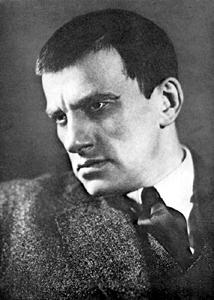 Vladimir Mayakovsky (1894 - 1930), one of Russia's most gifted writers and a prominent member of the avant-garde, is one of the most universally recognized characters in Russian history. Having taken his own life at the age of 36, he left behind a wealth of ground-breaking poems, prose, plays and art that continue to influence and inspire writers and artists to this day. Mayakovsky embodies the spirit of the Russian avant-garde - a creative individual who willingly sacrificed his means of self-expression to further the cause of the socialist revolution, and to give shape to a completely new Soviet culture. Vladimir Mayakovsky (1894 - 1930), one of Russia's most gifted writers and a prominent member of the avant-garde, is one of the most universally recognized characters in Russian history. Having taken his own life at the age of 36, he left behind a wealth of ground-breaking poems, prose, plays and art that continue to influence and inspire writers and artists to this day. Mayakovsky embodies the spirit of the Russian avant-garde - a creative individual who willingly sacrificed his means of self-expression to further the cause of the socialist revolution, and to give shape to a completely new Soviet culture.
Redefining the artist's role in society, Mayakovsky pointed to the artist's ultimate responsibility to reshape and reconstruct the new socialist culture and society. Poems influenced by Pushkin and other traditionalists were cast aside and replaced with works employing revolutionary combinations of words and images, dedicated to espousing industrialization and the new Soviet system. Mayakovsky devoted himself to fulfilling the role of "worker-poet": setting quotas for himself and adhering to the same expectations set for factory workers and other laborers, Mayakovsky pushed himself to produce, construct and create. In the span of his career, Mayakovsky produced a wide range of poetic works: early works which display the poet's hyper-sensitivity and sentimentality, and offer some of the century's most ardent and emotional lyrics of love and introspection; and works devoid of all personal expression, written to inspire and applaud the Soviet masses.
Mayakovsky's career as a poet was born in 1912, as the result of a late-night conversation with David Burliuk. Burliuk, a fellow student at the Moscow Institute for the Study of Painting, Sculpture and Architecture, had recognized the need for organization and unification in achieving a complete cultural revolution, and established a group of literary Futurists under the name of "Hylaea." Composed of individuals committed to creating new forms in art and literature, Hylaea issued illustrated publications and manifestos which inspired the gravitation of other Russian artists towards Futurism, and set the tone for the awakening of the Russian avant-garde. Having introduced Mayakovsky to his friends as "The famous poet Mayakovksy," (despite Mayakovsky's never having written a line of verse), Burliuk provided him with a role and a purpose which Mayakovsky would strive to fulfill forever.
The Russian Futurists, dismissing all writing which had come before them, proclaimed their commitment to injecting a new spirit and enthusiasm into Russian culture and literature. Spouting futurist verse from sidewalks and street corners, and calling for the complete rejection of tradition, Mayakovsky, Burliuk and the other Futurists would roam through Moscow, wearing capes, costumes, wooden spoons poised ridiculously in their lapels, and images of airplanes and animals painted on their faces.
On July 15, 1915, an event occurred which would ultimately inspire a great deal of pain and passion into the poet's life: Mayakovsky was introduced to Osip and Lili Brik. Having been invited to the Brik's apartment as a guest of Lili's sister, Mayakovsky broke into an unrequested recitation of his poem, "The Cloud in Trousers." Touched and stunned, Osip responded by offering to pay for the poem's publication, and Lili, casting away a preconceived aversion to the poet, fell in love. From that evening on, Lili and Mayakovsky enjoyed a life-long affair - an affair condoned and encouraged by Osip, and characterized by periods of great tragedy and turmoil. Osip published many of Mayakovsky's poems thereafter, and worked together with Mayakovsky as co-editors of LEF (Left Front for the Arts), the landmark literary and cultural journal of the Russian avant-garde. Lili became the inspiration behind the bulk of Mayakovsky's ensuing works, and it was to her that he dedicated nearly all of his books and poems. Her wide-eyed visage graces the cover of Mayakovsky's Pro eto. Ei i mne. (About this. To her and to me.), and her image appears throughout the text in a series of Dada-esque photomontages created by Alexander Rodchenko.
In the years that followed, Mayakovsky pledged himself to the service of the revolution. Inspired by the new government's promises of better living standards and equal rights for all Soviet citizens, and its commitment to encouraging new forms and directions in art, Mayakovsky traded poems of emotion and personal experience for socialist slogans and propaganda pieces. Urging other artists and authors to do the same, he set an example by devoting himself to designing propaganda posters for ROSTA (the Russian Telegraph Agency). One of the few times he would create his own images, these projects integrated words and pictures, offering grotesque caricatures of bankers and the bourgeoisie, and urging support for the Red Army in the civil war against the White Army.
Despite his wide-spread popularity, an assortment of misfortunes occurred which pushed Mayakovsky into a deep depression; growing disfavor from the government, the extended suppression of self-expression, and the eventual loss of the love of Lili Brik are all factors attributed to the poet's decision to shoot himself on the evening of April 14,1930.
In death, Mayakovsky is far from gone. Reversing a statement in which he recently had denounced the poet, Stalin proclaimed Mayakovsky a national hero. Today, monuments and statues of Mayakovsky stand tall in city squares throughout the former Soviet Union, and schools, universities and metro stations are named in his honor. His words live on in contemporary publications of his poems, and in productions of his plays.
This profoundly charismatic and artistic persona still serves as a symbol of the spirit of the Russian avant-garde, and the poet's remarkable presence continues to shine through photographs and other images. These portraits by Rodchenko and other avant-garde artists, so charged by the power of Mayakovsky's passion and dynamism, offer an introduction and an invitation to further indulge in the fascinating realm of the Russian avant-garde
Nabokov V.V.
Vladimir Vladimirovich Nabokov (1899 - 1977)
Russian-born novelist and critic, who wrote both in Russian and English, and spent most of his life in exile. Nabokov's best-known novel, Lolita (1955), shocked many people but its humor and literary style were praised by critics. The first version of the story, Volshebnik (The Enchanter), was written in 1939 in Paris. The Enchanter centered on a middle-aged man, who falls in love with a 12-year-old girl and marries her sick, widowed mother to satisfy his erotic desires. He molests the girl in a Riviera hotel while she's asleep, she wakens and he runs into the traffic and dies.
Vladimir Nabokov was born in St. Petersburg as the son of Vladimir Dimitrievich Nabokov, a liberal politician, and Elena Ivanovna (Rukavishnikov). His aristocratic family was wealthy and Nabokov was educated by British and French tutors. At 16 Nabokov inherited a large estate from his father's brother, but he did not have much time to enjoy his wealth because of the Russian Revolution. His family emigrated to Berlin and Nabokov entered Trinity College, Cambridge, from where he graduated three years later in 1923. His father was murdered in 1922 by a Russian fascist in Berlin, and the word of God then disappeared from his texts.
Nabokov lived in Berlin for 15 years and worked as a translator, tutor and tennis coach. He won acceptance as the leading young writer in the Berlin Russian community, with a major publishing house and two literary journals. In his early works Nabokov dealt with the death, the flow of time and sense of loss. Already using complex metaphors, Nabokov themes became later more ambiguous puzzles - he was a remarkable chess player - that challenge the reader to involve in the game. ''Readers are not sheep," he once wrote to a publisher, "and not every pen (pun) tempts them."
As a writer Nabokov gained his first literary success with his translations of some of Heine's songs. His first novel, MASHENKA, written in Russia, appeared in 1926. In 1924 Nabokov married Véra Evseevna Slonim, who came from a Jewish family; they had one son, Dmitri. Nabokov's early nine novels were published under the pen name Vladimir Serin. Among there works were The Gift (1937-38), a novel and an intellectual history of 19th-century Russia and Invitation to a Beheading (1938), a political fantasy.
When Hitler released the killer of his father, Nabokov moved to Paris in 1937. There he met the Irish novelist James Joyce. He moved three years later with his wife and son to the United States, with a loan he received from the composer Rachmaninov. Nabokov taught at Wellesley College and Cornell University, where he delivered highly acclaimed lectures on Flaubert, Joyce, Turgenev, Tolstoy and others. He also continued his extensive researches in entomology, becoming a recognized authority on butterflies. His first publication in English was an article titled 'A Few Notes on Crimean Lepidoptera,' but changing language was not easy - ''What agony it was, in the early 'forties, to switch from Russian to English,'' he wrote in a letter in 1954.
Nabokov's first novels in English were THE REAL LIFE OF SEBASTIAN KNIGHT (1941) and BEND SINISTER (1947). The Atlantic and the New Yorker started to publish Nabokov's short stories in the early 1940s. In America, apart from collecting his shorter prose of the 1930s into one book, VESNA V YAL'TE, Nabokov wrote only memoirs and verse in Russian.
In the 1950s Nabokov published CONCLUSIVE EVIDENCE (1951), an autobiography, which was later revived as SPEAK, MEMORY (1966), set mainly in pre-revolutionary Russia. Lolita, which was filmed first time in 1962 and directed by Stanley Kubrick, is one of the most controversial novels of this century. The story, dealing with the desire of a middle-aged pedophile Humbert Humbert for a 12-year-old girl, is said to be a metaphor for the writer and his art, and for the old world - Humbert is an European expatriate - encountering the new, represented by an American teenage girl, in all its vulgarity. Humbert kees a prison-diary of his lifelong fascination with pubescent "nymphets." The first is Annabel Leigh, who dies of typhus, but then he finds Lolita in a New England town. She reminds him of the little girl he loved as a boy. During the course of the story, Humbert loses her to Clare Quilty, a playwright and pornographic filmmaker. Humbert kill him and dies in a prison of a heart attack. Lolita dies in childbirth as delivering a stillborn daughter. With the book Nabokov gained a huge success, although it was banned in Paris in 1956-58 and not published ion full in America and the U.K. until 1958. Lolita allowed him to abandon teaching and devote himself entirely to writing. In 1957 Nabokov published PNIN, a story of a hapless Russian professor of literature on an American college campus, and in 1962 appeared PALE FIRE, an ambitious mixture of literary forms, partly a one-thousand-line poem in heroic couplets, partly a commentary on them by a mad exiled king. "I can do what only a true artist can do," describes the mad Kinbote himself, "pounce upon the forgotten butterfly or revelation, wean myself abruptly from the habit of things..."
From 1959 Nabokov lived in Switzerland, where his permanent home was at the Montreux Palace Hotel. His later works include ADA (1969), a love story set on the planet of Antiterra, a mixture of Russia and America, TRANSPARENT THINGS (1972) and LOOK AT THE HARLEQUINS! (1975), in which Nabokov's own life coincides occasionally with the protagonist's, also a writer.
The writer's son Dimitry undertake the translation of several of his books in these later years. Nabokov himself wanted to be valued more as an American writer than a Russian one, but in the Soviet Union he perhaps enjoyed greater fame than in the West. In LECTURES ON LITERATURE (1980) wrote that to be a good reader one do not have to lean heavily on emotional identification, action, and the social-economic or historical angle, or belong to a book club. "The good reader is one who has imagination, memory, a dictionary, and some artistic sense - which sense I propose to develop in myself and in others whenever I have the chance." - Nabokov died in Lausanne on July 2, 1977. Among Nabokov's major critical works are his study of Nikolay Gogol (1944), and translation of Alexander Pushkin's Eugene Onegin (1964), with commentary.
Olesha Y.K.
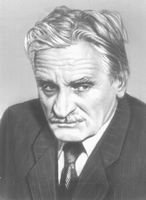 Yury Karlovich Olesha (1899 - 1960) Yury Karlovich Olesha (1899 - 1960)
Writer, journalist, and playwright, whose best-known work, Zavist (1927, Envy) painted a prophetic picture of the clashing values in the early years of the Soviet Russia. When the authorities realized that Olesha's works were more ambiguous than was permissible, he fell from favor.
Yury Olesha was born in Elizavetgrad, Ukraine, into a middle-class family. His father was an excise officer, an impoverished member of the gentry. The family moved to Odessa in 1902. Olesha was educated at home, and Rishelevskii gymnasium, Odessa (1908-17). He studied law for two years at Novorossiikii University, Odessa, where he participated in literary discussion groups.
Rejecting his parents' monarchist sympathies Olesha joined in 1919 the Red Army for a year. He served as a telephonist in a Black Sea naval artillery battery. He married Olga Gustavovna Suok and worked as a propagandist at the Bureau of Ukrainian Publications in Kharkov. In 1922 Olesha moved to Moscow and published his first story, 'Angel'. He became a staff member of the railway journal Gudok, which had such writers as Isaak Babel, and Ilf and Petrov.
In the 1920s Olesha published humorous verse and sharp, critical articles. His famous novel Envy appeared ten years after the Revolution and created an sensation. The ambiguous work tells the story of a Nikolai Kavalerov and two brothers, Andrei and Ivan Babichev. Andrei is a hero of the Revolution whom Kavalerov envies and who represents the rising generation. Kavalevov longs for personal fame. He allies with Ivan, opponent of the new age, against Andrei. Their plans fail, and Ivan withdraws from the scene. As the narrator in Dostoevsky novel Notes from Underground, Kavalerov is pushed to the margins of society, that can find no place for a dreamer. The stage adaptation of the novel was entitled A Conspiracy of Feelings (1929). In Olesha's original ending Kavalevov lapses into a stupor and is denounced by Ivan as a worthless museum piece, "the man whose life was stolen away." In the staged ending, Kavalevov murders Ivan, instead of Andrei.
Envy was followed by novella The Three Fat Men (1927), where the circus stars Tibul and Suok are leading the people to overthrow repressive authorities. It was made into a play (1930), a ballet (1935) and an opera (1956). After the early 1930s Olesha published little. 'A Cherry Pie', published in a collection of short stories in 1931, Olesha confessed his confusion: "Comrade driver, believe me, I am a mere amateur, and cannot tell you what turn to take." He wrote a few translations and film scenarios, and chose silence. In a speech to the First Congress of Soviet Writers in 1934, Olesha defended the need for independent literature. Following this event Olesha's name vanished from Soviet literature. The literary doctrine known as Socialist Realism was formulated more or less by Maxim Gorky, who was chosen chairman of the Writers' Union. When a few years before Envy was praised for its original form, it was now condemned for its 'reactionary' stylistic tendencies and in 1937 Olesha was accused of 'antihumanism'.
During World War II Olesha was evacuated with the Odessa Film Studio to Ashkhabad in Turkmenistan. After the war he returned to Moscow. His only noteworthy theatre piece in later years was an adaptation of Dostoevsky's The Idiot for the Vakhtangov Theatre. Olesha died on May 10, 1960.
The publication of a selection of his stories, IZBRANNYE SOCHINENIYA, signaled Olesha's rehabilitation in 1956, three years after Joseph Stalin's death. In 1965 appeared posthumously Olesha's autobiographical No Day Without a Line, a collection of fragments in more or less thematic order, dealing with such subjects as 'family', 'school', 'the circus' and 'literary figures'. "There was something Beethovesque about Yuri Olesha, something mighty, even in his voice," said the writer Konstantin Paustovsky once. "His eyes spotted many marvellous things around him, and he wrote about them tersely, precisely, and well."
Ostrovsky N. A.
Ostrovsky, Nikolai Alexeyevich. Born in 1904, the fifth child of poor parents in the village of Viliya in western Ukraine. He father was a seasonal laborer and his mother the daughter of a forest worker. Attended the village school until he was nine. In 1913 he worked as a herdsboy. In 1914, family moves to railroad town of Shepetovka. He enters elementary school, but is expelled by scripture teacher. After that he worked in the kitchens at the railroad station, but was dismissed in 1917 for sleeping on the job. He found work in a timber yard, then in 1918 he became a stoker's mate then electrician at the local power station. When the Germans occupied the town in spring of 1918, Ostrovsky ran errands for the local Bolshevik underground. In July 1918 he joined the Komsomol and the Red Army in August. He served in the Kotovsky cavalry brigade. During 1920 he was wounded near Odessa and contracted typhus. He returned to action but was again wounded near Lvov and sent to hospital in Kiev. In October he was demobilized on medical grounds. In 1921, he began working in railway workshops of Kiev and as secretary of the local Komsomol.
He suffered from rheumatism and typhus and in August 1922 he was sent to Berdybsk, a resort on the Sea of Azov, for treatment. In October 1922 he was officially declared an invalid. However he continued working. In 1923 he was appointed Commisar of the Red Army's Second Training Battallion and Komsomol secretary for Berezdov in western Ukraine. In Jan 1924 he went to Izyaslav as hed of Komsomol district committee. In August 1924 he joined the Communist Party. The year 1925 he spend in Kharkov for medical treatment. In May 1926 he went to a sanatorium in the Crimeas. By Dec 1926 polyarthritis deprived him of almost all mobility and be became virtually bedridden. Nonetheless, in December 1927 he began a correspondence course at the Sverdlov Communist University in Moscow and he completed it in June 1929. In August, he lost his vision.
In 1930, undaunted by his paralysis and blindness, in Sochi, he began work on first novel, How The Steel Was Tempered. He also wrote articles for newspapers and journals and spoke often on the radio. In April 1932 he became a member of the Moscow branch of the Association of Proletarian Writers and in June 1934 he joined the Union of Soviet Writers. On October 1, 1935, he was awarded the Order of Lenin. He died in December 1936, aged 32. His second novel, Born of the Storm, begun in Jan 1924 and concerning the Civil War in Ukraine, remained unfinished.
Pasternak B.L.
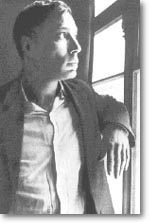 Boris Leonidovich Pasternak(1890 - 1960), poet and prose writer, one of the great modern masters of Russian literature. Pasternak was the elder son of artist Leonid Pasternak and pianist Rozaliya Kaufman. He was born, brought up, and lived most of his life in Moscow. His early years were spent in a richly cultural artistic atmosphere. He showed early promise in both art and music, and under the impact of Scriabin studied musical composition for six years (1903-09). Pursued by vocational doubts, however, he read philosophy at Moscow University (1908-13), and an enthusiasm for Neo-Kantianism took him to Marburg University to study under Hermann Cohen in the summer semester of 1912. Boris Leonidovich Pasternak(1890 - 1960), poet and prose writer, one of the great modern masters of Russian literature. Pasternak was the elder son of artist Leonid Pasternak and pianist Rozaliya Kaufman. He was born, brought up, and lived most of his life in Moscow. His early years were spent in a richly cultural artistic atmosphere. He showed early promise in both art and music, and under the impact of Scriabin studied musical composition for six years (1903-09). Pursued by vocational doubts, however, he read philosophy at Moscow University (1908-13), and an enthusiasm for Neo-Kantianism took him to Marburg University to study under Hermann Cohen in the summer semester of 1912.
Contacts with Moscow literary circles and his reading of Russian Symbolist literature (Blok, Bely and others) and of works by Hamsun, Ibsen, Przybyszewski, and Rilke probably first stimulated Pasternak's own literary endeavors, and around 1909 he wrote translations of Rilke and pieces of autobiographically based prose and verse. Pasternak's publishing debut was in 1913 with the Lirika poetic group, and in 1914 a first verse collection Twin in the Stormclouds (Bliznets v tuchakh) appeared. The same year he joined Sergei Bobrov's moderate Futurist group, Tsentrifuga, and until 1917 published polemical articles and verse in a variety of futurist miscellanies. Topical "urban", symbolist and ego-futurist elements did not obscure the original talent and personality in Pasternak's early poetry, which was characterized by alliterative orchestration, novelty of rhyme, rhythmic and lexical variety, and by virtuosic metaphor. Pasternak met Mayakovsky in spring of 1914, and some of his wartime verse registered Mayakovsky's influence. Two prose stories "The Mark of Apelles" (Apellesova cherta 1915, published 1918) and "Letters from Tula" (Pi'sma it Tuly 1918, published 1922) reflected Pasternak's attempt to purge himself of the alien "romantic manner," and an article called "Some Propositions" (Neskol'ko polozhenii 1918, published 1922) also dwelt on the aesthetic and ethical reasons for resisting the current vogue for poetic rhetoric and self-dramatization.
Partially lamed by a childhood accident, Pasternak was rejected for military service and spent part of World War I engaged in clerical work in the Urals, only returning to Moscow after the February 1917 Revolution. An amorous affair of summer 1917, intensified by revolutionary exhilaration and experiences of a journey to the Saratov area, inspired the verses of My Sister Life (Sestra moya zhizn'). This important poetic cycle circulated widely before its publication in 1922 and earned Pasternak acclaim as a major modern poet. The cycle celebrates love and nature experience as the rapturous revelation of a creative life-force. In it luxurious and explosive imagery combines and sometimes contrasts with the disciplined quatrain form, occasional colloquial idiom and elliptical syntax. The same freshness of vision was also captured in the prose story "Zhenya Luvers' Childhood" (Detstvo Lyuvers, 1918, published 1922) in which a child's developing awareness of surrounding objects, human beings and moral concerns is evoked, transcending the arbitrariness of ordinary psychological description and subverting the orderly severity of the unpoetic adult world.
Pasternak's first marriage, to Evgeniya Lurie, broke up in 1931 after nine years, largely as a result of his new infatuation with Zinaida Neigauz, who eventually became his second wife. In summer 1931 Pasternak travelled with his new consort to the Caucasus, and new friendships blossomed with Georgian poets Iashvili, Tabidze, and Chikovani. Love lyrics and Georgian impressions loomed large in a further verse collection Second Birth (Vtoroe rozhdenie, 1932). The title evidently implied a form of renewal, and in the verses Pasternak spoke of and demonstrated his striving towards a new and "unprecedented simplicity." The poetry also hinted at a new-found optimism and reconciliation of lyrical and social elements, while still emphasising the seriousness and tragic potential of the poet's calling. But artistic rebirth was short-lived. When independent artistic groups were disbanded in 1932 and the new Union of Soviet Writers assumed control of literary affairs, one of its primary functions was to impose conformity and adherence to the principles of socialist realism. Pasternak was officially recognized as a major poetic talent, and for a time he perhaps naively showed willingness to participate in official literary life. He was a leading, though oblique and idiosyncratic speaker at the First Congress of Writers in 1934, and he was in the Soviet delegation to the Paris Conference of 1935 in Defense of Culture. But he recognized the dangers of being cast as an approved "court poet" and was privately revolted by the tyranny of Stalinism. After 1935 his flow of original writings virtually ceased, and his few recorded public statements were sharply critical of official interference with artistic freedoms. Earlier cajoling and muffled criticism of Pasternak now became openly hostile, and as colleagues and friends disappeared in the purges of the later 1930s, Pasternak resorted to poetic translation as a safer livelihood. His renderings of Georgian poets pleased Stalin and may have helped to preserve his liberty; they were followed by Russian renderings of Byron, Keats, Petofi, Verlaine, and Becher. In the years of World War II and the later 1940s he also translated the major tragedies of Shakespeare, and these remain the standard versions used for staging the dramas in Russia. Two further major translating achievements were Pasternak's versions of Goethe's Faust (1953) and Schiller's Maria Stuart (1958).
Within Russia, the war brought some ideological relaxation and concession, and a revival of morale. Some of Pasternak's earlier verse was reprinted and two new collections appeared. On Early Trains (Na rannikh poezdakh, 1943) and Breadth of Earth (Zemnoi prostor, 1945) handled patriotic themes while eschewing all hackneyed official rhetoric; in simple, unforced language Pasternak described everyday local scenes, evoking a sense of communion with common folk at work and at war. The postwar ideological clampdown of "Zhdanovism" in the arts again forced Pasternak into silence. Surrounded by terror and suspicion, he labored on with translations while working away in secret on the manuscript of a prose novel. Themes, characterizations, names, and situations from prose fragments published between 1918 and 1939 now re-emerged in the novel Doctor Zhivago which Pasternak completed in 1955.
Doctor Zhivago was rejected for publication in the USSR, but its publication (1957) and acclaim in the West, followed by the award of the Nobel Prize for Literature (1958) unleashed a bitter official campaign against Pasternak, forcing him to reject the award. In the late 1950s Pasternak composed a further book of transparent and reflective verse, When the Weather Clears (Kogda razgulyaetsya, 1957), and a second "autobiographical essay," Avtobiograficheskii ocherk (1957); both books came out first in the West, but were later printed in the USSR also. A historical drama, The Blind Beauty (Slepaya krasavitsa), was left incomplete at Pasternak's death; surviving extracts depict Russia's emergence from tyranny to emancipation and enlightment in the late 19th and early 20th century and suggest that the work was conceived as a form of aesopian comment on Stalinist and post-Stalinist Russia. Despite official opprobrium, Pasternak's funeral at Peredelkino writers' settlement near Moscow was attended by thousands, and his villa and grave are still places of pilgrimage.
Paustovsky K.G.
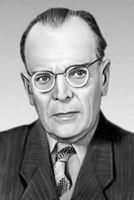 Konstantin Georgievich Paustovsky Konstantin Georgievich Paustovsky
Russian soviet writer, born 31 May 1892 in Moscow. His father, a descendant of the Zaporozhsky Cossacks, was a railroad statistician. His mother came from the family of a Polish intellectual. Russian, Polish, and Ukrainian were spoken in his home. He grew up in Ukraine, partly in the country and partly in Kiev. In 1912, he entered the University of Kiev, the physics and mathematics faculty, but then he switched to the study of philosophy. In 1914 he transferred to the University of Moscow. His education was interrupted by World War I. He served at the front as a medical orderly.
After the war he wandered around, trying his hand at many jobs in the factories of Ekaterinoslav, Yuzovka, and Taganrog as well as among the fishermen on the Azov Sea. In March 1917 he settled down in Moscow and began work as a journalist. During the Civil War, he was again traveling, this time as a journalist. He found himself in Kiev, Odessa, Batum, Sukhumi, and Tbilisi. In 1923, he was back in Moscow.
Paustovsky started writing while still in the gymnasium. His first works were imitative poetry. He then tried prose and his first stories to be published were Na Vode ("On The Water") and Chetvero ("Four") in 1911 and 1912. During World War I he created some sketches relaying his impressions of life at the front, and one of these was also published. Paustovsky tried a return to poetry and even sent some of his poems to Bunin. However, Bunin replied, "I think that your sphere, your real poetry, is prose. It is here, if you are determined enough, that I am sure you can achieve something significant."
His first book, Morskiye Nabroski ("Sea Sketches") was published in 1925, but was little noticed. This was followed by Minetoza in 1927 and the romantic novel Blistaiushchiey Oblaka ("Shining Clouds") in 1929. In the 1930s, Paustovsky, like other writers of the time, visited various construction sites and wrote in praise of the industrial transformation of the country. To this period belong the novels Kara-Bugaz (1932) and Kolkhida (1934). Kara-Bugaz won particular praise. It is essentially a tale of adventure and exploration around and near the Kara-Bugaz Bay, where the air is mysteriously heavy. It begins in 1847 and moves to the Civil War period when a group of Reds are abandoned to near-certain death on a desolate island. There are, however, survivors, who are rescued by an explorer. Some of the survivors continue on to help in the exploration, development and study of the natural wealth of the region.
Paustovsky continued to explore historical themes in Severnaya Povest ("Tale of the North") (1938). In this tale, following the anti-Tsarist Decembrist uprising in Petersburg, a wounded officer who took part in the uprising and a sailor try to make it by foot across the ice to Sweden. They are captured amid a series of dramatic events. Years later, in Leningrad of the 1930s, the great-grandsons of the participants in the events unexpectedly meet.
During the later 1930s, Russian nature emerged as a central theme and leitmotif for Paustovsky, for example, in Letniye Dni ("Summer Days") (1937) and Meshcherskaya Storona (1939). For Paustovsky, nature was a many-faceted splendor in which man can free himself from daily cares and regain his spiritual equilibrium. This focus on nature drew comparisons with Privshin. And, in fact, Privshin himself wrote in his diary, "If I were not Privshin, I would like to write like Paustovsky."
During World War II Paustovsky served as a war corresondent on the southern front. From 1948 until 1955 he taught at the Gorky Institute for Literature.
In 1943 Paustovsky produced a screenplay for the Gorky Film Studio production of "Lermontov", directed by A. Gendelshtein. Another work of not is Tale of the Woods1948. This story opens in remote forest in the 1890s, where Tchaikovsky is working on a symphony. The daughter of the local forester often brings Tchaikovsky berries. Half a century later, the daughter of this young girl is now a laboratory technician at the local forest station.
Perhaps Paustovsky's most famous work is his autobiography, Povest o Zhizni ("Story of a Life") (1945-1963). It is not a mere historical document, however; rather, it is a long, lyrical tale, focusing on his personal perceptions of events. In 1955, Paustovsky gave us The Golden Rose, a book about "literature in the making". It consists of stories and fragments dealing with creativity, the role of the writer, and the function of literature. One of the stories in this work is "Precious Dust", in which a trash collector spends two years gathering the grains of gold dust from the trash bins of a jewelry shop. When he has enough gold, he smelts it into a beautiful golden rose as a gift for the woman she loves. But, by then, she has moved to America and left no forwarding address.
Paustovsky also edited a few literary collections, Literary Moscow (1956) and Pages from Tarusa, in which he tried to bring new writers to the public's attention and to publish writers suppressed during the Stalin years.
Other major works include "Snow", Crossing Ships (1928); The Black Sea (1936); Summer Days (1937); and The Rainy Dawn (1946). He is also the author of several plays.
In 1965, Paustovsky was nominated for the Nobel Prize.
In February 1966 he was one of more than 125 prominent figures from science and the arts who signed a letter to the 23rd Party Congress appealing against re-Stalinization.
He died in Moscow on July 14, 1968.
Pavlenko P. A.
Pavlenko, Pyotr Andreyevich. Born 29 June 1899 in Petersburg, the son of an office worker. He received his education at the Bakinsky Tekhnicum, from which he graduated in 1920. That same year, he joined the Bolshevik Party and the Red Army, where he served as a political worker, including duty in the oil city of Baku. After the Civil War, he worked in the Soviet trade mission which took him to Turkey, Syria, Greece, Italy, and France between 1924 and 1927.
As a writer, Pavlenko made his literary debut with Aziatskiye Povesti ("Asian Tales"), exotic in subject matter and florid in style. Pavlenko became associated with the Pereval ground, and his story Shematony appeared in a Pereval anthology of 1930. Two years later, he published Barrikady ("Barricades"), a short novel dealing with the Paris Commune of 1870. A larger work, Na Vostoke ("In The East"), appeared in December 1936. It chronicles the adventures and enthusiasm of ordinary Soviets building new cities in the far eastern reaches of wildest Siberia. Pavlenko characterized these new Soviet citizens this way:
And so they came out there in hundreds of thousands and in millions in order to keep pace with the Revolution and not lag a step behind it. Their fathers had burned down estates, had defended scores of front, had lost their wives and become disused to their children, while the sons were building cities and setting up stable families, were getting used to sleeping eight hours and eating three meals a day.
It is a picture of stabilization after the hectic Revolutionary period. But still there are White Russian spies and military worries. And--wouldn't you just know it--Japan starts a war. But the Soviet Union bombs Tokyo, sinks the Japanese fleet with its submarines, and stops a Japanese attack with a new secret weapon. Pavlenko seemed to have a particular dislike for England which he invoked as a symbol of the old capitalist world bound to fall:
England was tossing in agony, and the young nations, her laborers, stood by, their mouths agape with joy and happiness. With England, a whole era in the history of mankind was passing away. If it were possible to impersonate political systems we would have seen a decrepit gentleman posing as a diplomat and an educator, who, after his death, turned out to be only a secondhand dealer and usurer.
Pavlenko also undertook to write several successful film scripts, most notably his collaboration with film genius Sergei Eisenstein on Aleksandr Nevsky (1938). His second film script was for Yakov Sverdlov (1940), about the life and work of the famous Bolshevik. This film won a State Prize, second class. In 1942 he produced a script for the film Slavnii Malii, a "heroic musical comedy" adaptation of his own story, Mstiteli ("The Avengers"), which tells the tale of a French flyer who is shot down during the war and winds up in a detatchment of partisans around Novgorod. His next film script, Klyatva ("Vow") (1946), centers around a woman's two meetings with Stalin--the first after Lenin's death when Stalin vows to remain true to the great leader's legacy, and the second following the end of the Great Patriotic War. Pavlenko continued his service to the cult of the personality in the script for Padeniye Berlina ("The Fall of Berlin") (1949), a war film. Pavlenko's last script was for Kompozitop Glinka ("Composer Glinka") (1952), a film in which he also acted the role of F. Bulgarin.
Besides his artistic work, Pavlenko also worked as a journalist. He reported directly from the court room during the 1927 trial against the anti-Soviet Trotskyite Center. He was a war correspondent during the Soviet-Finnish War of 1939 and 1940 and again during World War II, working for Pravda and Krasnaya Zvezda. Between 1942 and 1943 he also served as the Chairman of the Defense Commission of the Union of Writers.
Numerous of his stories and war sketches appeared in the books Put Otvagi ("Path of Bravery") (1942) and Narodniye Mstiteli ("People's Avengers").
Pavlenko's main work, for which he won the Stalin Prize in 1947, is Schastye ("Happiness"). Set mainly in the Crimea in 1944 and 1945, it is the story of a wounded war veteran who comes to the war-torn Crimea hoping to settle down to a nice, quiet life. Instead, he finds happiness by plunging himself into Party work to aid in the reconstruction of the area.
In the course of the novel, Roosevelt, Churchill, and Stalin show up for their famous Yalta Conference. The author treats Roosevelt with respect, as in this passage:
Roosevelt created a good impression upon those who saw him. The people like to see in great men the features of the zealot, for what, after all, is the measure of greatness if not zeal?
It is even suggested in the novel that Roosevelt might eventually come over to the Communist side. Churchill, on the other hand, doesn't come off looking so well:
Churchill, with the inevitable cigar in his mouth, obese and senile-looking, but youthfully active and possessing amazing power of endurance, also created an impression, but not the same as that created by Roosevelt. Far from it. The British Prime Minister was astonishing rather than likeable. It was felt that the British Prime Minister was a tireless businessman consumed with anxiety lest he arrive too late and miss something supremely important likely to be going on at any moment-.People wanted to respect him, but there was nothing likeable about him. He gave the impression of an old gentleman who had lunched well and had washed his lunch down with some delicious and bracing beverage.
Stalin, naturally, is portrayed somewhat more flatteringly, as when the hero of the novel, Voropaev, is brought to see him:
Stalin was incredibly calm. It seemed to Voropaev that Stalin had not aged at all since he had last seen him at the parade in Red Square on November 7, 1941, but that he had changed in a different way. His face was the same, familiar down to the smallest wrinkle, but it had acquired a new air, an air of triumph, and Voropaev rejoiced on observing this. Stalin's face could not help changing and becoming slightly different, because the people looked into it as in a mirror in which they saw the reflection of themselves, and the people had changed, had become still more majestic.
Despite his heavy work load at the Yalta Conference, Stalin takes the time to study the local conditions, advising a gardener on grape-growing techniques and pointing out a good location for a future olive sovkhoz. He also makes a veiled reference to a purge to come soon in the Moscow cadres, a comment which brings a twinkle to the eyes of Molotov, who is also present.
The novel Happpiness also highlights a difference between the Soviet and Western social systems: In Austria, the Soviet army takes time to help some peasants plow their field, asking for only a thank you in return. The Americans see this as insidious propaganda, while at they same time they see nothing wrong with painting soap advertisements on the sides of their tanks.
The short novel Stepnoe Solntse ("Steppe Sun") was published in 1949.
Pytor Pavelko won a total of four Stalin Prizes (1941, 1947, 1948, and 1950).
He died on 16 June 1951.
Pilnyak B.A.
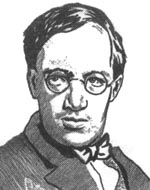 Boris Andreevich Pilnyak, real name: Boris Andreevich Vagau. Born 29 Sept (old style) 1894 in Mozhaisk. Spent childhood in Mozhaisk, Bogorodsk, and Kolomna. Also spent time in Saratov and the village of Ekaterinenshtate (later renamed Baronsk) on the Volga. His father was a veteranarian and his mother a teacher. They were active in the Populist movement. In 1920 he gratuated from the Moscow Commerce Institute, in the economics department, specializing in administrative finances. Began writing poetry at age nine. First poem published in 1909, when he was 14 years old. He considers his literary career began in 1915 when he was published in the journals "Russkaya Mysl", "Zhatva" and others. Boris Andreevich Pilnyak, real name: Boris Andreevich Vagau. Born 29 Sept (old style) 1894 in Mozhaisk. Spent childhood in Mozhaisk, Bogorodsk, and Kolomna. Also spent time in Saratov and the village of Ekaterinenshtate (later renamed Baronsk) on the Volga. His father was a veteranarian and his mother a teacher. They were active in the Populist movement. In 1920 he gratuated from the Moscow Commerce Institute, in the economics department, specializing in administrative finances. Began writing poetry at age nine. First poem published in 1909, when he was 14 years old. He considers his literary career began in 1915 when he was published in the journals "Russkaya Mysl", "Zhatva" and others.
In 1922 he visited Germany, and England in 1923. He made two lengthy trips to the Far East (1926 & 1932) and spent five months in the United States in 1931, where he was briefly under contract to MGM. "O.K.: An American Novel" (1932) contains his often disagreeable impressions of America.
His first major work, "The Naked Year" (1921), is a panorama of events of the revolution and the civil war told in a fragmentary, plotless, and stylistically heterogenous manner. "Tale of the Unextinguished Moon" (1926) contained an implication of the highest authorites (Stalin) in the death of military leader Mikhail V. Frunze. "Mahogony" (1929), which included an idealized portrait of a Trotskite Communist, was condemned as slanderous and Pilnyak was villified. Pilnyak knew members of the highest circles of authority. "The Volga Falls to the Caspian Sea" (1931) shows a struggle of sabateurs against true communists, who are trying to alter nature and establish a new morality.
Karl Radek was an intimate of Pilnyak's, and he was acquainted with Trotsky and some members of the secret police. He married three times and left three children. He was arrested in 1937 and apparently died the same year. (Some Soviet sources put his death at 1941.) Posthumously rehabilitated.
Other works include "Ryazan Apple" (1921); "The Blizzard" (1921); "The Third Capital" (1922); "Black Bread" (1923); "Machines and Wolves" (1924); "Mother Earth" (1924); "Beyond the Portage" (1925); "A Chinese Tale" (1927); and "Ivan Moscow" (1927).
Prozorovsky L. V.
Prozorovsky, Lev Vladimirovich Born in 1914 on the Volga in the Atkarsky uezd, near Saratov, the son of a country doctor. Father died when he was 13. After 7th grade in school, he went to work in order to help his mother raise their sister. He was a packer of boxes, an elevator operator in a hospital, an electrician, and a lighting technician at an opera theater, where he also joined the Komsomol. He later became a police officer assigned to the Saratov criminal investigation group "BB" (brigade for the struggle against banditism). He was wounded on 17 May 1935, which ended his police career.
He went to work as a photographer for the newspaper "Communist", which published his first poem in March 1938.
He took evening classes at the pedological institute and became the Sartov correspondant for "Soyuezfotokhronika".
During the Great Patriotic War, he was sent to the front as a photo scout for an artillery division until August 1942, after which he was a correspondant for the army newspaper "Na Razgrom Vraga". In September 1944 he became a member of the Communist Party of the Soviet Union.
His first book, "Raketa", a collection of poems, was published in Riga in 1955. This was followed with several adventure stories, including "Foreign Winds" (1957), "Spear of the Black Prince" (1962), and "Duel Without Seconds". In 1957 he became a member of the writers union, upon the recommendation of Mariya Davidovna Marich, author of a novel about the Decemberists, "Northern Lights".
The spy tale "Hunting For The Past" (1985) was the result of five years of friendship and study with the border guards in the Baltic region, where Prozorovsky watched with his own eyes the struggle against, as he puts it, "those attempting to bring ideological poison into our nation."
Semyonov Y.S.
Yulian Semyonov, Russian prose writer was born 8 October 31 May 1931 in Moscow. His father was one of the "repressed". Yulian Semyonov studied at the Oriental Institute of Moscow University, majoring in Persian History and Politics. After graduation, he worked as a researcher and lecturer. He began publishing fiction in 1958 and gave up the academic life to become a journalist and writer. His 1965 novel Petrovka 35 was an immediate success.
But Semyonov is mainly known for his "Stirlitz" series of novels. Otto von Stirlitz is the code name for Maksim Isaev, a Soviet intelligence agent who faithfully served the motherland in various posts from 1918 to 1967. He operated in Paris, Shanghai, and, most notably, in Nazi Germany during World War II where he infiltrated the SD (political security police) and practically single-handed exposed an attempt by Britain and the United States to conclude a separate peace with the Nazis and open a joint front against the Soviet Union. Stirlitz flirted with disaster in 1952 when, upon return to the Soviet Union, he was arrested by Beria's people. Only Stalin's timely death saved Stirlitz from execution.
Unlike the "James Bond" type of spy thriller, the Stirlitz books are based on actual events, thoroughly researched and full of historical document and fact. Semyonov flew all over the world to research his books, even meeting with famed Nazi Otto Skorzeny. Semyonov maintained close contact and was friendly with KGB agents. There are also rumors that Semyonov himself was a KGB colonel. But his close friends deny this.
The Stirlitz series appeared at a time when there was a conscious decision by the Soviet government--in light of the revealation of the Stalin-era abuses--to reabilitate the image of the intelligence worker in the eyes of the public. In this, the Stirlitz books were a hugh success.
Stirlitz was an ideal Soviet intelligence worker. Modest and businesslike; cultured and well-rounded. He could speak on philosophy, history and science with equal ease. He knew most every European language, with the exception of Irish and Albanian. Hard-headed and cold-blooded, but not cruel. He preferred to use intellectual methods rather than crude violence. In his entire career he killed only once. He was a moderate drinker; his main use for a bottle of cognac was as a weapon to club opponents over the head with. And he was virtuous; when invited to partake of some prostitutes, he declined saying, "I'd rather drink some coffee." His one indulgence was his speedy and fancy Horch automobile. And through all his international adventures, Stirlitz, a true Russian at heart, was pining for his homeland.
Stirlitz's status as folk hero is confirmed by the prevelance of Stirlitz jokes, which themselves constitute a whole sub-genre of Russian literature just begging for academic study.
Even in post-Soviet society, Stirlitz is popular. Newspapers report that when the film version of Seventeen Moments of Spring is broadcast, there are noticably fewer people on the streets and the incidence of crime falls.
Semyonov was a prolific writer and, besides the Stirlitz books, his major works include: Petrovka, 38; Ogoreva, 6; Confrontation; Reporter (1987); Burning; International Knot; Irreconcilability; Press Center; TASS is Authorized to Announce; Auction; Versions; Death of Stolypin; Diplomatic Agent; Dunechka and Nikita; Face to Face; Scientific Commentary; He Killed Me Near Luang-Prabang; Crossings; Pseudonym; Peter's Death; and The Secret of Kutovsky Prospect.
He also produced many short stories such as: My Heart Is In The Hills; Leader; Grigorio, Friend of Ernesto; Rain in the Gutters; Still Not Autumn; Exile of the Poet; Myocardial Infarction; How This Was; Horses and People; My Guide; Night and Day; Farewell to a Beloved Woman; Skorzeny--Face to Face; Old Man in Madrid; and Old Man in Pamplona.
Besides his writing, Semyonov also found time to serve as President of the International Association of Crime Writers.
In 1990 Semyonov suffered a major heart attack and was clinically dead before surgeons were able to revive him. After that, however, he was severely debilitated, confinded to bed and unable to work. He died in 1993. He was married and had two daughters.
Serafimovich A.S.
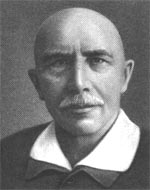 Alexander Serafimovich, a genuine Don Cossack, was born on January 19, 1863 in the village of Nizhne-Kurmoyarskaya, 100 miles east of Rostov-on-Don. At age three, he and his family moved to Poland with his father, who was stationed there with a Cossack regiment. In 1874, they returned to the Don and settled in Ust-Medveditskaya (later renamed Serafimovich). Alexander Serafimovich, a genuine Don Cossack, was born on January 19, 1863 in the village of Nizhne-Kurmoyarskaya, 100 miles east of Rostov-on-Don. At age three, he and his family moved to Poland with his father, who was stationed there with a Cossack regiment. In 1874, they returned to the Don and settled in Ust-Medveditskaya (later renamed Serafimovich).
After his father's death, he secured a military scholarship and studied mathematics and physics at the University of Petersburg. He met Alexander Ulyanov, Lenin's older brother, and joined a revolutionary student group. In 1887 he was arrested for writing a proclamation about the attempted assassination of Alexander III. He was exiled to Mezen in Archangel Province in the far north for three years.
In 1890 he returned to Ust-Medveditskaya, then moved to Novocherkassk and Rostov-on-Don, surviving by giving lessons and contributing sketches to local newspapers. During this time, he got involved in People's Will groups and carried on propaganda for them.
In 1902 he moved to Moscow and dedicated himself to writing. In 1903 he joined Maxim Gorky's cooperative publishing enterprise Znanie, which published three volumes of Serafimovich's stories. He participated in the 1905 Revolution in Moscow's Presnya district. He traveled to Finland in 1910. In 1915, after the outbreak of World War I, he went to Galacia where he and Lenin's sister, Maria Ulyanova, served as medical orderlies. He was also correspondent for Russkiye Vedomosti. He was one of the first writers to support the October Revolution and was given responsibility for the artistic section of Izvestiya.
In March 1918 he was at the civil war front as a correspondent for both Izvestiya and Pravda. He joined the Communist Party in 1918. After the Civil War he was active in editorial work as a board member of Tvorchestvo and chief editor of Oktyabr. He was awarded the Stalin Prize, Order of the Red Banner and Order of Lenin. He died in Moscow on 19 January 1949.
Works: On an Ice-Floe (1889), a story of hunters in the White Sea. The Snow Desert (1889). On Rafts (1890). The Switchman (1891), a railway story. In The Health Resort (1902), a tale set in Yalta where Serafimovich himself has received treatment for tuberculosis. Into the Storm (1903), a fishing tale. On the Shore (1903), another fishing tale. In Presnya (1906), The Bombs (1906), and How They Were Hanged (1908) reflect his experience during the 1905 revolution. In the Middle of the Night (1906) contains a portrayal of a workers' mass meeting in the Crimea. The Glow of the Fire (1907), describes the burning of church estates. At the Precipice (1907) shows punitive measures taken by the authorities after the events of 1905. Forest Life (1908), set in Archangel province. Sands (1908), a story of peasant greed and murder, was praised by Lev Tolstoy. Chibis (1908), a sad tale about a homeless family of farm laborers roaming the Don country. A Town in the Steppe (1912), his first novel, tells the tale of the struggle between capitalists and proletarians as a new industrial town is built in the Don steppes. Three Friends (1914), about life on a small farm in the Don. Short Summer Night (1916), deals with exploitation of children. The Black Three-Cornered Cap (1914) and Thermometer (1914) deal with the poverty and suffering of ordinary people during wartime. The Revolution, the Front and the Rear (1917-1920), a series of civil war sketches and tales. His main novel, The Iron Flood (1924), describes the march of the Taman Army between late August and mid-September 1918. It depicts mass action, mass mentality and the class essence of the Civil War. Two Deaths (1926) is story of a woman who volunteers to spy on the White cadets during street-fighting in Moscow following the Revolution. Over the Don Steppes (1931) is a series of sketches about the live of the Don Cossacks. Collective Farm Fields and an autobiographical novel remained unfinished at his death.
Shishkov V.Y.
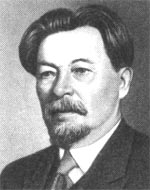 Vyacheslav Yakolevich Shishkov, born on 3 October 1873 in the town of Bezhetsk, Tver region. His father was a merchant, but suffered a business setback and became a shop assistant working for other local merchants. Shishkov studied in the local school and, from a very early age, showed a talent for writing. At age 11 he wrote The Wolf's Lair, a story of robbers. Vyacheslav Yakolevich Shishkov, born on 3 October 1873 in the town of Bezhetsk, Tver region. His father was a merchant, but suffered a business setback and became a shop assistant working for other local merchants. Shishkov studied in the local school and, from a very early age, showed a talent for writing. At age 11 he wrote The Wolf's Lair, a story of robbers.
Shishkov went on to study civil engineering at the Vyshnevolotskoe Technical School, from which he graduated in 1891. He worked in the Novgorod and Vologosky regions, then, in 1894, went to work in the Tomsk region of Siberia, where he was to stay for 20 years. He traveled the regional waterways, measuring and making maps of the Enisei, Irtysh, Ob, Lena, Biya, Katun, Chulym, Angara, and Lower Tungusk. His travels brought him in contact not only with the varied wonders of Siberia, but also the many strata of society there: workers, peasants, gold miners, criminals, wandering bums, political exiles, sectarians.
In 1908, the astounding sights and sounds of a thunderstorm around a gold-mining encampment so entranced Shishkov, that he felt compelled to describe it in writing. And a new career was born. His first published story, Kedr ("The Cedar"), appeared in the newspaper Sibirskaya Zhizn' in 1908. This was followed in 1909 by Pomolilis', a story taken from Tungus life, which was published in the Petersburg journal Zaveti.
He continued his work and explorations. In 1911, he spent 8 months on the remote reaches of the Lower Tungusk studying not only the river, but the folklore and society of the locals. In all, he gathered 87 songs and bylini, which were published in 1914 by the Irkutsk Geographical Society.
In 1914, Shishkov also took a trip to Petersburg, where he met Gorky. He showed Gorky his story Taiga, depicting life in a Siberian village. Gorky liked it and said it was asssured of success.
Although he called Siberia his "second motherland", he parted with it in 1915, moving to Petersburg both to work in the Ministry of Transportation and to continue his writing career. His first collection of stories, Sibirsky Skaz (1916) was a celebration of the Siberian people, nature and life. It also contained in it a reflection of the revolutionary-democratic attitude of the author.
Following the October Revolution, Shishkov gave himself fully to writing. He felt the need to wander again, to better acquaint himself with the lives and ways of rural folk. Between 1918 and 1924 he undertook trips through the Petrograd, Tversk, Smolensk and Kostroma regions. The result was Rzhanaya Rus, another collection of stories.
The Gang (Vataga) (1924) and Lake Peipus (1925) are tales of revolutioinary partisans. In 1931 he published The Wanderers (Stranniki), about homeless delinquents in the wake of the war. It took Shishkov twelve years, from 1920 to 1932, to complete his monumental epic Ugrium-Reka ("Gloomy River"). It is a grand, 800-page treatment of greed, love, success, failure, and violence surrounding the search for gold in Siberia. After its publication Konstantin Fedin said:
If our reader wants to plunge into the depths of Siberian history, he cannot do without Vycheslav Shishkov.
Shishkov spent the winter of 1941 and 1942 in Leningrad during the Nazi blockade. The harsh conditions had an effect on the now-elderly writer's health, and he finally allowed himself to be evacuated to Moscow. There he continued work on Emelyan Pugachev, a panoramic novel concerning the famous 18th-century rebel and the era of Catherine the Great. This work was to win a State Prize.
Shishkov had a real love for the language of the common people. As he said:
The creator and repository of language is the people. To make the language come alive and be richer, you must talk with the people--workers, peasants--and write down their sayings and expressions, the structure of their speech, in a note book.
V.Ya. Shishkov died on 6 March 1945.
Sholokhov M.A.
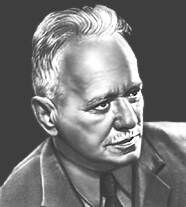 Mikhail Alexandrovich Sholokhov (1905-1984) Mikhail Alexandrovich Sholokhov (1905-1984)
Russian writer, who was awarded the Nobel Prize for Literature in 1965. Sholokhov's best-known work is the novel Quiet Flows the Don (1928-40), the finest realist novel about the Revolution. While Leo Tolstoi's novel War and Peace (1863-69) immortalized the the Napoleonic campaigns to the eve of the Decembrist revolt, Quiet Flows the Don showed the destruction of the Cossacks and the birth of a new society. After this magnificent novel, Sholokhov's career as a writer started to go down and reached its bottom with the novella 'The Fate of a Man' (1956-57). It is among the least impressive works produced by a Nobel writer, along with Hemingway's posthumously published book True at First Light (1999).
Mikhail Sholokhov was born in the Kruzhlinin hamlet, part of stanitsa Veshenskaya, former Region of the Don Cossack Army. His father was a Russian of the lower middle class. He had many occupations, including farming, cattle trading, and milling. His illiterate mother came from an Ukrainian peasant stock and was the widow of a Cossack. She learned to read and write in order to correspond with her son. Sholokhov attended schools in Kargin, Moskow, Boguchar, and Veshenskaia, but his formal education ended in 1918 when the civil war reached the Upper Don region. Sholokhov joined the Bolshevik (Red) Army, serving in the Don region during civil war. During this period Sholokhov witnessed the anti-Bolshevik uprising of the Upper Don Cossacks and took part in fighting anti-Soviet partisans, remnants of the white army. These experiences were later recounted in his works.
When the Bolsheviks had secured their control of power, Sholokhov went to Moskow, where he supported himself by doing manual labour. He was a longshoreman, stonemason, and accountant (1922-24), but also participated in writers "seminars"interrmittently. His first work to appear in print was the satirical article 'A Test', which was published in 1922 in the Moskow newspaper Yunosheskaya Pravda. 'The Birthmark,' Sholokhov's first story, appeared when he was 19. In 1924 Sholokhov returned Veshesnkaya and devoted himself entirely to writing. In the same year he married Mariia Petrovna Gromoslavskaia; they had two daughters and two sons.
Sholokhov's first book, DONSKIE RASSKAZY (Tales of the Don), a collection of short stories, appeared in 1925. The dominant theme in the stories is the bitter political strife within a village or a family during the civil war and the early 1920s. Sholokhov joined the Communist Party in 1932, and in 1937 he was elected to the Soviet Parliament. He wrote to Stalin about the brutal mistreatment of collective farmers in 1933 and complained about mass arrests in 1938. This letter led to a treason case against the author, but he was spared and promoted as the leading figure of the Soviet literary establishment. Stalin followed closely Sholokhov's literary career and influenced publication of his works.
Sholokhov gained world fame with his novel TICHY DON (Quiet Flows the Don), which won the Stalin Prize in 1941. The work was originally published in serialized form between the years 1928 and 1940. The author was 22 years old when he submitted the first volume for publication and 25 when three-quarters of the work was composed. In the second volume Sholokhov especially relied on documentary material. The third book's frank account of ill treatment of Cossacks by Communists caused the journal Oktiabr to suspend publication in 1929. Permission to resume was only accorded after reference to Stalin himself. Book 4 did not appear in complete form until 1940, 15 years after the young author had first written its early scenes.
Quiet Flows the Don presents the struggle of the Whites against the Reds more or less objectively. Sholokhov portrays the Cossacks realistically and reproduces their speech faithfully. This also inspired orthodox Communist to accuse the writer of adopting uncritically a conservative Cossack point of view. The story traces the progress of the Cossack Grigory Melekhov, a tragic hero. He is based on a historical prototype, Kharlampii Ermakov, one of the first Cossacks to rise against the communist in 1919. He was later imprisoned and shot in 1929. Like many figures of classical tragedy, Melekhov fate is destined by his own virtues. He first supports the Whites, then the Reds and finally joins nationalist guerrillas in their conflict with the Red Army. Back at home he is destroyed by a former friend, a hardline communist. However, Grigory's political and war experiences are overshadowed by the story of his tragic love. In the narration nature description has a central place. Sholokhov's prose is ornamental with prolific use of color, figures of speech, and careful attention to details.
During World War II Sholokhov wrote about the Soviet war efforts for various journals, among them Pravda and Krasnaia zvedza. He received Stalin Prize for Literature in 1941 and Lenin Prize in 1960. Sholokhov's second novel. Virgin Soil Upturned, appeared in two parts, 'Seeds of Tomorrow' in 1932 and 'Harvest on the Don' in 1960. The novel depicted collectivization of agriculture in a Don Cossack village. It is perhaps the best-known and most sympathetic description of this period. It also became required reading for all collective farm directors. The dramatic events are written in the first volume in rapid sequence with the touch of a journalistic report. The second volume, which covers only the summer of 1930, shows the decline of Sholokhov's artistic ambitions and ideological orthodoxy. The reader learns nothing about the terrorism and famine of 1932-33. During the 1933 famine Sholokhov himself saved thousands of lives by persuading Stalin to send grain to the Upper Don region. No new literary work of his appeared since 1969.
Sholokhov accompanied in 1959 the Soviet Premier Nikita Khrushchev on a trip to Europe and the United States, and in 1961 he became a member of the Central Committee. In most of his speeches and journalistic writings Sholokhov faithfully followed the official policy of the day. Sholokhov died on January 21, 1984 in Veshenskaya, where he had lived from 1924. By 1980 almost seventy-nine million copies of his works had been printed in the Soviet Union in eighty-four languages.
Quiet Flows the Don is Sholokhov most controversial work and it has been alleged by Aleksandr Solzhenitsyn among others, that much of the novel was plagiarized from the writer Fyodor Kryukov, a Cossak and anti-Bolshevik, who died in 1920. Several studies has been published on this subject: R.A. Medvedev's Problems in the Literary Biography of Mikhail Sholokhov (1977) was criticized in Slavic and East European Journal in 1976 by Herman Ermolaev. Additional information is in A Brian Murphy's studies of Tikhiy Don in the New Zealand Slavonic Journal (1975-77) and the Journal of Russian Studies, no. 34 (1977). Sholokhov's other works are not on his masterwork's level, but the accusations remain largely unproven. Critics have argued, that he could not have written all or part of the novel because of his young age and because Quiet Flows the Don described atrocities on both sides impartially. In 1984 Geir Kjetsaa and others published their study The Authorship of the Quiet Don, where computer study supported the authorship of Sholokhov. Most of the manuscripts were lost when the Germans occupied Veshenskaya , but in 1987 some two thousand pages of manuscript was discovered and authenticated.
Shukshin V.M.
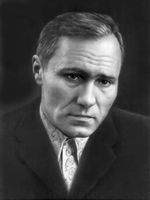 Vasily Makarovich Shukshin, actor, film director, and writer born on 25 July 1929 in a peasant family in the Siberian village of Srostki, located in the Altai krai. In 1933, his father was executed either for sabotage in the kolkhoz or for inciting a riot. For the sake of the family, Shukshin's mother renounced her husband's name, and gave her son her maiden name of Popov. He lived with this name until he turned 16 years old. (Markar Shukshin was posthumously rehabilitated in 1956.) Vasily Makarovich Shukshin, actor, film director, and writer born on 25 July 1929 in a peasant family in the Siberian village of Srostki, located in the Altai krai. In 1933, his father was executed either for sabotage in the kolkhoz or for inciting a riot. For the sake of the family, Shukshin's mother renounced her husband's name, and gave her son her maiden name of Popov. He lived with this name until he turned 16 years old. (Markar Shukshin was posthumously rehabilitated in 1956.)
After finishing the village seven-year school, Vasily Shukshin enrolled in the Biysk Automobile Technical College. Around this time, Shukshin started writing stories and submitting them to a Moscow journal. Presumably, these early submissions were all rejected. Since Shukshin was not in Srostki at the time, the village postmaster misatkenly delivered the returned manuscripts to a Vasily Maksimovich Shukshin, the writer's illiterate uncle, who used the paper to roll cigars. So, unfortunately, these early writings are lost forever.
After two and a half years at the technical college, Shukshin was expelled, possibly because of failing an engine mechanics course, or possibly because of barage of profanity directed at a teacher. He returned to Srostki, but the situation was difficult there, with famine threatening, so, at age 17, Shukshin left the village. He took a job as a metal worker-rigger at a pipe factory in Kaluga. He subsequently worked at a tractor factory in Vladimir and at a train-repair station.
In 1949 he was called up for military duty and served in the Navy as a radio-specialist first on the Baltic Sea, and later on the Black Sea. Suffering from a stomach ulcer, Shukshin was demobilized in 1953. He returned to Srostki, where he taught Russian language and literature while simultaneously serving as director of the village school.
Shukshin had a busy year in 1954. He married Marya Shumskaya (with whom he was to have one daughter). In May of 1954 Shukshin became a candidate member of the Communist Party, and in August of the same year he enrolled in the All-Russian Institute of Cinematography. Shukshin's original plan had been to enroll in the Gorky Institute of Literature, but he missed the application deadline.
Shuksin became a full member of the Communist Party in 1955.
Shukshin had his first major acting role in M. Khutsiev's 1958 film Two Fyodors (Dva Fedora). 1958 was also the year that Shukshin published his first story, Dvoe Na Telege ("Two On A Cart"). The publishing house Molodaya Gvardiya issued his first collection of stories, Selskiye Zhiteli ("Village Residents") in 1963.
In 1963, working out of the Gorky Film Studios, Shukshin produced his first full-length feature film Zhivet Takoi Paren' ("There Lives Such a Fellow"), which won the Golden Lion of Saint Mark Award at the 16th Venice Film Festival. Other films soon followed, such as Vash Syn i Brat ("Your Son and Brother", 1965), Stranniye Liudi ("Strange People", 1969), and Pechki-Lavochki ("Bench by the Stove", 1972).
Shukshin married a second time in 1964, to Lidiya Nikolaevna Fedoseeva, with whom he was to have two more daughters.
Along with his film career, Shukshin continued writing. In 1965 he produced a historical novel, Lyubavini ("The Lyubavins"). It tells the story of a Siberian family and their difficulties in coming to terms with the new Soviet regime being established in their village in the 1920s. The story spans several decades and follows several generations. The second part of the novel, called Druzhba Narodov ("Friendship of Peoples") was not published until 1987.
Shukshin published four more collections of stories: Tam, Vdali ("There In The Distance", 1968), Zemlyaki ("Countrymen", 1970), Kharaktery ("Characters", 1973), and Besedy Pri Yasnoi Lune ("Conversations Under a Clear Moon", 1974). He also penned a second historical novel, Ya Prishel Dat Vam Voliu ("I Have Come To Give You Freedom", 1974), which dealt with the Cossack and peasant revolt led by Stenka Razin in the 17th century. Shukshin had hoped to turn this project into a film as well, but censorship problems prevented it.
Shukshin also wrote a play entitled Energichniye Liudi ("Energetic People"), which was published in Literaturnaya Gazetta in June of 1974.
As a writer, Shukshin is considered a derevenshchik (village writer). He deals with rural settings and themes. The hero of his works is usually a chudak, an eccentric. In the story Odin ("Alone", 1963), a harness-maker loves to forget the drudgery of the day by playing his balalaika, but he must do this in secret because his wife thinks it's merely a distraction. In Mille Pardons, Madame!" (1968), the main character regales visitors with a fanciful tale about his part in a failed assassination attempt on Hitler during World War II. And in Srezal ("Cut Down To Size", 1970), a villager delights in humiliating visiting city intellectuals with what he believes is his superior knowledge, although his understanding of current events is really rather spotty.
This choice of hero sets Shukshin apart from other derevenshchiki. As Kathleen Parthe points out, Shukshin usually chooses as a protagonist, an adult male eccentric who is a truck driver or other nonagricultural worker, whereas the typical derevenshchik writes about old women or children and celebrates the dignity of agricultural labor. Shukshin's heroes live for their nights and weekends away from work, for their own "personal holiday"; the heroes of the derevenshchik are more focused on everyday reality or byt.
Perhaps Shukshin's most famous work is Kalina Krasnaya ("Snowball Berry Red"), which he published as a novel in 1973 and turned into a film (in which he himself starred) in 1974. It is the tale of an eccentric ex-convict who tries to escape his old lifestyle and start afresh with honest labor and a good woman. However, his old gang catches up with him and kills him. For this work, Shukshin was posthumously awarded the Lenin Prize in 1976.
Vasily Shukshin died of a heart attack on 2 October 1974 in Kletskii, Volgagrad, while filming Oni Srazhalis Za Rodinu ("The Fought for the Motherland").
After his death, several more collections of Shukshin's stories were published, including: Brat Moi ("My Brother", 1975), Oseniu ("In the Autumn", 1976), Okhota Zhit ("I Want To Live", 1977), and Rasskazy ("Stories", 1977). Do Tretikh Petukhov ("Before the Cock Calls Thrice", 1976) is an extravagant parody of the Russian fairy tale in which Ivan the Fool is sent on a search not for wisdom, but for a certificate attesting to his wisdom. The novella Tochka Zreniya ("Point of View", 1979) describes a matchmaking from four different points of view.
Some posthumously published essays and articles include Nravstvennost est Pravda ("Morality is Truth", 1979) and Voprosy Samomy Sebye ("Questions to Myself", 1986).
Soloukhin V.A.
Vladimir Alexeyevich Soloukhin
Born in 1924 in a peasant family. In 1951 he graduated frm the Gorky Literary Institute. In 1953 he published his first collection of verse devoted to Russia, its past and present. His poetic and lyrical essays describe the Russian village and its inhabitants. He is well known for his short stories, many of which are autobiographical.
Strugatskie
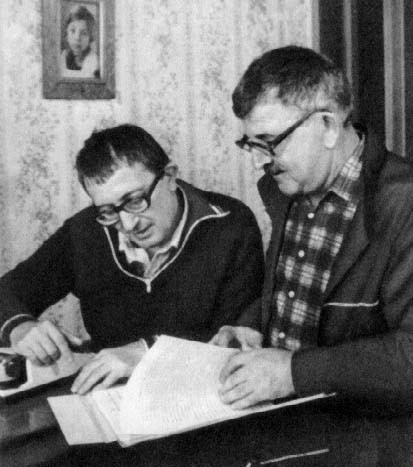 Arkady Natanovich & Boris Natanovich Strugatskie Arkady Natanovich & Boris Natanovich Strugatskie
Arkady was born in 1925, Boris in 1933. In the 1960s these brothers became the most popular science fiction writers in the Soviet Union. It's Difficult To Be A God (1964) is a tale of life in a fascist state. Predatory Things of the Age (1965) shows a future materialistic state where people are in danger of turning into contented idiots. The Second Coming of the Martians (1967) is a Gogol-esque satire of bureaucracy and the xenophobe. Int The Snail on the Slope (1966-1968), a giant forest is being studied by a state security agency. The atmosphere is so oppresive that even the machines want to escape. The Fairy Tale of a Troika (1968) is a fable in which the universe is a skyscraper where the sewer cleaners have seized power. In The Inhabited Island (1969) a government uses transmitter stations to control men's minds. Spontaneous Reflex is about a robot that is so sophisticated, it develops a spontaneous reflex and decides to go on a walkabout.
Tikhonov N.S.
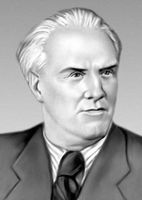 Nikolay Semyonovich Tikhonov was born 4 December 1896 in a middle-class family in St. Petersburg. This future patriotic war balladeer was a hussar in the tsar's army of World War I, but by 1917 he was an ardent Bolshevik supporter. Of the Bolsheviks he wrote: Nikolay Semyonovich Tikhonov was born 4 December 1896 in a middle-class family in St. Petersburg. This future patriotic war balladeer was a hussar in the tsar's army of World War I, but by 1917 he was an ardent Bolshevik supporter. Of the Bolsheviks he wrote:
Gvozdi by delat' iz etikh lyudey;
Krepche b ne bylo v mire gvozdey!
("If you make nails out of these people;
There would be no stronger nails in the world!")
Tikhonov joined the Red Army during the Revolution and Civil War years.
After demobilization he settled in the town which was then known as Petrograd and became associated with the Serpion Brothers (Zamyatin, Zoshchenko, Shklovsky, etc.). His first two collections of poems, "The Horde" (1922) and "Mead" (1922), were expressions of his sensations and adventures in his years of war. His work also showed the influence of Acmeism, employing concrete images, pictorial detail, and semantic precision.
In the mid-1920s, he fell the influence of Velimir Khlebnikov and Pasternak and began experimenting with his poetic style. In search of new themes and colors, he traveled to Central Asia.
Social issues were important to this fiercely patriotic writer, and many of his short stories of the 1930s concern socialist construction projects in Central Asia.
He even tried his hand at a screenplay for the 1931 film "Teryak", an agitprop film about the struggle against illegal drugs in Turkmenistan. The plot of this rather unprofessional film included an attempted assassination of a party worker. The film, however, was soon withdrawn from release because, as "Pravda" said, it had "mistaken tendencies." Tikhonov's reputation was not damaged, however, and during World War II he continued producing works idealizing courage and duty.
He served as head of Soviet Writers Union from 1944 to 1946 and won three Orders of Lenin, three Stalin Prizes, and one Lenin Prize.
Despite his earlier respect for the poetry of Pasternak, Tikhonov eagerly joined in the campaign against the Nobel winner in the 1950s.
Nikolai Semyonovich Tikhonov died in Moscow on 8 February 1979.
Tolstoy A.N.
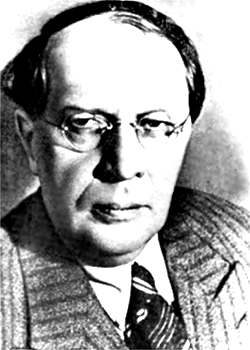 Alexey Nikolaevich Tolstoy (1883 - 1945) Alexey Nikolaevich Tolstoy (1883 - 1945)
Novelist, playwright, historian, and short story writer, former nobleman who immigrated to western Europa after the Bolshevik Revolution. Tolstoy returned to Russia in 1923. He became supporter of Communist Party and honoured artist receiving three Stalin Prizes.
Aleksey Tolstoy was born in Nikolaevsk, in Samara Province, in an aristocratic family distantly related to Lev Tolstoy and Ivan Turgenev. He grew up without knowing his real father, Count Nikolai Aleksandrovich Tolstoy, who was a member of the elite of Russian society and a wealthy landowner. His mother had left her husband and three children, and moved with Aleksei's stepfather, Aleksey Apollonovich Bostrom, to a farm in the Samara region.
Until the age of 13, Tolstoy was educated at home, then at secondary school in Samara (1894-1901), and at St. Petersgurg Technological Institute (1901-08). His first literary experiments were born under the influence of the Symbolist movement. Among his early works were some realistic short stories depicting his childhood. As a writer Tolstoi made his breakthrough with a series of novels exploring the historical process of the impoverishment of the nobility's country estates and the spiritual decline of their owners.
Between the years 1914 and 1916 Tolstoy served as a war correspondent for the newspaper Russkie vedomosti, sided with the Whites. He made several visits to the Front line, and travelled in France and England. In 1917 Tolstoi worked for General Denikin's propaganda section. Unable to accept the Russian Revolution, he emigrated next year with his family to Paris. A few years later he moved to Berlin where he became the editor of the Bolshevik newspaper Nakanune. With a change in his political beliefs, Tolstoy broke with the emigre circles and returned to the Soviet Union.
After an uneasy period, when he was suspected because of his aristocratic origins, Tolstoy establised himself among the leading Soviet writers. During the 1920s Tolstoy wrote several plays, including adaptations of works by Eugene O'Neill and Carel Capek. He participated in the anti-fascist congress in Paris and London in 1935-36 and took part in the 2nd International Congress of Writers in Madrid during the Spanish Civil war (1936). In 1936 he was elected Chairman of the Writer's Union and a deputy to the Supreme Soviet in 1937. Two years later he was elected member of the Soviet Academy of Sciences. Tolstoy died in Moskow on February 23, 1945.
Tolstoy's major works include Nikita's Childhood (1922), a lyrical story with autobiographical elemets of a childhood in a Russian village, and Road to Cavalry (1920-1942), a trilogy about the life of four people, sisters Dasha and Katia, and Telgin and Roshchin, from the eve of World War I to end of the Russian Civil War. It covered the same period as Sholokhov's Quiet Flows the Don (1928-40), but from the viewpoint of the progressive intelligentsia. Peter the First (1929-45) was a historical novel, which made a strong comeback in the 1930s. It followed the myth of Peter the Great as a progressive ruler who made Russia strong, while also having a heart for the people.
"When a man's at war and constantly facing death he rises above his ordinary self. All the trashy stuff that doesn't matter peels off him, like dead skin after sunburn, and only the kernel, the real man, is left." (from 'The Russian Character', 1944)
Among Tolstoy's political novels were Chornoe zoloto (1932), which painted uncharitable caricatures of Russian émigrés, and Khleb (1937), in which history was shamelessly falsified to laud Stalin and denigrate Trotsky. In his last plays, Oryol i orlitsa (1942) and Trudnye gody (1943) Tolstoi idealized Ivan the Terrible and then drew parallels between him and Stalin - an idea that the film director Sergei Eisenstein used in his monumental film production, Ivan the Terrible (1945-46). Stalin disliked especially the second part, although the first part won a Stalin Prize.
Tolstoy also published two science fiction novels, both of which appeared in the experimental 1920s and which were revised during the following decades of Stalinist terror. Aelita (1923) was a science-fiction fantasy in the manner of H.G. Wells, telling the story of a Soviet expedition to Mars with the aim of establishing communism. A Red Army officer forments a rebellion of the native Martians, who are in fact long-ago emigrants from Atlantis. The story was adapted into screen in 1924. Its futuristic, Expressionistic sets were designed by Isaac Rabinovich of the Kamerny Theatre. The film influenced the design in Flash Gordon, an space opera, which was created by the artist Alex Raymond in 1934 and led to a popular radio serial and several films. Giperboloid inzhenera Garina (1926, The Death Box) described an attempt of an unscrupulous inventor to use his death ray to conquer the world. He manages to rule a decadently capitalist USA for a short period.
Tsvetaeva M.I.
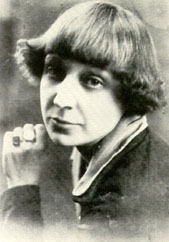 Marina Ivanovna Tsvetaeva (1887 - 1938) Marina Ivanovna Tsvetaeva (1887 - 1938)
Marina Tsvetaeva was the Russian poet, prose writer. She was born in a family of professor of the Moscow University, Ivan Vladimirovich. Her mother was very talanted pianist, but died very early and left two daughters (Marina and sister) in the charge of father.
Tsvetaeva is first of all a poet-lyricist, not only because the sheer volume and quality of her lyric poetry is remarkable, but also because her lyrical voice remains markedly audible in her narrative poetry, her prose, and her letters. Her lyric poems fill ten collections; the uncollected lyrics would add another, substantial volume. Her first two collections indicate their subject matter in their titles: Evening Album (Vecherny al'bom, 1910) and The Magic Lantern (Volshebnyi fonar', 1912). The poems present cameo scenes of a childhood and youth passed quietly in the nursery, study and ballroom of a professorial, middle-class home in Moscow. The viewpoint is intimate but never trivial or banal; the poems reveal the young poet's mastery of the five standard syllabotonic verse meters and her inventiveness in devising uncommon stanza forms, traits of versification that persist in her later poetry alongside her characteristic innovations: the logaoedic lines and the inter-stanzaic enjambements.
The full range of Tsvetaeva's talent developed quickly and made itself evident in two new collections which share the same title: Mileposts (Versty, 1921) and Mileposts: Book One (Versty, Vypusk I, 1922). Three hallmarks of Tsvetaeva's mature style emerge in the Mileposts collections. First, Tsvetaeva dates each of her poems and publishes them, with a few exceptions, in strictly chronological order. All the poems in Mileposts: Book One, for example, were written in 1916 and form a kind of diary in verse. Secondly, there are cycles of poems which fall into fairly regular chronological sequence among the single poems, evidence that certain themes sought sustained expression and variation. One such cycle, in fact, announces the theme of Mileposts: Book I as a whole--the "Poems on Moscow." Two other cycles are dedicated to poets, the "Poems to Akhmatova" and the "Poems to Blok," which reappear, further amplified, in a separate volume, Poems to Blok (Stikhi k Bloku, 1922). Thirdly, the Mileposts collections reveal the essential dramatist in Tsvetaeva, her ability to don verbal masques, to speak as another character, to merge the dramatic and the lyric in monologues, dialogues, choruses, and one-sided perorations.
The years of Revolution and civil war brought special hardships to Tsvetaeva; her husband Sergei Efron was a White Army officer and Tsvetaeva was cut off and alone in Moscow while he fought on the Crimean front. These years produced the poems of The Swans' Demesne (Lebedinyi stan, Stikhi 1917-1921, published in 1957) celebrating the White Army. In 1922 Tsvetaeva learned that Efron had survived and had left Russia. She took her young daughter Ariadna (born in 1912--another daughter had died in infancy from the wartime famines) and joined her husband in Berlin, from which city the family migrated first to Prague and later to Paris in 1925, the same year in which Tsvetaeva's son Georgy was born. Thus, Tsvetaeva's last two collections of lyrics were published by emigre presses, Craft (Remeslo, 1923) in Berlin and After Russia (Posle Rossii, 1928) in Paris. These two collections display the heights of Tsvetaeva's lyric power. The outpouring of cycles continues and accelerates. Their expanded thematic and vocal range encompasses the nocturnal secrecy of the twenty-three "Berlin" poems, the pantheistic exaltation of "Trees" (Derev'ya), the stoic renunciation of "Cables" (Provoda) and "Pairs" (Dvoe), and the tragic, proud credo of "Poets" (Poety). Again, the poems betoken future developments. Foremost among these is the voice of "the Greek Tsvetaeva" heard in the cycles "The Sibyl," "Phaedra," and "Ariadne." Tsvetaeva's beloved, ill-fated heroines reappear in two important verse plays, Theseus-Ariadne (Tezei-Ariadna, 1927) and Phaedra (Fedra, 1928), which form the first two parts of an uncompleted trilogy entitled Aphrodite's Rage. The satirist in Tsvetaeva is second only to the poet-lyricist. Several satirical poems, moreover, are among Tsvetaeva's best-known works: "The Train of Life" (Poezd zhizni) and "The Floorcleaners' Song" (Poloterskaya), both included in After Russia, and The Ratcatcher (Krysolov, published in 1925 and 1926 in journal installments), a long, folkloric narrative sometimes considered Tsvetaeva's greatest work. The target of Tsvetaeva's satire is everything petty and kleinburgerlich. Unleashed against such middling, creature comforts is the vengeful, unearthly energy of workers both manual and creative. Thus, in her notebook, Tsvetaeva writes of "The Floorcleaners' Song": "Overall movement: the floorcleaners ferret out a house's hidden things, they scrub a fire into the door... What do they flush out? Coziness, warmth, tidiness, order... Smells: incense, piety. Bygones. Yesterday... The growing force of their threat must be stronger than the climax."
Tsvetaeva's last ten years in emigration, from 1928 when After Russia appeared to her departure for the Soviet Union in 1939, have rightly been called the "prose decade." It was preceded, however, by two series of prose pieces: a set of short sketches related to the revolutionary and civil-war period from 1917 to 1920, and a set of literary essays dating from 1922 to 1931. The literary work comprises criticism, short tributes to the poets Balmont, Kuzmin, Bryusov, Mandelshtam, and Rilke, and a portrait of the painter Natalya Goncharova.
The great prose decade opens with two essays that examine literature in the perspective of history and ethics: "The Poet and Time" (Poet i vremya) and "Art in the Light of Conscience" (Iskusstvo pri svete sovesti), both published in 1932. In 1933 Tsvetaeva's prose began to draw heavily on her past, although few of the some twenty prose pieces of this period can be called "autobiographical" in the usual sense of that word. Rather, the prose begins from Tsvetaeva's strongly-sensed duty to preserve a vanished past and then plunges beyond autobiography into a mythic recreation of her childhood that serves, in turn, as a metaphor for the genesis and destiny of the poet. This mytho-biography emerges in four long prose pieces. Written separately and published in rather misleading alternation with more conventionally autobiographical short works, "The House at Old Pimen" (Dom u Starogo Pimena, 1934), "Mother and Music" (Mat' i muzyka, 1935), "The Devil" (Chert, 1935), and "My Pushkin" (Moi Pushkin, 1937), present the ancestry and birth of the poet in quasi-autobiographical settings which, although charmingly authentic, function primarily as clues to the literary and mythical constants in which the poet's real life is lived.
Tsvetaeva rightly belongs in the quartet of Russia's greatest 20th-century poets along with Akhmatova, Mandelshtam, and Pasternak. And Tsvetaeva became conscious of her place very early on. Her correspondence, which comprises about three solid volumes, includes a remarkable exchange of letters with Pasternak and many other letters devoted to literature. Poetry and poets dominate all other themes in Tsvetaeva's work, a trait she shares with her great contemporaries. And other poets have most eloquently characterized Tsvetaeva's particular genius. Thus, Pasternak's praise of Mileposts can be extended to all Tsvetaeva's poetry:
"I was immediately tamed by the lyrical power of Tsvetaeva's form, which had become her very flesh and blood, which had strong lungs, had a tight, concentrated hold, which did not gasp for breath between lines but encompassed without a break in rhythm whole sequences of stanzas, developing their innate elements."
Tvardovsky A.T.
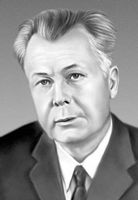 Alexander Trifonovich Tvardovsky, born 21 June 1910 in the village of Zagorye, Smolensk district. His father was a literate blacksmith who scraped together enough money to buy a small plot of swampy land, which the family proudly worked. Alexander Trifonovich Tvardovsky, born 21 June 1910 in the village of Zagorye, Smolensk district. His father was a literate blacksmith who scraped together enough money to buy a small plot of swampy land, which the family proudly worked.
As a youth, Travdovsky was active in his village Komsomol. In 1924 he began sending off to local newspapers poems about Komsomol activities and various local abuses. His first publication came in 1925 when the paper "Smolensk Village" printed the poem New Hut ("Novaya Izba"). Three years later, when he was 18, Tvardovsky gathered up all his poetry and went to Smolensk to visit the poet Mikhail Isakovsky. This first meeting was the start of a life-long friendship. Tvardovsky had only the incomplete education which a village school could offer. He and other young poets in Smolensk at that time were all in the same boat. As Tvardovsky later wrote:
Superficial reading and some small knowledge about the "little secrets" of the trade inspired in us dangerous illusions.
These illusions led the poet to undertake a trip to Moscow. A few of his works appeared in the journal October, but he had difficulty finding work. So Tvardovsky returned to Smolensk in the winter of 1930 and entered the Pedogogical Institute, where he became a star pupil.
During this time, collectivization was going on. Tvardovsky was also working as a reporter and often visited kolkhozes, so he was aware of the suffering. He also felt it personally, since his father was deported as a kulak. Nonetheless, Tvardovsky firmly believed that the changes were necessary. He achieved a success with the printing in "Molodaya Gvardia" of his longer poem The Path to Socialism ("Put' k Sotsializmu"), about life on a kolkhoz. Despite the critical approval the piece received at the time, Tvardovsky later criticized his own work:
It was riding without holding the reins, loss of the rhythmic discipline of poetry; more simply stated, it wasn't poetry.
Tvardovsky considered his second major work, Vstupleniye ("Introduction") (1932), also to be a disappointment. Success and national acclaim finally came to him in 1936 with publication of Strana Muraviya ("The Land of Muraviya"), the tale of a Don Quixote-like muzhik who, not wanting to join the kolkhoz, wanders across the nation searching for a kolkhozless area. He, of course, finds no such area and, in the end, realizes that the only happy life is on the kolkhoz and returns home. For this work, Tvardovsky was awarded his first Stalin Prize in 1941.
In 1936, Tvardovsky again moves to Moscow--this time as a recognized poet--and enrolls in the Moscow Institute of History, Philosophy, and Literature. In 1939, he graduates and publishes a collection of lyric poems, Selskaya Khonika ("Village Chronicle"). He is also called up into the army. He participates in the Red Army advance into western Belorussia, in the Finnish War, and, of course, the Great Patriotic War. It was during the Finnish War that Tvardovsky, writing for the paper Na Strazhe Rodiny, created the character of Vasya Tyorkin for a humor column. The peasant-soldier was very popular with the real soldiers reading the paper, and he eventually was reworked into the hero of Vassily Tyorkin. Of the poem, Tvardovsky said:
It was my lyric, my social commentary, song and sermon, anecdote and embellishment, heartfelt conversation, and reaction to events.
"Vassily Tyorkin" received popular acclaim, essentially becoming a folk hero. This work won Tvardovsky his second Stalin Prize in 1946. Surprisingly, praise for this work also came from the staunch anti-Communist Ivan Bunin, who said:
This book is truly unique. What freedom of expression, what accuracy and precision in every detail, what a wonderful soldiers' language--not a hitch, not a single false or vulgar word.
The sadness and sorrow of war is expressed in Tvardovsky's 1946 poem Dom u Dorogi ("House by the Road"), which describes life in Russia under Nazi occupation. For this, Tvardovsky won yet another Stalin Prize in 1947. In 1946 he also composed a requiem for the fallen heros, Ya Ubit Podo Rzhevom.
In 1961 he won a Lenin Prize for Za Daliu--Dal' ("Distance Beyond Distance"), a contemplative work presented as a journey across Siberia. In it, the narrator meets a friend returning from a labor camp. Stalinism is condemned as a deviation from Leninism.
In 1954 Tvardovsky began work on Tyorkin Na Tom Svete ("Tyorkin in the Other World"), a type of parody-continuation of the original Tyorkin tale, in which the hero visits hell and finds there a distorted view of Soviet life. The work was not completed until 1963. It was published, but not viewed favorably by government and Party officials.
In 1968 he finished Po Pravu Pamyati ("By Right of Memory"), in part a confession of his own mistakes, and in part a warning to future generations. It was not published until 1987. In the later years of his life, Tvardovsky focused mainly on lyric poetry.
He was made chief editor of the literary journal Novy Mir in 1950, but was removed from the post in 1954 following his publication of "Sincerity in Literature" by Pomerantsev. However, he was reinstated in 1958 and continued in the post until 1970. During that time, he secured publication for Solzhenitsyn's "One Day In The Life of Ivan Denisovich" and "Cancer Ward".
Tvardovsky was member of the Directorate of the Soviet Writers Union and a candidate member of the Central Committee of the Communist Party of the Soviet Union.
He died on 18 December 1971, following a long illness.
Veresaev V.V.
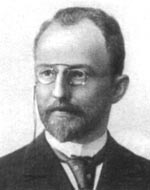 Vikenty Vikentevich Veresaev, pen-name of V.V. Smidovich, born on 16 January 1867 in Tula in a large family. His father was a doctor and social activist. Vikenty Vikentevich Veresaev, pen-name of V.V. Smidovich, born on 16 January 1867 in Tula in a large family. His father was a doctor and social activist.
The young Veresaev studied at the Tula Classical Gymnasium, where he was an outstanding student, excelling particularly in ancient languages. He began to write poetry at age 13.
Upon graduation from the gymnasium in 1884, Veresaev enrolled in the history faculty of Petersburg University. Completing the course in 1888, he then undertook medical studies at Derptskii University. In addition to his studies, Veresaev continued to write. His first published work was the poem Razdumye ("Meditation"). In 1890, Veresaev visted his brother in Donetsk. There he toured the coal mines, providing him with material for Podzemnoe Tsarstvo ("Underground Kingdom"), a collection of sketches about the hardships of mining and miners, which he published in 1892.
In 1894, Veresaev finished his medical studies and got a position as a house-surgeon at a hospital in Petersburg. In the autumn of that year, he finished his tale Bez Dorogi ("Without a Road"), which was published in Russkoye Bogatstvo. He became associated with a literary circle of Marxists, including the likes of Struve, Maslov, and Kalmykova. And he maintain contact with workers and revolutionary-minded youth. Veresaev's activities came to the attention of the town governor, who was not pleased. In 1901, on the governor's orders, Veresaev was fired from his job and banished from Petersburg for two years. He spent those two years in Tula, probably not bringing his own samovar. It was also in 1901 that Veresaev published the largely autobiographical Zapiski Vracha ("Notes of a Doctor").
After his period of banishment, Veresaev moved to Moscow. However, with the outbreak of the war with Japan in 1904, he was called up for military duty. The experiences he gathered over the next two years were reflected in the collection Rasskazy o Voine ("Stories of War"), which were published in 1906.
Veresaev's initiative led, in 1911, to the creation of the Writers' Book Publishing House in Moscow, which he headed up until 1918. And in 1917, he became chairman of the artistic and education commission of the Moscow Soviet. During this time, Veresaev wrote Zhivaya Zhizn, an analysis of the work of Dostoevsky and Tolstoy.
In September of 1918, Veresaev traveled south to the village of Koktebel, near Feodosia, in the Crimea. He intended to remain there only three months, but the Civil War in the area created a constantly changing situation and Veresaev ended up staying for three years.
He returned to Moscow in 1921, and in 1922 published the novel V Tupike ("Deadlock").
In 1924, Veresaev produced a book on the art of writing, Chto Nuzhno Dlya Togo, Chtoby Byt' Pisatelem ("What Is Needed To Be A Writer"). In the work, Veresaev describes writing as a rather lofty profession:
Like a bird in the blissful freedom of unconscious attraction, a writer must give expression to all that which fills his soul, not encumbering himself with questions about the nature of poetry or what are its tasks....Art is wide in scope and many-faceted and will not endure any fetters upon itself.
Veresaev was not an advocate of any particular style or school of writing. He said, "It's not necessary to work out any style. The style will come of itself." Further, Veresaev had this advise for writers:
Forget about any art of writing. Give yourself up to creating for yourself, not thinking about the readers....This will be the best thing that you write, believe me.
This attitude, of course, earned him the ire of some of the more leftist writers, who accused him of ignoring the social basis of all human activities, including writing.
Veresaev then immersed himself in literary research, which resulted in Pushkin V Zhizni ("Pushkin In Life") (1926-1927) and Gogol V Zhizni ("Gogol in Life") (1933).
Another novel, Syostry ("Sisters"), appeared in 1933. Focusing on two sisters who are Komsomol members, it tells the story of a generation born too late to take part in the Revolution or Civil War. Many of these young people feel cheated of the opportunity to undertake great, exciting deeds, wishing that they could have fought in Budenny's cavalry instead of having to work on the labor front. The two sisters at the center of the novel take different paths on the road to understanding Communism. One, Ninka, refuses to accept preordained ideas and doctrines. Instead, she feels the need to be a "great charlatan", to try out new ideas for herself, to find the truth by making mistakes. The other sister, Lelka, immerses herself in the life of a factory, trying to shed her intellectuallism and become truly proletarian. Party work in the factory is difficult. The workers are slow to shed their old psychology, not yet understanding that they themselves are the new owners and that they are only cheating themselves with their drunkenness and absenteeism. Even Party members find it difficult to keep up enthusiasm for socialist emulation campaigns and attempts to reduce defects. Then comes the collectivization campaign. Factory workers sent to the countryside, including Lelka, finally get their chance for great deeds and are ruthless in their rooting out of kulaks and forcing peasants into the kolkhozes. Ninka defies Party orders and works instead for "voluntary" collectivization. She is about to be purged but is saved when Stalin publishes his "Giddy From Success" article denouncing the excesses of forced collectivization.
Veresaev then returned to literary research with Sputniki Pushkina ("Pushkin's Companions") in 1934-1936. His Nevydumannoiey Rasskazy o Proshlom ("Real Stories of the Past") came out in 1940. In 1943, Veresaev won a State Prize.
He died in Moscow on 3 June 1945.
Vishnevsky V.V.
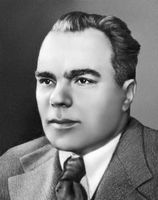 Vsevolod Vitalievich Vyshnevsky Vsevolod Vitalievich Vyshnevsky
8 .12.1900, St. Petersburg, - 28.2.1951, Moscow
The Russian Soviet writer
He was born in St. Petersburg in the family of land surveyor. Since childhood he was familiar with publishing (in the house where he lived, there were two publishing houses, and workers frequently invited the boy and showed him the work). By the age of 12 Vishnevsky had known about publishing, editorial and typographical work.
He studied in the Petersburg gymnasia and his favourite subjects were Russian, history and geography. He was the editor of school magazine "Under School Desk". Vishnevsky started to keep diaries early and that helped him in his literary life.
When Vishnevsky was 14 years old, that was the time of First World War, he volunteered to the front and became ship's boy on the Baltic Fleet. During
1915 - 1916 he served in the Guards as the Sergeant Major of reconnaissance, he was decorated with three Georgian Crosses and achieved the real life
experience.
In army in June 1917 Vishnevsky joined the Bolsheviks. He took part in the October revolt of 1917 in Petrograd. During the Civil war he served as the machine gunner in First Cavalry Army and was the commander and the commissar in the Baltic and Black Sea Fleet.
Vishnevsky started to publish in 1920. He was the editor of magazine "Krasnoflotets". Vishnevsky took part in the Soviet-Finnish War of 1939-1940 and the Great Patriotic War (his rank was the captain). Since 1944 he was the editor of magazine "Znamya". In 1924 "Collection of Sea Stories" was published. The romantic play "First Cavalry Army" (1929) is dedicated to heroic events of the Civil War. Then he wrote the play "the Last and the Decisive" (1931), publicist tragedy "In the West There Is Battle" (1931, published in 1933), which was one of the first Soviet
antifascist plays, "Optimistic Tragedy" (1933), where the loss of Red Army's regiment served to the victory of the Bolsheviks truth. This play and the film script "We Are From Kronstadt" (1933) became the classical works of the Soviet dramatic art.
Vishnevsky wrote plays "Near the Walls of Leningrad" (1944) and "Unforgettable 1919" (1949; the State Prize of the USSR, 1950); film "We are Russian People" (1937) and the uncompleted documentary and artistic epopee "War".
Vishnevsky's works characterized by the romantic pathetics, swift action, mastery of the crowd scenes, oratorical skills and political orientation.
His plays are famous abroad.
Vishnevsky was also the publicist, contributed to the newspaper "Pravda" and was the military correspondent during the Great Patriotic War.
Vishnevsky was decorated with 2 Orders of Lenin, 5 other Orders and also medals.
Voinovich V.N.
Vladimir Nikolaevich Voinovich, born 26 September 1932 in Dushanbe. His father was a journalist, his mother a mathematics teacher. In May of 1941 he moved to Zaporozhye with his father. Then with the war and evacuation, he moved around a lot, living in Stavropol krai, Kubishev oblast, Vologodsky oblast, the Crimea, and Moscow. He worked as a shepherd, carpenter, metal worker, airplane mechanic, teacher, and editor for radio. He served in the army from 1951 to 1955. Studied in the Pedagogical Institute for a year and a half. While in the army, he began to write poetry, but then he switched to prose. His first story "We Live Here" was published in Novy Mir in 1961. Other published works include "Half a Kilometer", "I Want To Be Honest", "Two Comrades", and "Degree of Trust". In 1962 he was accepted into the Writers Union. In 1968 he became involved in dissident activities. In part because of his portrayal of Soviet society in "The Life and Amazing Adventures of the Soldier Ivan Chonkin", he was excluded from the Writers Union in 1974. In 1980 he emigrated, and in 1981 Leonid Brezhnev signed an order stripping him of his Soviet citizenship, claiming Voinovich had:
...systematically taken part in activities hostile to the USSR and has brought harm to the prestige of the USSR by his activities.....
Voinovich wrote back to Brezhnev:
"I have not undermined the prestige of the Soviet government. The Soviet government, thanks to the efforts of its leaders and your personal contribution, has no prestige. Therefore, in all justice, you ought to revoke your own citizenship."
In 1991, M.S. Gorbachev restored Voinovich's citizenship. Since 1995 Voinovich has undertaken painting and has had several exhibitions.
Vvedensky A.I.
Vvedensky Alexander Ivanovich (1904 - 1941), the poet.
He was born on November 23, in St. Petersburg in the family of economist. He studied in gymnasia and then at school named after L.Lentovsky. He finished
that school in 1921, but did not passed examination in the Russian literature. Vvedensky started to write at school. In that period his favourite poet was A. Blok. In 1920s Vvedensky was under the strong influence of futurism. He especially valued poetry of Kruchenykh.
After the graduation from school Vvedensky became a student of law department of Petrograd University and then the student of Chinese branch of the East
department, but soon he dropped off.
He worked as a clerk, then in 1921-22 at power station "Krasny Oktyabr".
But all Vvedensky was interested in was the literature. These years the poet widened his circle of poetic, literary ties and contacts in the world of
art. Vvedensky was seen at Klyuev's, visited Kuzmin and became a close friend to Harms. In 1925 they were published in the imaginist collection "Unusual Meetings of Friends", became members of the Leningrad Union of Poets, participated in collections "Collected Poems" and participated in
the group Zaumniky (this activity was neither fruitful, nor long).
They tried to unite "all left forces", and in 1927 they formed a literary-theatrical group under name "OBERIU" (Association of Real Art), which staged performances-concerts frequently were accompanied with scandals (inscriptions were such: "Art Is Not Scales", "We Are Not Pies"
etc.). They proclaimed themselves "not only the new poetic language creators, but also founders of new sensation of life and subjects". They worked until 1930 when they were banned.
Since 1928 Vvedensky worked as the children's writer and contributed to magazines "Yozh" and "Chizh".
By 1931 almost all members of "OBERIU" were arrested. Vvedensky was taken from a train on December 10. They were accused in distraction of people from construction of socialism with their "abstruse poetry". Vvedensky was accused in "sabotage in the children's literature". In March 21, 1932 he was released, but he was banned from residing in 16 cities of the USSR for the period of 3 years. Vvedensky settled in Kursk, then moved to Vologda, and finished his exile in 1933 in Borisoglebsk.
On return to Leningrad Vvedensky became a member of the Writers Union.
During 1933-1934 he wrote his best poetry: "I Regret, That I Am Not An Animal", "Invitation To Me To Think", "Four Descriptions" etc. In 1936,while in Kharkov, he got married and then together with the wife went to Caucasus, then he returned to Kharkov where he settled, sometimes visiting both capitals.
Vvedensky worked in the children's literature, earned his living by writing the clown reprises, couplets and miniatures. In 1939 he wrote the play "New Year's Eve at Ivanov's". Shortly before the war Vvedensky wrote the play for the S.Obraztsov's puppet theater. His last works were the plays "Potets" and "Where. When".
In 1941 Germans came nearer to Kharkov, and the family should be evacuated. The train was packed, therefore Vvedensky decided to wait for the next train, which should be in few days. But there was no further evacuation. In two days Vvedensky was arrested and accused according to the "counterrevolutionary" clause 54 - 10. Exact date of death is unknown. Later in the rehabilitation document there was a date - December 20, 1941.
Yevtushenko E.A.
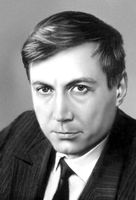 Evgeny Alexandrovich Yevtushenko Evgeny Alexandrovich Yevtushenko
Internationally best known poet of the post-Stalin generation of Russian poets. His early poems show influence of Mayakovsky and loyalty to communism, but with such work as The Third Snow (1955). Yevtushenko became a spokesman for the young generation. Throughout the Khrushchev and the Brezhnev periods he travelled widely abroad, giving readings as a symbol of a new freedom in the Soviet Union. The 6-foot-3-inch Siberian poet especially received much attention in the United States.
Evgeny Yevtushenko was born in 1932 in Irkutsk, as a fourth-generation descendant of Ukrainians exiled to Siberia. He moved in 1944 with his mother to Moscow, where he studied at the Gorky Institute of Literature from 1951 to 1954. In 1948 he accompanied his father on geological expeditions to Kazakhstan and to Altai in 1950. His first important narrative poem Zima Junction was published in 1956 but international fame he gained with Babi Yar, in which he denounced the Nazis and at the same clumsily criticized his own country for forgetting the message of the "Internationale". "But those with unclean hands / have often made a jingle of your purest name. / I know the goodness of my land. / How vile these anti-Semites - without a qualm / they pompously called themselves / the Union of the Russian People." Babi Yar is one of a number of literary treatments of a massacre of Jews in occupied Kiev on 29 September 1941. Composer Dimitri Shostakovich set the words to music as part of his Thirteenth Symphony. The poem was not published in Russia until 1984, although it was frequently recited in both Russia and abroad.
The Heirs of Stalin (1961), published presumably with Party approval in Pravda, was not republished until 1987. The poem contained warning that Stalin did not die. "And I appeal / to our government with a plea: / to double, / and treble, the guard at this slab, / so that Stalin will not rise again, / and with Stalin - the past." Yevtushenko dealt with burning topics of the day with strong rhetorical note. He demanded for a greater artistic freedom, and his attacks on Stalinism and bureaucracy in the late 1950s and 60s made him a leader of Soviet youth. However, he was allowed to travel widely in the West until 1963. He then published A Precocious Autobiography in English, and his privileges and favors were withdrawn, but restored two years later. In 1968 he denounced the Soviet invasion of Czechoslovakia in the poem 'Russian Tanks in Prague'.
In 1972 Yevtushenko gained a huge success with his play Under the Skin of the Statue of Liberty, which was produced in Moscow. Since the 1970s he has been active in many field of culture, writing novels, engaging in acting, film directing, and photography. He directed the film Kindergarten and acted in it, and in 1990 he directed the film Stalin's Funeral. He has also remained politically outspoken and supported in 1974 Solzhenitsyn when the Nobel Prize Winner was arrested and exiled. He sent an immediate telegram of protest to Brezhnev, in which he said that while he disagreed with Solzhenitsyn on many points, the author's explosive study Gulag contained "terrible documented pages about the bloody crimes of the Stalinist past."
In the West Yevtushenko was often criticized for being too "adaptable," but the KGB records have shown him to have been absolutely firm in supporting Solzhenitsyn. He wrote to KGB chief Yuri Andropov, the future general secretary of the Communist Party: "There is only one way out of this situation, but nobody will dare choose it: recognize Solzhenitsyn, restore his membership in the Writers' Union, and afterward, just declare suddenly that Cancer Ward is to be published." Later he also suggested that Boris Pasternak's Nobel Prize in Literature, which the author rejected under pressure by the Soviet Government, should be posthumously restored. "He earned it with his entire life and work," Yevtushenko wrote in an article. His own speeches were constantly censored in magazines. In 1985, when Mikhail S. Gorbachev had just risen to power, Literaturnaya Gazeta, published by the Soviet Writers' Union, left out several major sections of Yevtushenko's remarks about Stalin's purges, the evils of collectivization, and the privileges of the elite. Yevtushenko himself declined to criticize the editing.
Yevtushenko's first novel Wild Berries (1981), was attacked by critics but it became a huge success among readers. In the story, which fused the past and future, history and fantasy,Yevtushenko dealt among others with Stalinist collectivization of agriculture and the elimination of the kulaks, land-owning peasants. The author was advises to stick to poetry. In 1989 Yevtushenko became a member of the Congress of People's Deputies and next year he was appointed vice president of Russian PEN. When Yevtushenko was appointed in 1987 honorary member of American Academy of Arts and Sciences, the Russian-born poet Joseph Brodsky resigned in protest - he considered his colleague a party yes man. Brodsky has bitterly stated: "He throws stones only in directions that are officially sanctioned and approved." Yevtushenko's readers, however, have defended the poet faithfully, stating that "you can't blame him that he survived." In 1993 Yevtushenko received a medal as 'Defender of Free Russia,' which was given those who took part in resisting the hard-line Communist coup in August 1991.
After the accession of Gorbachev to power, Yevtushenko introduced to Soviet readers many poets repressed by Stalin in the journal Ogonek. He rose public awareness of the pollution of Lake Baikal, and when communism collapsed he supported the plan to erect a monument to the victims of Stalinist repression opposite Lubianka, headquarters of the KGB. In Don't Die Before You're Dead (1995) Yevtushenko's gave his satirical account of the August 1991 coup, which eventually lifted Boris Yeltsin to power. In a scene the slain Grand Duchess Olga whispers her last poems into Yeltsin's ear. - Yevtushenko have been married four times: in 1954 he married Bella Akhmadulina, who published her first collection of lyrics in 1962. After divorced he married Galina Semenova. Yevtushenko's third wife was Jan Butler (married in 1978), and fourth Maria Novika (married in 1986).
Zamyatin E.I.
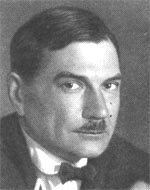 Evgeny Ivanovich Zamyatin, born on 1 February 1884 in Lebedyan, Tambov guberniya. His father was a priest. His mother was an educated woman who loved literature and played the piano. As a child, he claims that his friends were books. Years later, he wrote: Evgeny Ivanovich Zamyatin, born on 1 February 1884 in Lebedyan, Tambov guberniya. His father was a priest. His mother was an educated woman who loved literature and played the piano. As a child, he claims that his friends were books. Years later, he wrote:
"I still remember how I shivered over Dostoevsky's Netochka Nezvanova and Turgenev's First Love. These were my elders and, perhaps, a bit terrifying. Gogol was a friend."
In 1902, he graduated from the Voronezh Gymnasium with a Gold Medal, which he pawned some months later for 25 rubles. He went on to enroll in the Shipbuilding Institute in Petersburg. During summers, he did practical work in factories and ships, including one journey from Odessa to Alexandria, with many stops in between. He was in Odessa during the mutiny on the Potemkin. He joined the Bolsheviks and took part in the revolutionary events of 1905. At one point, his room was a clandestine printing press. For his political activities, in 1905 Zamyatin was arrested, beaten up, locked in solitary for several months, then banished from Petersburg. He managed to return to the capital some time later, however, and illegally graduated from the Shipbuilding Institute in 1908, after which he joined its faculty.
Zamyatin's literary debut was publication of the story Odin ("Alone") in the journal Obrazovanie in 1908. No one noticed. In 1911, the tsarist secret police finally corrected a typographical error in their orders which enabled them to catch up with Zamyatin and banish him to Lakhta. There he wrote Uezdnoye ("District Tales"), which scored his first literary success. In 1913, Zamyatin's rights were restored with a general amnesty granted on the 300th anniversary of the Romanov Dynasty. Then, in 1914, he published the anti-military tale Na Kulichkakh ("At The End of The World") in the journal Zavety. Tsarist authorities saw this tale as an insult to the Russian officer corps. Every issue of Zavety was confiscated, and Zamyatin and the publisher were arrested. Zamyatin was shipped off to the north for a time, then tried under charges of anti-militarism and subversion. He was acquitted. This period provided impressions for the tale Sever ("North") (1918) and the story Africa.
In 1916 and 1917 Zamyatin worked on Russian ice-breakers in England, giving him inspiration for his satire of English life, Ostrovityane ("Islanders") (1917). In the autumn of 1917, he returned to Russia and worked on the construction of the Soviet ice-breakers "Ermak" and "Krasin". At the same time, he was invited by Gorky himself to work on the editorial board of Vsemirnaya Literatura, with special responsibility for English and American literature. Zamyatin, of course, continued to publish stories. Of particular note is Peshchera ("The Cave") (1920), in which life in an unheated room in Petrograd is compared to living in a prehistoric cave. Or as one critic described it:
This is a story of the degredation and poverty of people, clinging to a single idea -- to get food and fuel. It is a crystalized nightmare, slightly reminiscent of Poe, with the difference that Zamyatin's nightmare is extraordinarily truthful.
Zamyatin called his style of writing Neorealism, a microscopic examination of events, characters, and details. He once explained it thusly:
What after all is Realism? If you examine your hand through a microscope you will see a grotesque picture: trees, ravines and rocks instead of hairs, pores, grains, and dust....To my mind this is a more genuine realism than the primitive one.
The Realists held up a mirror and saw your smooth, pink skin. The Neorealists saw the grotesque, frightening reality behind this. This Neorealism, as Zamyatin saw it, was born of a dialectic synthesis of Realism with Symbolism. Invoking the image of clouds around a mountain summit, Zamyatin explained:
The Realists writers accepted the clouds as they saw them: rosy and golden, or black and heavy with storm. The Symbolists had the courage to climb to the summit and discover that there was nothing pink or golden there, nothing but slush and fog. The Neorealists were on the mountaintop with the Symbolists and saw that the clouds are fog. But having come down from the mountain, they had the courage to say: "It may be fog, but it's good fun all the same."
This highlights another important aspect of Neorealism for Zamyatin, humor:
Humor and laughter are the hallmark of a vital, healthy man who has the strength and the courage to live. They express the joy in living felt by the old Realists and by the Neorealists, and they distinguish the Neorealists from the Symbolists. In the Symbolists you find only a smile, a contemptuous smile at the contemptible earth. But you never hear them laugh. . . . We hear laughter in the works of the Neorealists, and this tells us that they have somehow overcome, subjugated the eternal enemy, life.
Zamyatin preached the importance of heresy. As he described it in 1919:
The world is kept alive only by heretics....Our symbol of faith is heresy. Tomorrow is an inevitable heresy of today, which has turned into a pillar of salt, and to yesterday, which has scattered to dust....This is the constant dialectic path which in a grandiose parabola sweeps the world into infinity.
And further:
True literature can be created only by madmen, hermits, heretics, dreamers, rebels, and skeptics.
Zamyatin's major work is, no doubt, the anti-Utopian novel My ("We"), which he finished in 1920. The very first anti-Utopian novel in western literature, Zamyatin called it "my most jesting and most serious work." It is set in the future One State, which is ruled over by the perfect laws of mathematics. All citizens have numbers, not names, and practically every moment of their time is regulated by the Book of Hours. Even sex is rationed with pink coupons. D-503, a leading mathemetician, is working on the Integral, a spaceship intended to force happiness on the inhabitants of the rest of the universe, because, after all, it is their "duty to compel them to be happy." Unexpectedly, D-503 becomes infected with an irrational number, that is to say, love. This drives him to further illegal acts such as shirking work, developing a soul and imagination. The object of his love, I-330, turns out to be a revolutionary, and he gets involved in her plots. The revolutionaries are foiled, and all law-abiding citizens are then rewarded with a Great Operation, which removes all imagination and turns them back into happy, toiling members of the perfect society, that is to say, zombies.
This novel raised up a storm of controversy and Zamyatin was subjected to extraordinarily harsh criticism. From 1929 on, he was no longer published in the Soviet Union. In 1931, he wrote a letter to Stalin, asking permission to go abroad. Perhaps because of the intervention of Gorky, Stalin agreed and Zamyatin was allowed to go to Paris, while retaining his Soviet citizenship.
He was readmitted to the Writers Union in 1936, but never made it back to his homeland. He died in Paris on 10 March 1937.
|